
TL;DR
Mastitis is a wedge of red, hot, painful breast plus flu-like body chills and a fever over 101°F. The first 24 hours of home treatment (rest, ibuprofen, gentle nursing, ice between feeds) clears 80% of cases. Call your doctor today if the fever lasts past 24 hours, the red wedge spreads, or you feel worse instead of better.
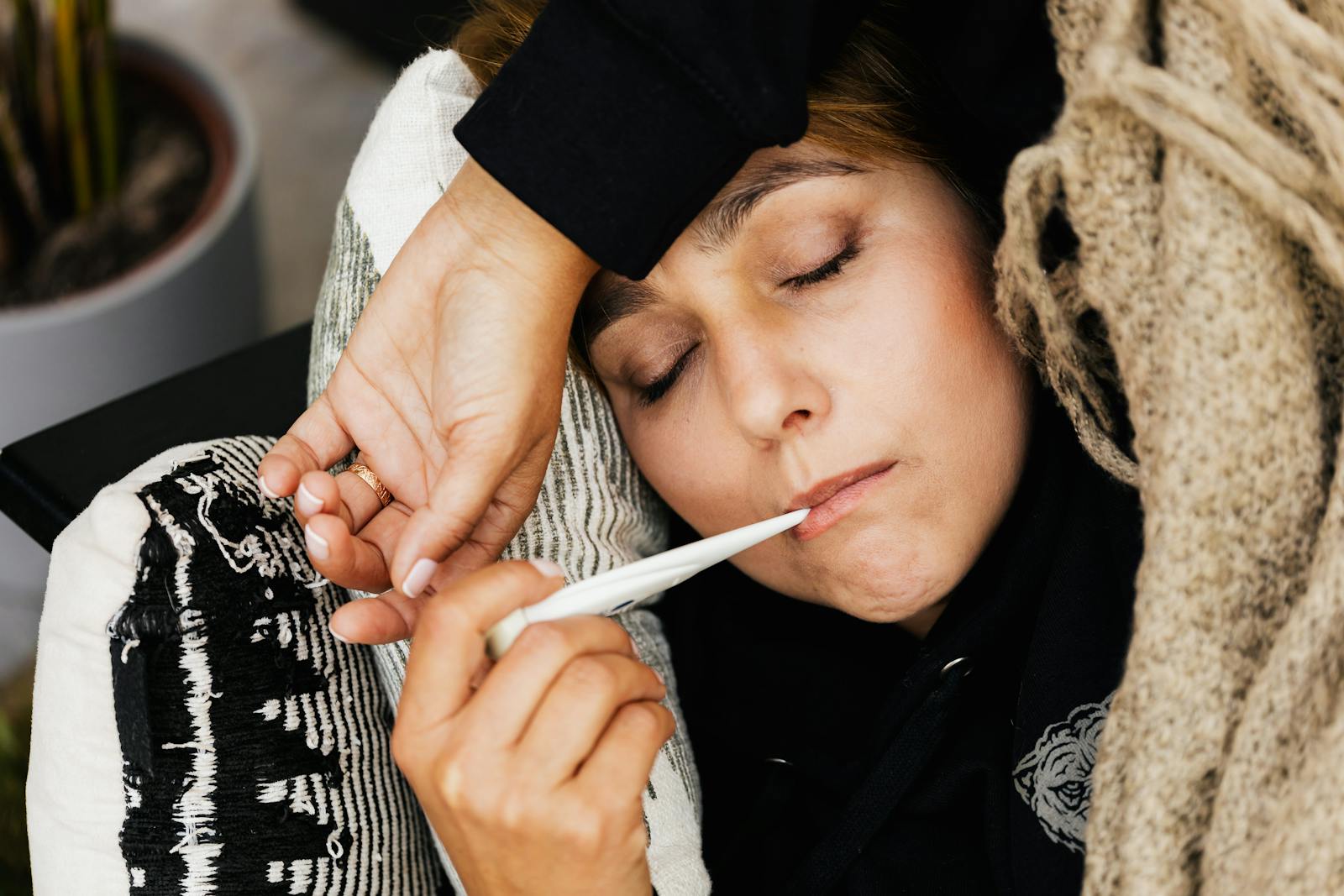
You’re holding the baby with one arm, googling with the other, and the whole left side of your chest feels like it’s on fire. There’s a red patch you can almost trace with your finger. You’re shaking under the blanket. The thermometer just said 102.4°F.
This is mastitis, and the next 24 hours matter.
First, the part that will feel familiar. You spent the day with a clogged duct and figured it would work itself out by morning. You went to bed. You woke up at 2am freezing, with that deep ache that feels like the worst flu of your life. Now you’re scared.
The good news: 80% of mastitis cases clear with home treatment in the first 24 hours. The other 20% need antibiotics, and a small handful need the ER. Knowing which one you’re in is the whole game.
What is mastitis?

Mastitis is inflammation in the breast, sometimes with a bacterial infection layered on top. It happens when milk gets stuck (clogged duct) and the back-pressure forces milk into the surrounding tissue. Your immune system reacts hard. That’s the fever, the chills, the body aches.
About 10% of breastfeeding moms get mastitis at some point. Most cases happen in the first 6 weeks. The other big spike is when you go back to work or sleep starts stretching past 4 hours, because longer gaps between feeds = more chances for milk to pool and clog. Oversupply is another clog risk, since making more milk than your baby takes means more milk sitting around, so handling an overactive letdown and oversupply lowers your odds of a clog too. (If you’re in the back-to-work window, our pumping at work guide covers how to keep your sessions on a tight 3-hour schedule, which is the single best mastitis-prevention move, and our best hands-free breast pumps roundup ranks the 7 worth buying by suction strength so empty-the-breast sessions actually empty.)
The 2022 update from the Academy of Breastfeeding Medicine reframed mastitis as a spectrum. It starts with breast fullness, moves into a clogged duct (no fever), then inflammatory mastitis (fever and red wedge), then bacterial mastitis (the same plus signs of true infection), and at the worst end, abscess. Most moms never get past stage 2 or 3.
Mastitis vs clogged duct: how to tell
This is the question that brought you to the search bar. Here’s the line.
A clogged duct is:
- A sore, firm lump in one breast
- Skin over it feels normal-temperature
- No fever, no chills, no flu feeling
- Often resolves with one good feed plus heat and gentle massage
Mastitis is the clogged duct plus:
- A red wedge or red patch on the skin (you can usually trace its edge)
- Skin over the area is hot to the touch
- Fever above 101°F (38.3°C)
- Body aches, chills, exhaustion that feels like the flu
- Sometimes nausea or just a deep “I feel wrong” feeling
If you’ve got the fever and the body aches, you’ve got mastitis. Stop debating it and start treating it. Need a refresher on what a normal clogged duct looks like first? The breast engorgement guide covers the steps before this gets worse.
Why the first 24 hours matter
Mastitis is one of those conditions where speed beats perfection. Bacterial mastitis can become an abscess in 48 to 72 hours if it’s left alone. An abscess almost always needs in-office drainage, antibiotics, and a few weeks of recovery.
Catch it in the first 24 hours and the playbook is short: rest, drain, ice, ibuprofen. Wait too long and you’re picking up an antibiotic prescription, sometimes two.
There’s a second reason to move fast. Mastitis tanks supply on the affected side, sometimes by 30 to 50% for a week. Treating it early protects your supply. Skipping feeds because it hurts is the worst thing you can do.
How to treat mastitis at home, step by step
Here’s the 24-hour plan that works for the 80%. Start it the moment the red wedge and the fever line up.
-
Get in bed and stay there. Mastitis is your body fighting an inflammation. Walking around the kitchen “to get things done” is the opposite of what works. Bring the baby and a water bottle to the bed and stay there for the next 12 hours minimum. Treat this like the flu, because that’s what it feels like.
-
Take ibuprofen 600mg every 6 hours. Ibuprofen does two things at once: it knocks the fever down and reduces breast inflammation. Take it on a full stomach. Tylenol is fine for the fever but doesn’t address inflammation, so ibuprofen is the better single choice. Skip aspirin.
-
Nurse or pump the affected side every 2 hours. This is the actual treatment. The clogged area has to drain. Start the feed on the affected side (baby’s first sucks are the strongest). If the latch hurts, soften the breast with a few minutes of hand expression first. Your milk is safe for the baby. The American Academy of Pediatrics is clear on this: keep nursing. (Posture matters here: a too-soft pillow lets baby slide off the affected side and the duct doesn’t fully drain. If your pillow has gone flat, our best nursing pillows roundup ranks 7 picks; My Brest Friend Original is the firmest for keeping baby aligned during a mastitis recovery feed.)
-
Ice for 10 minutes between feeds. The 2022 mastitis guidelines flipped the old advice (heat) to ice. Heat actually increases inflammation. Ice between feeds reduces swelling and pain. A bag of frozen peas wrapped in a thin towel for 10 minutes works. Repeat between every feed.
-
Skip the deep massage. This is the other big change from the old advice. Aggressive massage on a mastitis breast pushes inflammation deeper and can make things worse. Gentle stroking from the chest wall toward the nipple during a feed is fine. Anything that hurts is too much.
-
Drink water and eat what you can. Aim for a glass of water per feed. Mastitis dehydrates you fast through the fever. If you can keep food down, do, but don’t force it. Soup, toast, anything easy. (Once the fever drops and supply needs rebuilding, our foods that increase milk supply guide covers the 8 with research behind them — most rebuild iron stores at the same time.)
-
Sleep when the baby sleeps. For real this time. Sleep is when your immune system actually clears the infection. The 2am wakeup that started this thing is a sleep-debt thing as much as a milk thing. Get a partner, your mom, anyone, to take the next overnight shift if you can.
By hour 12 to 18, you should feel a real shift. The fever should be coming down. The red wedge should be smaller or fading. The body aches should be lifting. If that’s happening, you’re in the 80%. Keep going.
When to call your doctor (within the first 24 hours)
Some moms need the call sooner than 24 hours, even with home treatment going. Pick up the phone if any of these are true:
- Your fever is still 101°F or higher 24 hours after starting the home plan
- The red wedge is bigger, not smaller, after 12 hours
- You feel worse instead of better
- The pain is unmanageable even with ibuprofen
- This is your second mastitis on the same side in less than 6 weeks (recurrent mastitis needs a different workup)
- You have nipple damage that looks infected (yellow crust, weeping, deep cracks, or a bite that broke the skin)
- You have a history of MRSA or recent hospital exposure
The standard prescription is dicloxacillin or cephalexin for 10 to 14 days. Both are safe for breastfeeding. Take the full course even if you feel better at day 3, because stopping early is how it comes back.
When mastitis is an ER trip
Most mastitis is not an emergency. But these signs are. Go to the ER, not urgent care, if:
Track every feed without the spreadsheet
Latchly times each side, logs pumps, and shows you the patterns. Free to start.
- Fever 103°F (39.4°C) or higher that doesn’t come down with ibuprofen
- Red streaks running from the breast up toward your armpit or collarbone (this can mean the infection is spreading through lymph)
- A hard, fluctuating lump that feels like a water balloon under the skin (possible abscess)
- Confusion, severe dizziness, or fainting (signs of sepsis)
- Vomiting that won’t stop so you can’t keep fluids or medication down
- Your baby is under 6 weeks old AND your fever is over 102°F (call your OB and pediatrician right away. Both of you may need to be seen)
Sepsis from mastitis is rare but it does happen. If your gut says this is more than the flu, listen to it.
How to keep it from coming back
About 1 in 4 moms who get mastitis will get it again. The recurrence usually hits the same breast, often the same duct. Here’s what actually moves the needle on prevention.
Don’t skip feeds or let your sleep stretch past 4 hours in the first 6 weeks. This is the single biggest risk factor. If you’re going to bed at 11pm and the baby sleeps until 5am, that 6-hour gap is plenty of time for a clog to form.
Ask why the breast isn’t draining. If clogs keep coming back on the same side and your baby clicks, slides off, or feeds forever without emptying you, the problem may be how your baby’s tongue moves. A tongue tie makes milk removal inefficient, and poor removal is what feeds the clog cycle. Get a feeding assessment before you accept repeat mastitis as your normal.
Watch for the early signs. A small lump that doesn’t hurt much yet, a slightly tender spot, a feed that doesn’t fully empty one breast. These are the catch-it-now moments. Nurse extra on that side, hand express, try a different position, ice it for 10 minutes.
Get your latch checked if you’ve had mastitis twice. Recurrent mastitis is often a latch problem in disguise. The baby isn’t fully draining one breast each feed and the milk pools. The deep latch guide walks through what a fully-draining latch actually feels like.
Lecithin daily if you’re a clogger. Sunflower or soy lecithin (1200mg, 3 to 4 times a day) thins the milk fat and reduces clogging in moms who get them often. It’s safe with breastfeeding. Ask your doctor.
Wear a bra that doesn’t compress. Underwire bras and tight sports bras compress ducts and cause clogs. Soft, stretchy nursing bras only for the first 6 weeks. After that, no underwire if you’re a clogger. (Soft reusable nursing pads matter too: tight or rough disposable pads compress and irritate, while a soft cotton or bamboo pad lets the duct breathe. Bamboobies are the most-recommended in our 12-product postpartum recovery kit for exactly this reason.)
Don’t let yourself get run down. Mastitis is a vulnerability infection. Sleep deprivation, dehydration, and stress all make it more likely. The postpartum self-care basics (water, food, real shower, long sleep stretch) aren’t just nice-to-haves here. They’re prevention.
Watch for cycle-related clogs. Once your period returns while breastfeeding, the hormone shift right before bleeding can briefly thicken milk and trigger a plugged duct in repeat-cloggers. If you keep getting a clog on the same day of your cycle, lean harder on the warm compress + frequent nursing routine that week and consider a daily sunflower lecithin during the dip. The same goes if you get pregnant while nursing: a nursing toddler is great at draining the breast, which is one reason breastfeeding while pregnant and tandem nursing can actually lower your clog risk after the baby comes.
Wean slowly when it’s time. Mastitis loves a sudden drop in milk removal, and a rushed wean creates exactly that. When you’re ready to stop nursing, the step-down weaning method drops one feed at a time so milk never pools long enough to clog.
What’s actually happening in your breast
If you want to understand the why, here it is in 30 seconds.
Milk is made in clusters of cells called alveoli, which drain into ducts that lead to the nipple. When milk stays in one duct too long (skipped feed, tight bra, baby suddenly sleeping longer at night), the back-pressure pushes some of that milk out of the duct and into the breast tissue. Your immune system sees milk where milk shouldn’t be and reacts hard. Hence the red wedge, the fever, the chills.
If bacteria from the baby’s mouth or your skin make it into the inflamed area, it becomes a true infection on top of the inflammation. That’s when antibiotics matter. But the first 24 hours of redness and fever is almost always inflammatory, not infectious. Which is why drainage and ice fix the majority of cases without antibiotics.
That’s the whole reason the 2022 guidelines stopped pushing aggressive massage and heat. Both make the inflammation worse. You’re not pushing milk out of a stubborn duct. You’re calming a swollen tissue and letting the baby do the actual work.
When to call your pediatrician about your baby
Your milk is safe. Even with antibiotics, even with the fever, even with a visible red wedge. Keep nursing.
One knock-on effect worth watching for: antibiotics knock down the normal bacteria that keep yeast in check, so a stubborn diaper rash in the week or two after your course is common, and it usually needs an antifungal rather than more barrier cream.
But call the pediatrician if:
- Your baby is under 6 weeks old and you have a fever over 101°F (the pediatrician may want to see the baby too as a precaution)
- Your baby suddenly stops nursing well or gets fussy at the breast on the affected side (some babies don’t love the salty taste of mastitis milk and prefer the other breast for a few days)
- You’re starting antibiotics and want to confirm the choice is breastfeeding-safe (most are, but it’s worth asking)
- Your baby has white patches in their mouth or you have shooting pain in the breast after feeds (yeast can complicate mastitis recovery, though thrush is over-diagnosed and burning pain is more often the latch or vasospasm)
Watch your baby’s wet diapers too. If you’re flat on your back with a fever, supply can dip on that side for a day or two. The wet diaper count guide is the easiest way to confirm baby is still getting enough.
The thing I wish I’d known
The first time I got mastitis I cried for an hour because I thought I’d done something wrong. I hadn’t. Mastitis is not a mom-failure. It’s not because you weren’t drinking enough water or sleeping enough or pumping enough or letting the baby nap long enough.
It’s because milk got stuck in a duct, and the duct backed up, and your body did exactly what it’s supposed to do, which is fight back. The fever and the chills are your immune system winning, not losing.
Get in bed. Take the ibuprofen. Nurse the baby on that side. Ice it. Cry if you need to. Text someone you love and tell them what’s happening so you don’t feel alone in the bedroom at 2am holding a baby and a phone.
You will feel better by morning. You will keep breastfeeding. The next 24 hours are short, even when they don’t feel that way.
If something in this list is making you nervous (the spreading wedge, the fever that won’t come down, the pain that’s worse instead of better), call. Don’t wait for office hours. Most OB practices have an after-hours line for exactly this. The early call almost always means a phone prescription instead of an ER trip.
You’re doing this right. Go drain that breast, take the meds, and get in bed.
Frequently asked questions
How do I know if it's mastitis or just a clogged duct?
A clogged duct is a tender lump with no fever and no flu feeling. Mastitis is the same lump plus a red wedge on the skin, body aches, chills, and a fever over 101°F. If you’ve got the fever and chills, it’s mastitis.
Can mastitis go away without antibiotics?
Yes. About 80% of mastitis cases clear with 24 hours of rest, frequent nursing or pumping on the affected side, ibuprofen, and ice. Antibiotics are only needed if symptoms haven’t improved within 24 hours or if you’re getting worse.
Should I keep breastfeeding with mastitis?
Yes, and on the affected side first. Your milk is safe for the baby, and draining the breast is the actual treatment. Stopping makes mastitis worse, not better.
What's the fastest way to get rid of mastitis at home?
Nurse or pump the affected side every 2 hours, take ibuprofen 600mg every 6 hours, ice 10 minutes between feeds, and rest in bed. Most moms feel a real shift in 12 to 18 hours.
When does mastitis become an emergency?
Go to the ER if your fever hits 103°F or higher, the red area is spreading fast, you see red streaks running up your chest or armpit, you’re confused or extremely dizzy, or you feel a hard fluctuating lump (possible abscess).
Can I get mastitis more than once?
Yes. About 1 in 4 moms who get mastitis will get it again, usually on the same side. The repeat risk is highest in the first 6 weeks postpartum and after going back to work (longer gaps between feeds).