
TL;DR
A pacifier won't ruin breastfeeding if you use it the right way. Wait until feeding is going well (often around 3 to 4 weeks), offer the breast first when your baby fusses, and use the pacifier mostly for sleep. Pause it if supply, latch or weight gain is a worry.
Your baby just ate, they’re still fussing, and your nipples need a break. Someone hands you a pacifier and says “just try it.” Then someone else says it will ruin breastfeeding. Now you’re scared to use the one thing that might give you 20 minutes of peace.
First, the part that will feel familiar: you hold the pacifier in one hand and stare at it like it’s a test. “If I give her this, will she stop wanting me?” You’re not being dramatic. You’ve heard that warning a dozen times. The good news is that a pacifier and breastfeeding can get along fine. You just need a few simple rules.
What does a pacifier actually do for a breastfed baby?
A pacifier gives your baby something to suck on that isn’t food. Babies are born with a strong urge to suck. It calms them, slows their heart rate, and helps them drift off to sleep. Some of that sucking happens at the breast. Some of it, babies want to do even when their belly is full.
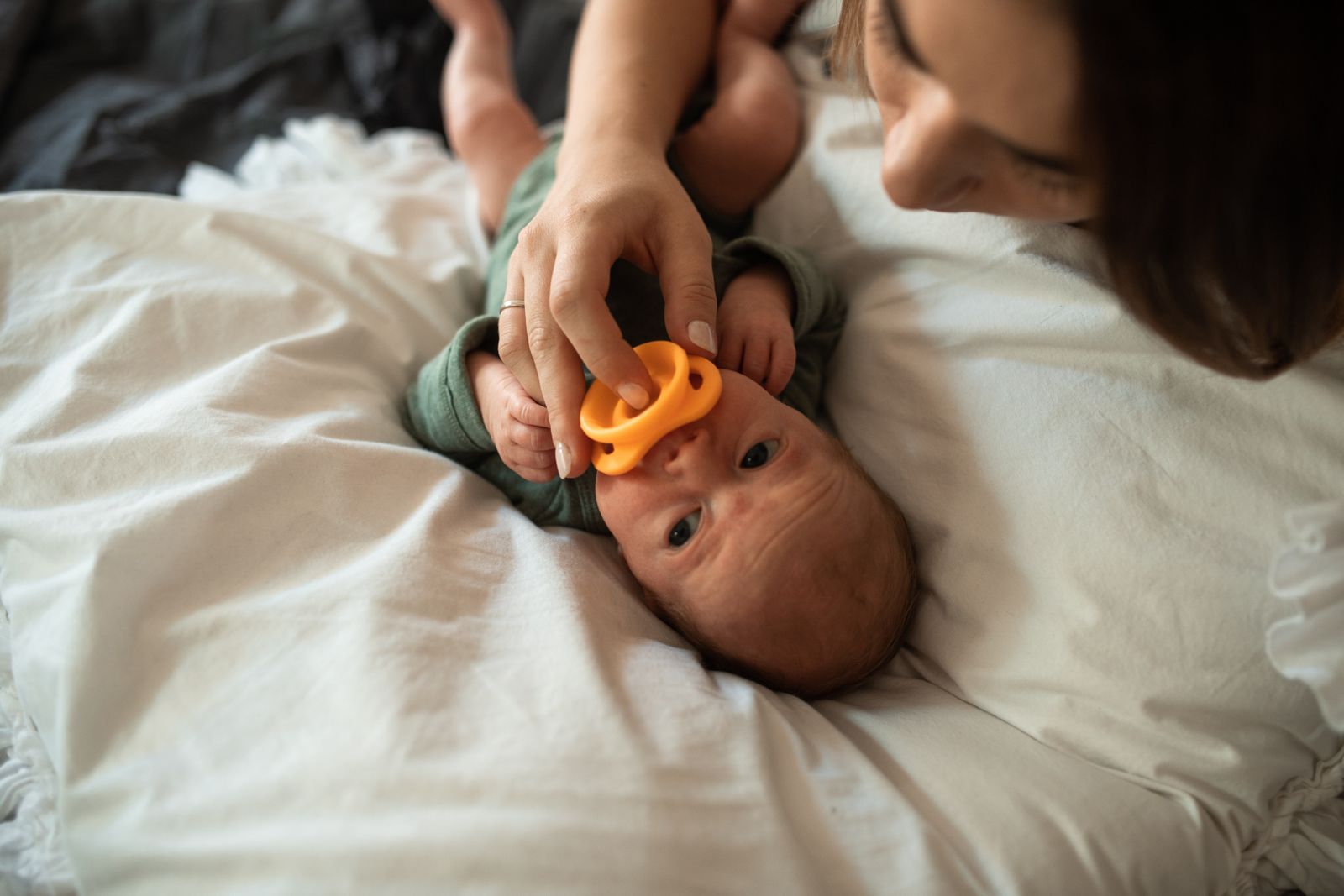
That’s why your baby may keep nursing long after the milk slows down. It’s called comfort sucking, and it’s normal. A pacifier can take over some of that job so you get a break.
It can also help with sleep. Offering a pacifier at naps and bedtime is linked to a lower risk of SIDS. Doctors aren’t sure why. It may keep babies from sleeping too deeply, or keep the airway a little more open. Either way, it’s one of the reasons the American Academy of Pediatrics says pacifiers are fine for sleep once breastfeeding is going well.
Will a pacifier mess up breastfeeding?
Honest answer: for most babies, no, if you wait and use it well. The fear comes from two things: “nipple confusion” and lower milk supply.
When researchers looked at healthy, full-term breastfed babies, starting a pacifier didn’t change how long moms breastfed. Babies who got a pacifier nursed about as long as babies who didn’t.
The real risk is quieter. A pacifier can hide hunger. A newborn who is soothed with a pacifier may skip a feed or two. Fewer feeds tell your body to make less milk. Over a week or two, that can mean lower supply and slower weight gain. That’s the problem the rules below are meant to stop.
The other risk is a shallow latch. In the first weeks, your baby is still learning to open wide and take in a big mouthful of breast. A pacifier asks for a smaller, tighter mouth. A few babies mix the two up, especially if the latch was already tricky. If you’re still working on it, getting a deep latch comes first.
7 rules for using a pacifier with a breastfed baby
1. Wait until breastfeeding feels easy. Most experts say around 3 to 4 weeks. Look for three signs: your latch doesn’t hurt, your baby is back to birth weight, and feeds have started to feel predictable. Some babies get there at 2 weeks. Some take 6. Go by the signs, not the calendar.
2. Offer the breast first. When your baby fusses, nurse first. If they eat, great. If they turn away, push the nipple out, or just suck lightly without swallowing, then try the pacifier. In the early months, the breast is the first answer to almost every cry.
3. Learn the hunger cues a pacifier can hide. Rooting, hands to mouth, lip smacking, turning toward your chest. These are early hunger signs. If you see them, feed, don’t plug. Crying is a late hunger sign, so try not to wait for it.
4. Count feeds, not hours. In the first 2 to 3 months, most breastfed babies eat 8 to 12 times in 24 hours. If the pacifier is stretching feeds to 4 or 5 hours during the day, that’s too long for a young baby. Check out signs your baby is getting enough milk if you’re not sure.
5. Use it mostly for sleep and car rides. Naps, bedtime, the car seat, the doctor’s office. These are the times a pacifier helps most and costs least. Try not to use it all day, every day, as the go-to answer for every fuss.
6. Don’t force it, and don’t replug all night. Offer it, and if your baby spits it out, let it go. Once they’re asleep and it falls out, you don’t need to put it back. Constant replugging can teach your baby to wake up just to get it back.
7. Pause it when supply or weight is a worry. If your baby is gaining slowly, your supply is low, or your nipples are cracked from a shallow latch, put the pacifier away for a while. Let your baby do all their sucking at the breast. That extra time is free supply work.
Track every feed without the spreadsheet
Latchly times each side, logs pumps, and shows you the patterns. Free to start.
How to give a pacifier to a breastfed baby
Pick a simple, one-piece pacifier sized for your baby’s age. Newborn sizes are usually labeled 0 to 3 months or 0 to 6 months. Shape doesn’t matter as much as the ads say. Many breastfed babies like a rounder nipple, but your baby will tell you. Try two or three styles and stick with what works.
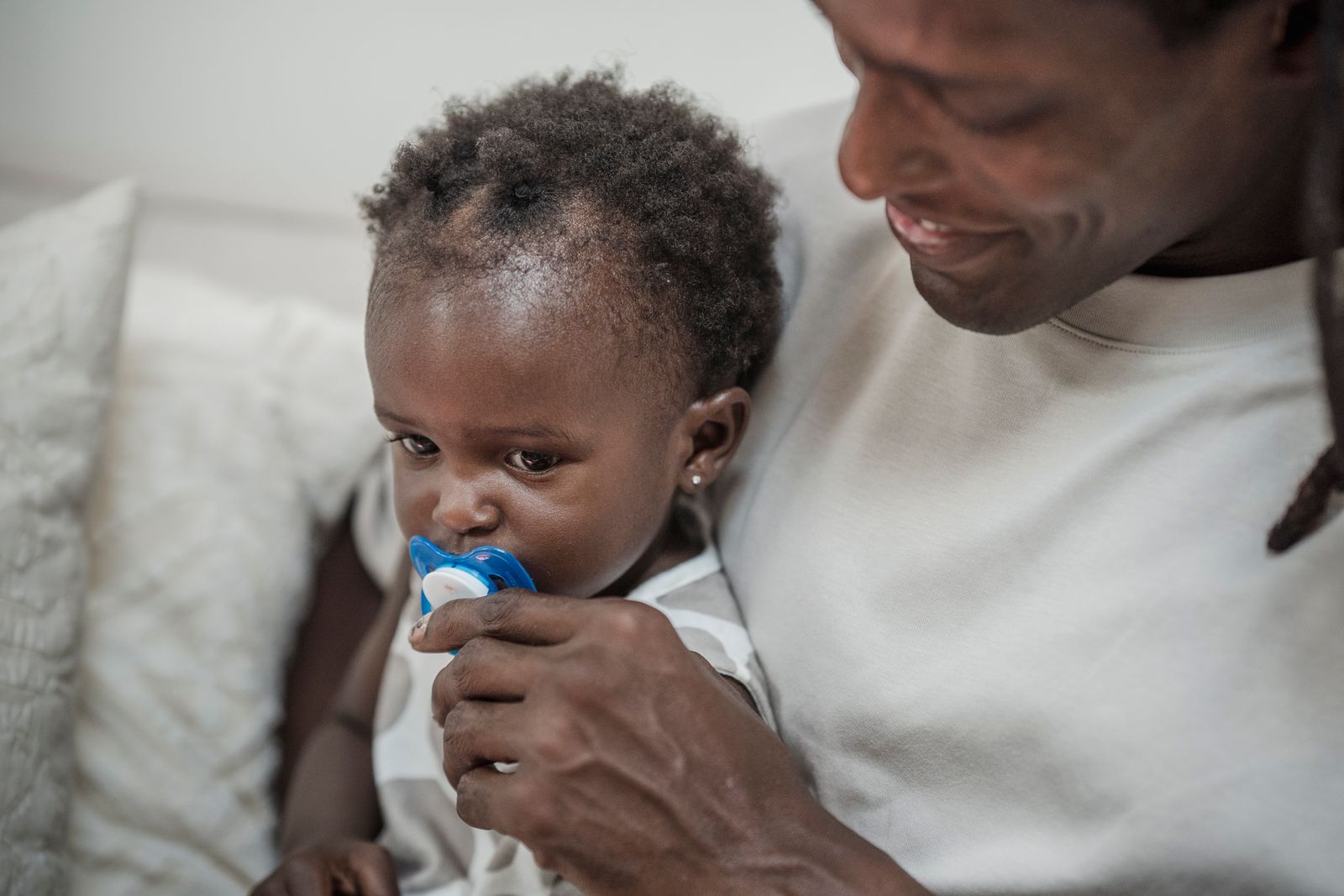
Offer it when your baby is calm or drowsy, not screaming hungry. A hungry baby will be angry about a pacifier, and that’s fair. A full, sleepy baby is much more likely to take it.
Touch it to their lips and let them pull it in. Don’t push it into a closed mouth. You can tickle the roof of the mouth gently with the tip to trigger the sucking reflex.
Let your partner try. Some breastfed babies refuse a pacifier from mom because they can smell milk. A partner or grandparent often has better luck. It’s also a nice way for them to help settle the baby while you sleep.
If your baby never takes one, that’s fine. Plenty of babies don’t. You don’t need to force it, and you’re not missing anything you can’t make up for with other ways of soothing.
Pacifier safety: the short list
These matter more than which brand you buy.
- Never tie it on. No strings, cords, or clips around the neck or on clothes during sleep.
- No honey, sugar, or syrup on it. Honey can cause botulism in babies under 1, and sugar harms new teeth.
- Check it often. Pull the nipple gently. If it’s cracked, sticky, torn, or loose, toss it.
- Keep it clean. Wash with hot soapy water or boil it in the first months. Don’t “clean” it in your own mouth, since that passes germs to your baby.
- Watch for thrush. White patches in your baby’s mouth plus sore, burning nipples on your side can mean thrush. Boil or replace pacifiers during treatment. Here’s how to tell sore nipples from thrush.
- Back to sleep, always. A pacifier doesn’t replace safe sleep. Your baby still sleeps on their back, in an empty crib or bassinet.
When to wean off the pacifier
Most babies don’t need help with this until 6 months or later. After that, a few things change. Ear infections get more common, and pacifier use is linked to more of them. Babies also start to find other ways to calm down, like sucking their hands. (Wait until 12 months before any soft lovey goes in the crib.)
A gentle plan:
- Between 6 and 12 months: keep the pacifier for naps and bedtime only. Put it away during the day.
- Around 12 months: many babies let it go easily if you just stop offering it. Expect a few rough nights.
- By age 2 to 3: most dentists want it gone, so it doesn’t affect how teeth line up.
If your baby uses the pacifier to fall asleep and wakes when it falls out, the 4-month sleep regression guide covers how to build other sleep cues.
When to call your pediatrician
Call your pediatrician or a lactation consultant if:
- Your baby has fewer than 6 wet diapers a day after day 5
- Your baby isn’t back to birth weight by 2 weeks, or isn’t gaining steadily
- Your baby seems to prefer the pacifier and fusses or pulls off at the breast
- Your nipples are cracked, bleeding, or pinched into a lipstick shape after feeds
- You see white patches in your baby’s mouth that don’t wipe off
- Your baby has ear pain, fever, or tugs at their ears often
- Your baby seems sleepy all day and hard to wake for feeds
If weight is the worry, our guide to a breastfed baby who isn’t gaining weight walks through causes and fixes.
The thing I wish I’d known
A pacifier isn’t a shortcut you need to feel guilty about. It’s a tool. Some days it gives your baby comfort. Some days it gives you a shower, a hot meal, or 15 minutes with your eyes closed. That matters too.
You don’t have to be a human pacifier to be a good breastfeeding mom. You also don’t have to use one at all. Both choices are fine. What matters is that your baby eats often, gains well, and your nipples aren’t paying the price.
So here’s your next step. If breastfeeding feels steady, try a pacifier at the next nap, after a full feed, when your baby is drowsy. If it’s not steady yet, give it another week or two and focus on the latch. Either way, you’re doing this right.
Frequently asked questions
When can I give my breastfed baby a pacifier?
Most experts suggest waiting until breastfeeding is going well, often around 3 to 4 weeks. That means your latch is comfortable, your baby is back to birth weight, and feeds feel predictable. If your baby needs one sooner for a medical reason, your care team may say it’s fine.
Will a pacifier cause nipple confusion?
For most healthy, full-term babies, research hasn’t found that pacifiers shorten breastfeeding once feeding is established. The bigger risk is the pacifier hiding hunger cues so your baby eats less often. Feed first, then offer the pacifier.
Can a pacifier lower my milk supply?
It can if it replaces feeds. Your supply depends on how often milk is removed. If the pacifier stretches the time between feeds, your body makes less. Keep feeding 8 to 12 times a day in the early months and watch diapers and weight.
Is it safe for my baby to sleep with a pacifier?
Yes. Offering a pacifier at naps and bedtime is linked to a lower risk of SIDS. Lay your baby on their back, don’t force it, and don’t put it back in once they fall asleep. Never tie it to a string or clip it to clothes for sleep.
Should I put the pacifier back in when it falls out at night?
No, you don’t need to. Once your baby is asleep, the protective effect doesn’t depend on keeping it in. If you replug it all night, your baby may start waking just to get it back.
When should I wean my baby off the pacifier?
Many moms start cutting back between 6 and 12 months, when ear infections become more common and babies can self-soothe in other ways. Keeping it for sleep only is a good first step. Most dentists want it gone by age 2 to 3.