
TL;DR
Most breastfed babies gain about 5 to 7 ounces a week in the first 3 months, and should be back to birth weight by 2 weeks. When gain is slow, the cause is almost always that milk isn't moving well: a shallow latch, too few feeds, or a sleepy baby. More feeds, breast compressions, and pumping after feeds fix most cases, and a short top-up doesn't mean breastfeeding is over.
Your pediatrician looks at the scale, then back at you, and says “Let’s see her again in 3 days.” Your stomach drops. You’ve been feeding all day and all night. How is she not gaining? Take a breath. Slow weight gain in a breastfed baby is common, it has clear causes, and most of them are fixable in a week or two.
First, the part that will feel familiar: you leave the office and google “breastfed baby not gaining weight” in the parking lot, with the baby still in the car seat. You’re not failing. You just found a problem early, which is exactly what weight checks are for.
What counts as slow weight gain?
Slow weight gain means your baby is growing more slowly than expected for their age, not that they’re small. Some babies are just petite. What your doctor watches is the trend.
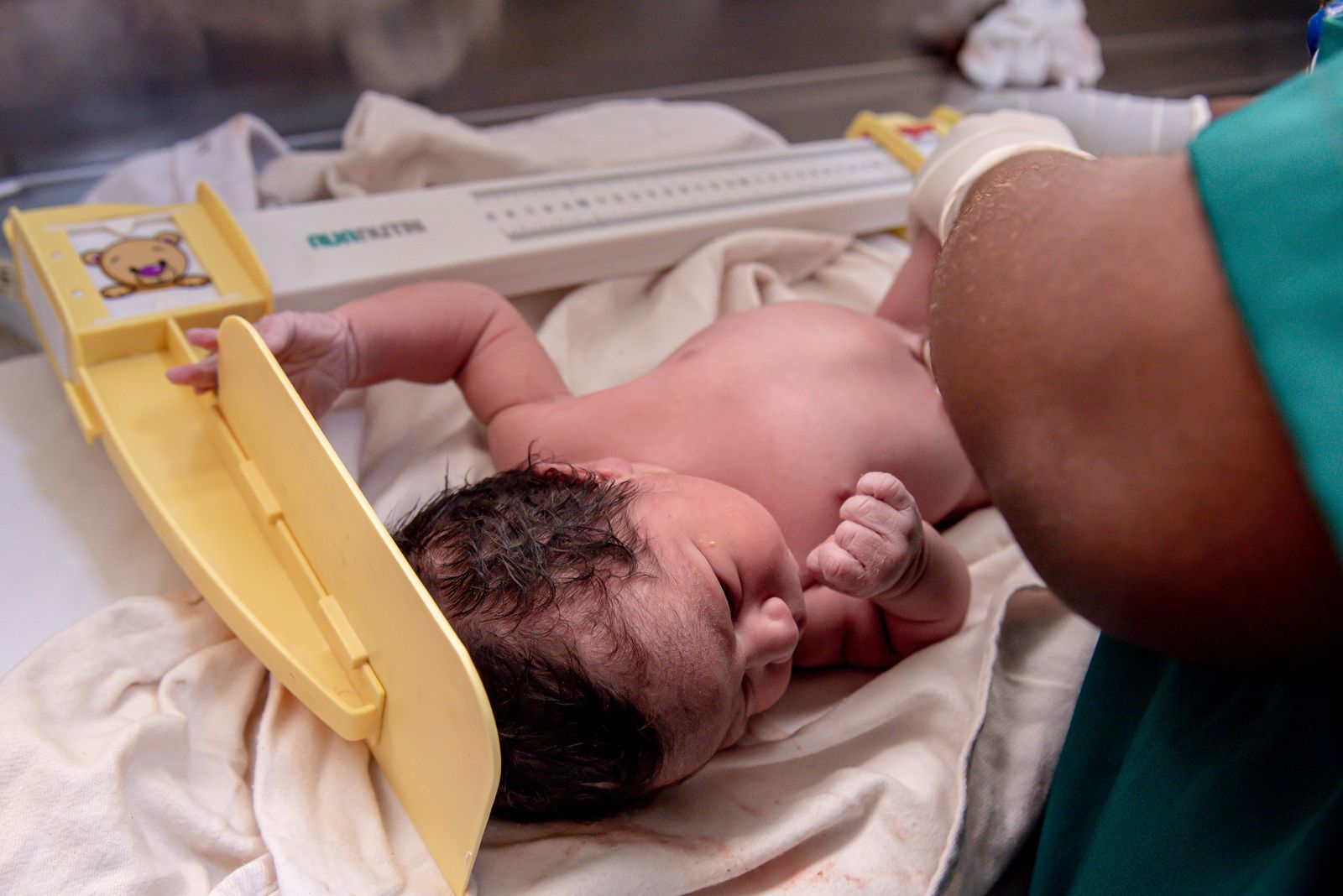
Here’s what normal looks like for a breastfed baby:
- Days 1 to 5: Losing up to 7 to 10 percent of birth weight is normal while your milk comes in.
- By day 10 to 14: Back to birth weight.
- Weeks 2 to 12: About 5 to 7 ounces (150 to 200 grams) a week.
- Months 4 to 6: Slower, about 3 to 5 ounces a week.
Percentiles are about the line, not the number. A baby who stays on the 10th percentile is growing well. A baby who drops from the 50th to below the 15th is the one your doctor will look at more closely. Also ask which chart your doctor uses. US doctors are told to use the WHO charts for babies under 2, which are built on breastfed babies. Older charts can make a breastfed baby look like they’re falling behind when they’re not.
Check the scale before you panic. A different scale, a wet diaper, or a big poop right before the weigh-in can swing the number by 2 or 3 ounces. Ask for a naked weigh-in on the same scale each time.
If you’re still not sure whether your baby is getting enough day to day, start with the 7 signs your baby is getting enough milk. Weight and wet diapers are the two that matter most.
Why your breastfed baby isn’t gaining weight
Almost every case comes down to milk not moving well from you to your baby. Here are the 7 most common reasons.
- A shallow latch. If your baby only takes the nipple, they can suck for 40 minutes and get very little. Pain, flat or lipstick-shaped nipples after feeds, and clicking sounds are clues. A deep latch changes everything.
- Too few feeds. Newborns need 8 to 12 feeds in 24 hours. Feeding on a strict 3 or 4 hour schedule, or a pacifier stretching feeds, can quietly cut intake.
- A sleepy baby. Some babies doze off a few minutes into a feed. Jaundice, an early birth, or a long labor make this more likely. If your baby always falls asleep while nursing before they’ve really eaten, that adds up.
- Tongue tie. A tight band under the tongue can make it hard to pull milk out. A tongue tie is worth checking if latch pain doesn’t improve.
- Low milk supply. This often follows a slow start, but some moms have medical reasons: thyroid problems, PCOS, breast surgery, leftover placenta, or not much milk-making tissue. Estrogen birth control and Sudafed can also lower supply.
- Illness in your baby. A cold, an ear infection, reflux, or a food allergy can slow gain for a while. Rarely, it’s a heart, gut, or metabolic issue, which is why your doctor checks your baby too, not only the feeds.
- A normal slowdown. Babies who gained fast early sometimes slow down around 3 to 4 months. If they’re happy, peeing well, and following a curve, that’s often just their pattern.
How to help your breastfed baby gain weight
Start with these 7 steps, ideally with a lactation consultant (IBCLC) watching a feed. Most babies start gaining better within a week.

1. Feed at least 8 to 12 times a day. Offer the breast every 2 to 3 hours in the daytime, counting from the start of one feed to the start of the next. Wake your baby if they sleep longer than 3 hours in the early weeks.
2. Fix the latch. Aim for a wide-open mouth, lips flipped out, and more of the dark area below the nipple in your baby’s mouth than above. A good latch shouldn’t hurt after the first few seconds.
3. Use breast compressions. When your baby’s sucking slows to little nibbles, squeeze your breast gently and hold. This pushes more milk out and wakes your baby up to swallow again. Release, then repeat when sucking slows.
4. Switch sides more than once. When your baby stops swallowing on one side, switch. Going back and forth 2 or 3 times keeps a sleepy baby drinking longer.
5. Keep a sleepy baby awake. Undress them to the diaper, rub their back or feet, and tickle their chin. Skin-to-skin between feeds also helps them wake up hungry.
Track every feed without the spreadsheet
Latchly times each side, logs pumps, and shows you the patterns. Free to start.
6. Pump after feeds. Pumping for 10 to 15 minutes after daytime feeds tells your body to make more milk. That extra milk is your first choice for top-ups. Power pumping once a day can help too.
7. Top up with your own milk first. If your doctor says to supplement, give your pumped milk first, then donor milk or formula if you need more. Use paced bottle feeding so your baby doesn’t learn to prefer the fast flow.
What a feeding plan from your doctor might look like
Most plans are short and come with a follow-up weigh-in in 2 to 7 days. They often look like this:
- Nurse first, for about 20 to 30 minutes total.
- Top up with a set amount, often 1 to 2 ounces, by bottle, syringe, or cup.
- Pump for 10 to 15 minutes.
This is called triple feeding, and it is exhausting. It’s meant to last days to a couple of weeks, not months. Ask a partner or helper to do the bottle while you pump, so each round takes 45 minutes and not an hour and a half.
A weighted feed can show what your baby actually drinks. A lactation consultant weighs your baby before and after nursing on a very accurate scale. It’s the best way to know if the problem is latch, supply, or both.
Topping up does not end breastfeeding. Lots of moms supplement for a few weeks and then go back to nursing only. If you’d like a longer plan for mixing both, our guide to combination feeding walks through it.
Protecting your milk supply while you sort it out
Supply follows demand, so every bottle should come with a pump session. If your baby gets a bottle and your breasts don’t get emptied, your body makes less.

- Pump or nurse at least 8 times in 24 hours, including once overnight.
- Eat and drink enough. You don’t need special foods, but skipping meals won’t help. Our list of ways to increase milk supply covers what works.
- Get your own checkup if supply stays low. A thyroid test or iron check is simple and can explain a lot.
- Track diapers and feeds for a few days. A simple log of feeds, wet diapers, and poops gives your doctor real data at the next weigh-in.
When to call your pediatrician
Call the same day if you notice any of these:
- Your baby isn’t back to birth weight by 2 weeks
- Fewer than 6 wet diapers a day after day 5, or dark yellow pee
- Fewer than 3 poops a day in the first 6 weeks, or poops that are still dark after day 5 (see our wet diaper guide for what to count)
- Your baby is very sleepy, hard to wake for feeds, or too tired to finish a feed
- Yellow skin that is spreading or getting deeper
- Forceful vomiting, or blood in poop or spit-up
- A sunken soft spot on the head, a dry mouth, or no tears when crying
- Your baby has dropped across 2 or more percentile lines
Go to the ER or call 911 if your baby is limp, won’t wake up, or is breathing fast or with effort.
The thing I wish I’d known

A low number on the scale is information, not a grade. It doesn’t mean you starved your baby or that your body is broken. It means milk isn’t moving as well as it should yet, and now you know where to look.
The moms who feel worst about this are usually the ones working hardest. If you’ve been feeding around the clock and your baby still isn’t gaining, that’s a sign to get hands-on help, not a sign you did something wrong. A good lactation consultant can often spot the problem in one feed.
And if your baby needs formula for a while, or for good, that’s okay too. A fed, growing baby is the goal. Your next step is simple: book the follow-up weigh-in, ask for an IBCLC visit, and start a feed-and-diaper log tonight.
Frequently asked questions
How much weight should a breastfed baby gain each week?
About 5 to 7 ounces (150 to 200 grams) a week for the first 3 to 4 months. Gain slows to about 3 to 5 ounces a week by 4 to 6 months. Your pediatrician looks at the trend over a few weeks, not one weigh-in.
When should my baby be back to birth weight?
Most babies lose up to 7 to 10 percent of their birth weight in the first few days and are back to birth weight by 10 to 14 days. If your baby isn’t back by 2 weeks, call your pediatrician and get a feeding check.
Is it bad if my baby is in a low percentile?
No. A baby who stays near the 10th percentile and grows along it is healthy. What matters is the line your baby follows. Dropping across 2 or more major percentile lines is the thing your doctor will want to look at.
Does supplementing with formula ruin breastfeeding?
No. A short-term top-up while you fix latch and supply keeps your baby growing, and most moms go back to full breastfeeding. Pump when your baby gets a bottle so your supply keeps up, and use paced bottle feeding.
Can foremilk and hindmilk cause slow weight gain?
Rarely. The real issue is usually total milk, not the type. If your baby gets enough milk overall, they get enough fat. Focus on more feeds and draining the breast well, not on timing each side.
Should I weigh my baby at home?
Only if your pediatrician or lactation consultant asks you to. Home scales often aren’t accurate enough to track ounces, and daily numbers swing with poops and pees. Use the same office scale every visit.