TL;DR
Most babies are ready for solids around 6 months, not before 4. Watch for readiness signs, not just the calendar: good head control, sitting with support, losing the tongue-thrust reflex, bringing things to their mouth, and real interest in your food. Purees and baby-led weaning both work, so pick what feels doable. Start with iron-rich single foods, wait a few days between new ones, and keep breast milk or formula as the main meal until age 1.
Everyone keeps asking if your baby has started solids yet, and you have no idea if the answer should be yes. Maybe they seem interested. Maybe they stare you down while you eat like you’re keeping something from them. Maybe your pediatrician mentioned it at the last visit and now you’re second-guessing the whole thing.
First, the part that will feel familiar: this stage is exciting and a little nerve-wracking at the same time. You’ve spent months getting feeding figured out, and now the rules are changing again.
Here’s the good news. Starting solids isn’t a test you can fail. There’s no perfect first bite, no magic food, no window that slams shut if you’re a week late. Your baby will tell you when they’re ready, and once you know what to look for, it gets a lot less scary.
What Starting Solids Actually Means
Starting solids means adding real food alongside breast milk or formula, not replacing it. For the first several months, milk is everything your baby needs. Somewhere around the middle of the first year, they start needing a little more, especially iron, and they start showing you they want in on what you’re eating.
That first stretch of solids is mostly practice. Your baby is learning how to move food around their mouth, how to swallow something that isn’t liquid, and how different textures feel. Some of it goes in. A lot of it ends up on the floor, the wall, and in their hair. That’s normal and it’s not a sign you’re doing anything wrong.
The goal in the early weeks isn’t a clean plate. It’s exposure. New tastes, new textures, and getting comfortable at the table.
The 5 Real Signs Your Baby Is Ready
Watch your baby, not just the calendar. Age gives you a rough window, but readiness is about development. Here are the five signs that actually matter. You want to see most of them together, not just one.
1. They can hold their head steady. Eating takes a stable head and neck. If your baby’s head still wobbles or needs support, their body isn’t ready to manage food safely yet.
2. They can sit up with support. Your baby doesn’t need to sit perfectly on their own, but they should be able to sit upright in a high chair or on your lap with a little help. Sitting upright helps food go down instead of causing choking.
3. They’ve lost the tongue-thrust reflex. Newborns automatically push anything solid out of their mouth with their tongue. It’s a built-in protection. When that reflex fades, food you offer stays in instead of getting shoved right back out.
4. They bring things to their mouth. Hands, toys, your car keys, whatever they can grab. This tells you the hand-to-mouth coordination that self-feeding needs is coming online.
5. They’re genuinely interested in food. They watch every bite you take. They reach for your plate. They open their mouth when a spoon comes near. That curiosity is your baby saying they want to try.
If your baby is hitting 6 months and showing most of these, you’re clear to start. If they’re 6 months but only doing one or two, it’s completely fine to wait a week or two and try again. There’s no prize for being early.
When to Start (and Why Not Before 4 Months)
Around 6 months is the sweet spot for most babies. The major health groups all land in the same place: wait until close to 6 months, and never start before 4 months. Before 4 months, a baby’s gut and swallowing skills just aren’t ready, and early solids are linked to more choking and tummy trouble.
Starting too early doesn’t get you ahead. It usually means more mess, more frustration, and a baby who isn’t set up to actually eat yet. Waiting for the signs makes the whole thing smoother.
One thing that trips people up: a baby waking more at night or seeming hungrier doesn’t automatically mean it’s time for solids. That’s often a growth spurt or the 4-month sleep regression, not a food cue. Solids won’t fix a regression, and starting them early can backfire. Look at the readiness signs, not the 3am wake-ups.
Purees or Baby-Led Weaning? You Don’t Have to Pick
There are two popular ways to start solids, and neither one is the “right” one. This is where the internet will try to make you feel like you’re choosing wrong. You’re not.
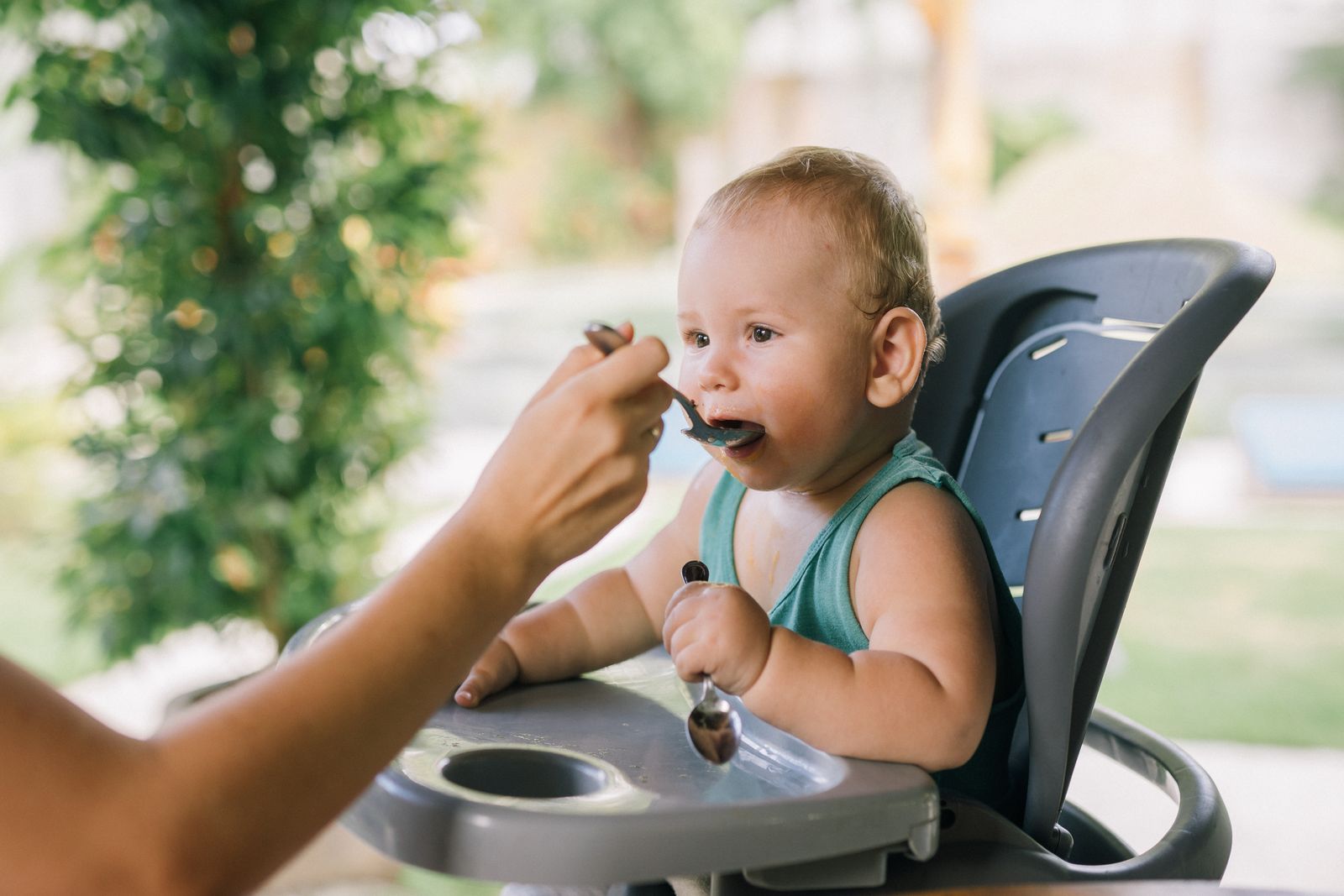
Purees mean you spoon-feed smooth foods first, then move to lumpier mashes, then soft finger foods over time. You’re in control of the pace, and it can feel less scary if choking worries you.
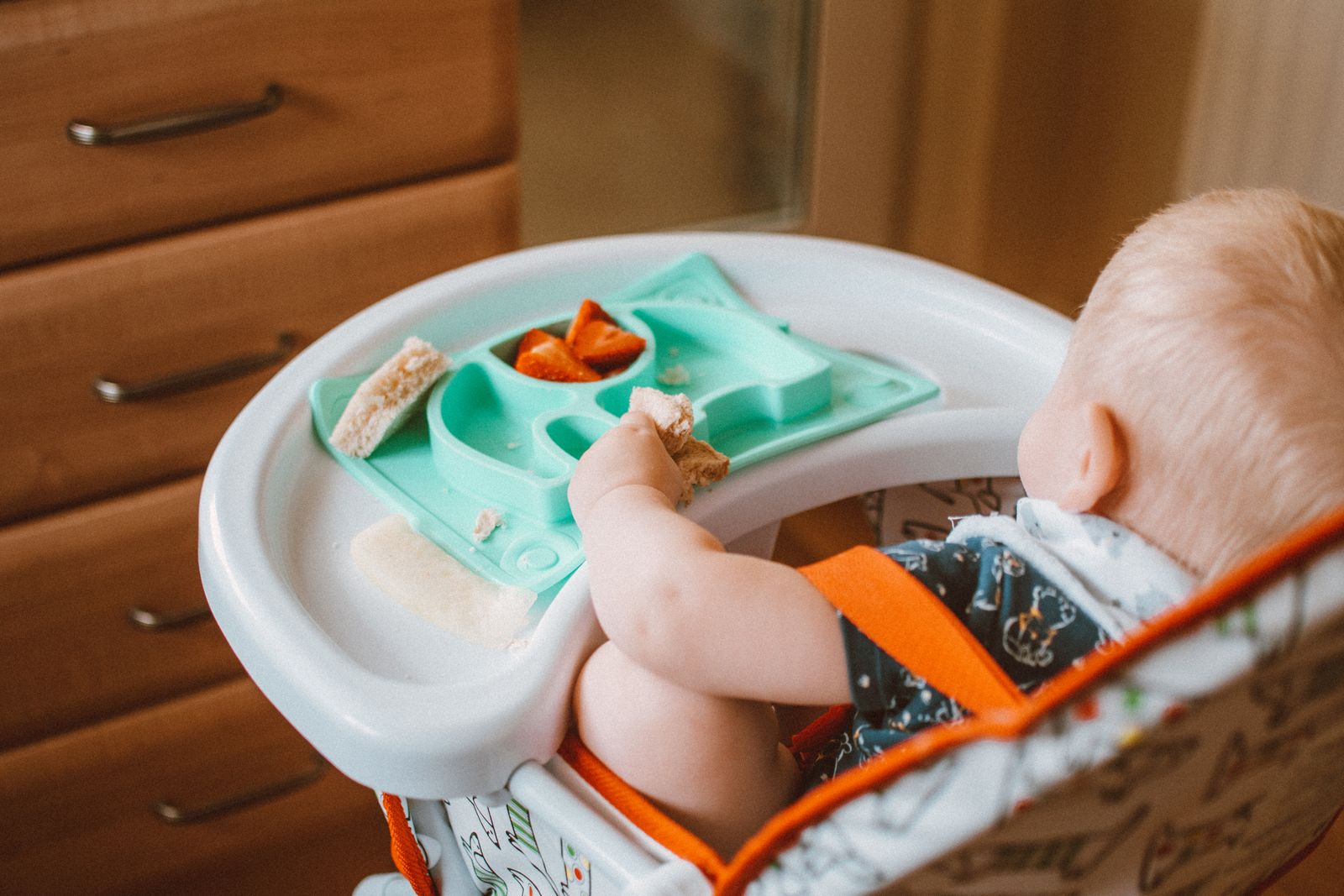
Baby-led weaning skips the spoon and hands your baby soft, graspable pieces of food to feed themselves from the start. Fans love that it builds self-feeding skills early and lets baby set the pace. If you want to try it, our guide to baby-led weaning first foods walks through the first 10 foods to offer and exactly how to cut them.
Here’s the honest truth: no solid research shows one method makes a healthier eater down the road. Plenty of families do both. Spoon-feed oatmeal at breakfast, hand over soft avocado strips at lunch. Do whatever fits your baby and your nerves. You can also switch approaches whenever you want.
Track every feed without the spreadsheet
Latchly times each side, logs pumps, and shows you the patterns. Free to start.
One quick note on gagging. With any method, some gagging is normal as your baby learns to move food back and swallow. Gagging is loud, red-faced, and self-correcting. Choking is silent. Knowing the difference (and taking an infant CPR refresher) takes a lot of the fear out of it.
First Foods: What to Offer and How
Iron is the priority when you start. Your baby’s iron stores from birth start running low around 6 months, and breast milk alone doesn’t fully cover it anymore. So lead with iron-rich foods.
Good early options: iron-fortified baby cereal mixed with breast milk or formula, soft-cooked and pureed meat, mashed beans or lentils, and iron-rich vegetables. Gentle favorites like avocado, banana, sweet potato, and pear are easy, well-loved starters too.
A few simple ground rules make the first weeks easier:
- Start with single-ingredient foods. One food at a time means if something doesn’t sit right, you know the culprit.
- Wait 3 to 5 days between new foods. This gives you a window to watch for any reaction before adding the next thing.
- Offer allergens early, not late. Peanut (as a thinned peanut butter or puff, never whole nuts), egg, and dairy are worth introducing early and often once solids are going. Waiting doesn’t prevent allergies, and early exposure may actually lower the risk. If your baby has severe eczema or a known food allergy in the family, ask your doctor first.
- Keep textures safe. Purees should be smooth at first. Finger foods should squish easily between your fingers. Cut round foods like grapes and cherry tomatoes into quarters, lengthwise.
Go at your baby’s pace. Some days they’ll eat with gusto, some days they’ll clamp their mouth shut. Both are fine.
How Much Milk Does Baby Still Need?
Breast milk or formula is still the main meal until your baby turns 1. There’s a saying worth remembering: food before one is just for fun. Early solids are for learning, not for filling their belly. Milk still delivers most of the calories and nutrition.
So don’t drop milk feeds to make room for solids. Keep your usual feeding schedule and add solids around it. Most babies start with one small solid meal a day, then build up to two meals by 7 to 8 months and three by around 9 months, with milk feeds still woven through the day.
A common worry is that solids will tank your supply or your baby’s milk intake. In the early months of solids, it barely moves the needle. Your baby is tasting, not replacing feeds. If you want to keep tabs on it, watch the same signs you always have that baby is getting enough milk: steady weight gain and plenty of wet diapers.
One thing that does change fast is the diaper. Solids make stools firmer, smellier, and more acidic almost overnight, and a lot of babies get their first real diaper rash in the weeks after food starts. Change a little more often during the switch and it usually passes. Firmer stool can also tip into real straining for some babies, especially with iron-fortified cereal. If that happens, baby constipation covers the gentle fixes that work in a day or two.
And no, starting solids is not the same as weaning. Weaning is a separate, gradual process that comes much later, and it has its own step-by-step approach when you get there. Right now you’re just adding food, not taking milk away.
Foods to Skip for Now
A short list of foods stays off the table in the first year. Most of the time solids are low-drama, but these are worth knowing:
- Honey. It can carry bacteria that cause infant botulism. No honey before age 1, not even a taste.
- Cow’s milk as a drink. Whole milk as a main drink waits until 12 months. Small amounts cooked into food, or yogurt and cheese, are fine.
- Choking hazards. Whole grapes, whole nuts, popcorn, hard raw veggies, chunks of hot dog, sticky globs of nut butter, and hard candy. Modify or skip.
- Added salt and sugar. Babies don’t need either, and their kidneys can’t handle much salt. Keep it simple and unsalted.
- Honey-sweetened or heavily processed snacks. Skip the sugary puffs and toddler junk for now. Real food first.
You don’t have to be perfect. You just have to steer clear of the genuine hazards.
When to Call Your Pediatrician
Most of starting solids is messy, not medical. But a few things are worth a call:
- Your baby truly chokes: silent, unable to cough, cry, or breathe. Learn the difference from gagging, and take an infant CPR class if you can.
- Signs of an allergic reaction: hives, facial or lip swelling, vomiting, or trouble breathing after a food. Breathing trouble is a 911 situation.
- Your baby refuses all food for more than a couple of weeks past 6 months, or seems to be losing interest in eating over time.
- Poor weight gain, blood in the stool, or ongoing diarrhea after introducing a new food.
- You’re introducing allergens and your baby has severe eczema or a strong family history. Ask before you start.
When in doubt, your pediatrician would much rather get the question than have you worry alone.
The Thing I Wish I’d Known
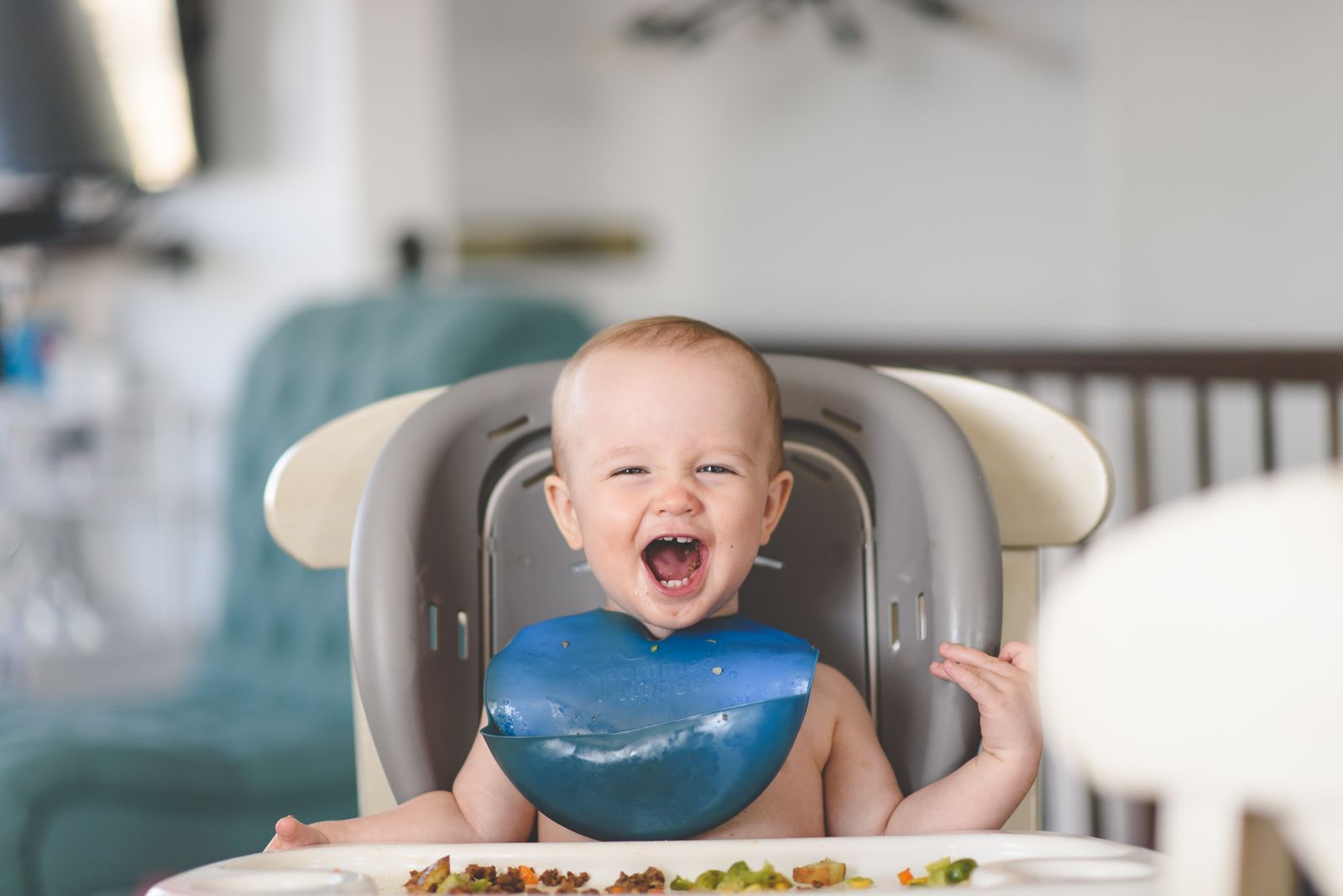
Starting solids felt like a huge milestone I might mess up, and it turned out to be one of the most fun parts of the whole year.
The pressure I put on myself, the perfect first food, the right method, the schedule, none of it mattered as much as I thought. What mattered was showing up at the high chair, offering something, and letting my baby explore. The mess was the point. The scrunched-up faces at a new flavor were the point.
You don’t need a color-coded meal plan or a pantry full of special baby products. You need a baby who’s ready, a soft food to start, and permission to go slow. If a meal falls apart, you try again tomorrow. There’s always another meal.
Give yourself the same grace you’d give a friend. You’ve been feeding this baby since day one, and you already know how to read them. This is just the next chapter of that.
If it helps to see the pattern, log those first meals in Latchly right alongside feeds, so you can spot which foods your baby loved, which ones caused a reaction, and how solids are fitting into your day. One less thing to keep in your head, so you can actually enjoy the mess.
Frequently asked questions
When should I start my baby on solids?
Most babies are ready around 6 months, and no baby should start before 4 months. Age is a starting point, not the whole answer. The real green light is a set of developmental signs: your baby can hold their head steady, sit up with a little support, and reaches for and mouths food. If your baby hits 6 months but isn’t showing those signs yet, it’s fine to wait a week or two.
What are the signs my baby is ready for solids?
Look for five things: steady head and neck control, the ability to sit up with support, loss of the tongue-thrust reflex (they stop automatically pushing food back out), bringing toys and hands to their mouth, and genuine interest in your food (watching you eat, reaching for your plate, opening their mouth). You want most of these together, not just one.
Should I start with purees or baby-led weaning?
Either one is fine, and you can do both. Purees put you in control with a spoon and smooth textures first. Baby-led weaning skips the spoon and lets your baby self-feed soft finger foods from the start. No study shows one is better for your baby long term. Many families spoon-feed some meals and offer finger foods at others. Pick what feels less stressful for you.
What are the best first foods for babies?
Iron is the priority, since a baby’s iron stores start running low around 6 months. Good first foods include iron-fortified baby cereal mixed with breast milk or formula, pureed or soft-cooked meat, mashed beans or lentils, and iron-rich veggies. Single-ingredient foods make it easy to spot a reaction. Soft fruits and vegetables like avocado, banana, sweet potato, and pear are gentle, popular starters too.
How much milk should my baby still get after starting solids?
Breast milk or formula is still the main event until your baby’s first birthday. Solids in the beginning are for practice, taste, and texture, not for filling their belly. Keep offering milk feeds on your usual schedule and add solids around them, usually once a day to start, then working up to two or three meals a day by 8 to 9 months.
When should I call my pediatrician about starting solids?
Call if your baby gags constantly or seems to truly choke (silent, can’t cough or breathe), has a possible allergic reaction (hives, swelling, vomiting, trouble breathing), refuses all food for more than a couple of weeks past 6 months, isn’t gaining weight, or has blood in the stool or ongoing diarrhea after a new food. A little gagging as they learn is normal. The scary stuff is not.