TL;DR
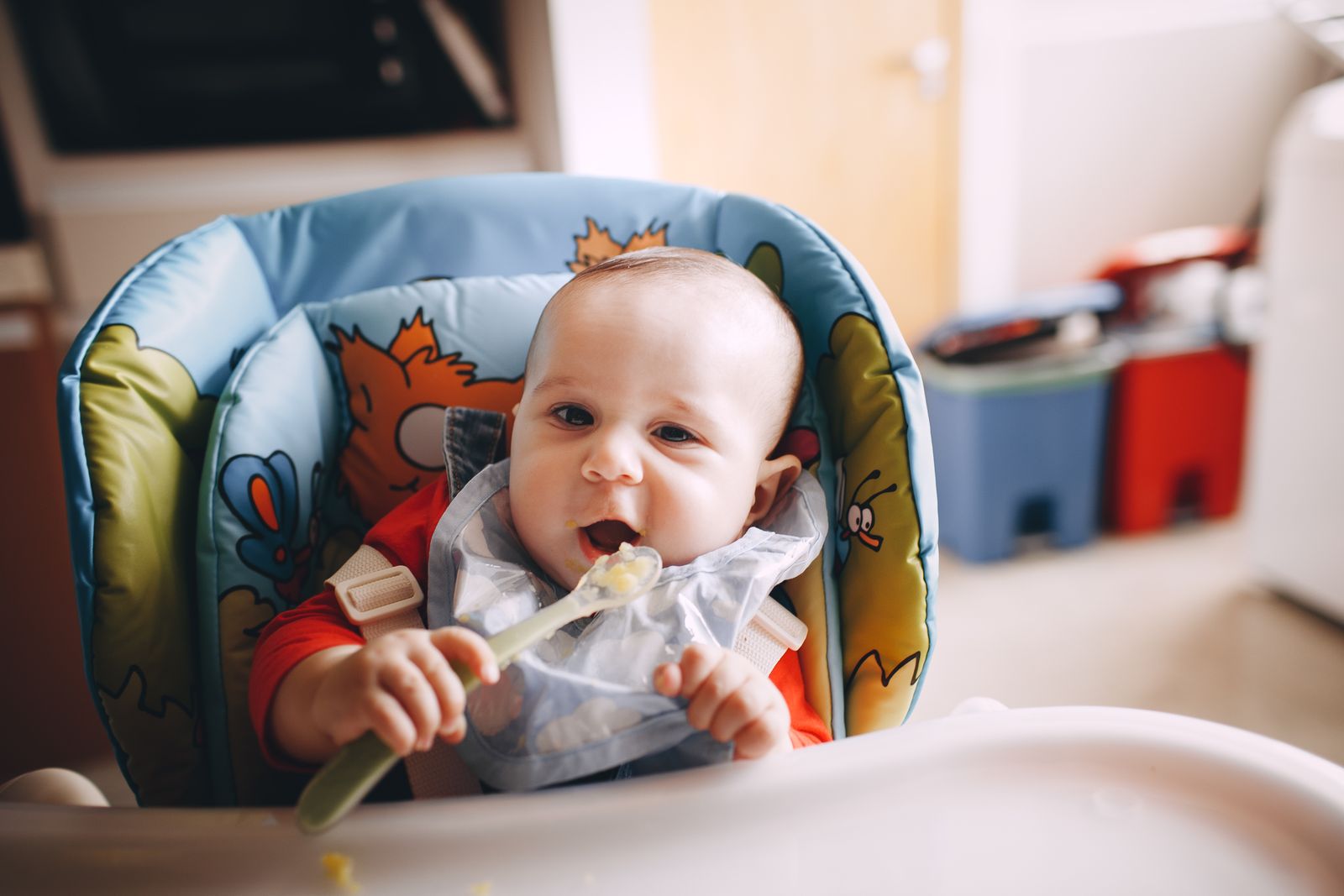
Baby-led weaning first foods are soft, squishable, and bigger than baby's pinky finger so she can grip them in a full fist. Start with iron-rich foods (soft meat strips, mashed beans on toast, avocado, banana with the peel-grip). You don't have to pick BLW or purees. A loaded spoon counts as BLW too.
Your baby is 6 months old and you are about to hand her a spear of avocado for the first time. Your hands are shaking a little because you have watched too many gagging videos and read too many horror-story comment sections.
First, the part that will feel familiar. You are hovering over the high chair, phone camera ready, half-terrified, half-thrilled, holding a piece of banana you sliced 5 times because you are not sure if it is the right size. She reaches for it. You freeze.
You are going to be okay. So is she.
Here is the actual baby-led weaning first-foods playbook for a 6-month-old, plus the two rules that make every other decision easier.
What Is Baby-Led Weaning?
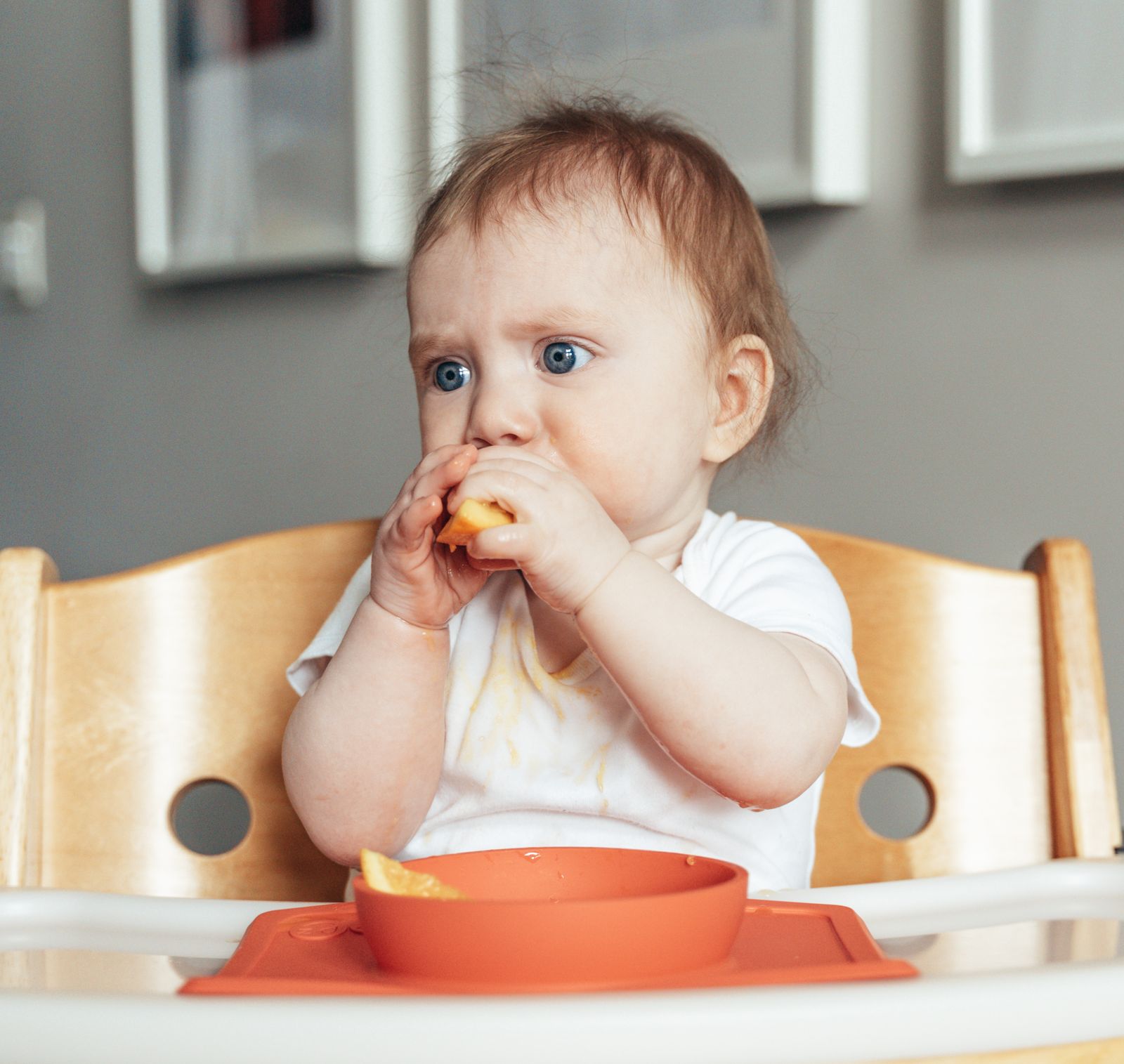
Baby-led weaning (BLW) means offering your 6-month-old soft, gripable finger foods from the very first meal instead of purees on a spoon. Baby feeds herself. You do not scoop food into her mouth. She picks it up, brings it to her lips, and figures out chewing and swallowing at her own pace.
Two important things this does not mean:
- It does not mean weaning off milk. Despite the name. Breast milk or formula stays baby’s main source of nutrition through 12 months. Solids at this stage are practice, exposure, and iron. They are not replacing meals.
- It does not mean skipping purees forever. You can offer a spoonful of yogurt or mashed sweet potato and still be doing baby-led weaning. If baby brings the loaded spoon to her mouth herself, she is leading the feed. That counts.
The core idea is that baby decides how much goes in, how fast, and when she is done. You provide safe food and stay close.
The 2 Rules That Make Every Food Choice Easier
Before you overthink the first-foods list, get these two rules in your head. Everything downstream flows from them.
Rule 1: The finger-squish test. Take the food between your thumb and index finger. Squeeze with light pressure, the same amount you would use to press a button. If it flattens completely, it is soft enough. If it does not, it needs more cooking, more ripening, or should not be offered yet.
Ripe pear, ripe banana, avocado, well-cooked broccoli stem, steamed sweet potato spear, cooked pasta, mashed beans, soft-cooked meat. All pass the squish test. Raw carrot, whole grape, apple wedge, whole nut, tough steak. None of them do.
Rule 2: The pinky-length rule. Cut every finger food longer than baby’s pinky. Two to three inches is a good target. Long enough that baby can grip it in a full fist with a piece sticking out to gnaw. Round shapes, coin-shaped slices, or bite-size chunks are choking hazards at this age because they match the size of baby’s airway. Long strips are safer than small pieces.
Get these two rules in your head and you can walk through any produce aisle deciding what makes the list.
What the 5 Readiness Signs Actually Look Like
Before starting BLW, your baby should show all five of these together. Age alone (turning 6 months) is not enough. If any are missing, wait a week or two and check again.
1. Steady head control. She can hold her head up without wobbling for the duration of a meal.
2. Sits with support. She can sit upright in a high chair with the harness buckled. She does not need to be able to sit unassisted on the floor. Chair support is fine.
3. Lost the tongue-thrust reflex. She does not automatically push food out of her mouth with her tongue. Test with a small taste of thin puree on a spoon. If it comes back out on the tongue every time, wait.
4. Brings objects to mouth. She reaches for toys, spoons, teethers, and brings them to her mouth on purpose.
5. Shows genuine food interest. She watches you eat, reaches for your plate, makes chewing motions. Waking more often at night is a growth spurt, not a solids cue. Growth spurts in babies covers the difference.
If she has all five, you are cleared to start. If you are new to solids in general, starting solids: 5 signs your baby is ready to eat covers the full readiness picture including when to wait past 6 months.
The First 10 Baby-Led Weaning Foods
Start with iron-rich foods. Babies are born with an iron stockpile that starts running low around 6 months, which is why “iron first” is the current AAP recommendation. After iron, add a mix of textures and colors.
1. Soft-cooked meat strips (beef, chicken, turkey)
The single most iron-dense first food. Cut into pinky-length strips along the grain so the fibers shred easily in baby’s mouth. Slow-cook or braise until it falls apart with light pressure. Baby will gnaw and suck the meat rather than chewing it in the beginning. The gnawing releases iron and juice. She swallows a lot less than you think, and that is fine.
2. Mashed beans on a toast strip
Iron-rich, plant-based, and easy to grip. Mash black, pinto, or white beans with a fork until they hold together. Spread on a strip of soft toast (crusts trimmed). Baby holds the toast, sucks and gnaws the bean spread. Some falls off. Most makes it in.
3. Avocado wedges (with peel-grip)
The classic BLW starter. Cut a ripe avocado into half-inch-thick wedges, leaving the bottom inch of peel on for grip. Baby holds the peel end, gnaws the flesh end. When she has done a few feeds and gets the hang, drop the peel.
4. Banana spears (with peel-grip)
Same peel-grip trick. Peel down the top two-thirds of a banana, leaving a peel handle on the bottom. Baby grips the peel, eats the spear. Bananas are slippery, so this handle is what makes them workable. If she squishes the whole thing in her fist and cries, wait a day and try again. She is learning.
5. Steamed broccoli stems
Nature’s perfect toddler-sized food. Steam broccoli florets until a fork slides through the stem. Baby holds the stem, eats the florets. The tree-shape gives her a natural grip. Steam long enough that the stem passes the squish test.
6. Hard-boiled egg yolk
Whole egg is one of the early-allergen priorities. Start with the yolk (softer, less allergenic reaction risk on first exposure) mashed on a toast strip or offered as a wedge. Once she has tolerated yolk 3 times over a week, add whites. Introducing eggs early actually reduces allergy risk vs waiting.
Track every feed without the spreadsheet
Latchly times each side, logs pumps, and shows you the patterns. Free to start.
7. Oatmeal fingers
Iron-fortified infant oatmeal, made thicker. Cook baby oatmeal with less liquid than the package says so it holds together. Spread in a thin layer on parchment, chill 20 minutes, cut into pinky-length strips. Baby holds. Baby eats. Iron-fortified oatmeal is one of the most efficient iron deliveries at this age.
8. Ripe pear or ripe mango
Naturally sweet, easy to squish. A very ripe Bartlett pear or a ripe Ataulfo mango cut into pinky-length spears. Test the squish before offering. Under-ripe fruit is a choking hazard.
9. Well-cooked pasta shapes
Fusilli, penne, or shells. Cook 2 minutes past al dente until very soft. Rinse. Offer plain or with a smear of mashed beans, ricotta, or thinned marinara. The grip-friendly shapes are the winners here. Long spaghetti is workable too if you cut it into 3-inch lengths.
10. Soft toast strips with a thin allergen smear
The allergen-introduction workhorse. Toast a slice of sandwich bread lightly, cut into 4 pinky-length strips. Smear with a paper-thin layer of one allergen at a time: peanut butter thinned with water or milk (never chunky), sesame tahini, mashed egg, dairy yogurt. Serve at the start of a meal so you can watch for reactions in the following 2 hours.

The Allergen Protocol
Common allergens should be introduced early and often, one at a time, with 3 to 5 days between new ones. This is the current AAP + AAAAI-endorsed approach and it applies to families with and without a history of allergies. If your baby has moderate or severe eczema, talk to your pediatrician about the timing first, since eczema raises the odds of a food allergy and can change how you introduce the highest-risk foods.
The 9 top allergens to introduce in the first 2 to 3 months of solids:
- Peanut (as thinned peanut butter, never whole peanuts or chunky)
- Egg (yolk first, then white)
- Cow’s milk (as yogurt or cheese; not as a drink until 12 months)
- Soy (as tofu or edamame mash)
- Wheat (as toast or well-cooked pasta)
- Tree nuts (as nut butters or ground into other foods, never whole)
- Fish (as flaked cooked salmon or white fish)
- Shellfish (as small pieces of shrimp; skip if there is a strong family history until you have talked to your pediatrician)
- Sesame (as tahini smeared on toast)
Serve the new allergen at the start of a meal, in your own home, when both parents are around if possible. Wait 3 to 5 days before the next new allergen. Once tolerated 3 times, add it into rotation and keep it there. Regular re-exposure is what protects the tolerance you just built.
Signs of a real allergic reaction: hives, swelling of the lips or eyes, vomiting within 2 hours, breathing changes. Call 911 for breathing changes or swelling of the tongue. Mild redness around the mouth from citrus or acidic foods is not an allergic reaction. It is skin irritation and it resolves on its own.
Gagging vs Choking
This is the fear that keeps parents from starting BLW. Understanding the difference is what makes the whole method workable.
Gagging is loud, red, and short. Baby’s face turns red, she coughs, she may cry, she pushes the food forward with her tongue. The gag reflex is protective. It is her body catching a piece of food that got too far back before it could go down the wrong way. Gagging is normal, expected, and mostly harmless. It happens often in the first few weeks of solids and gets less frequent as she learns.
Choking is silent. No sound. No cough. Face turns blue, not red. Eyes wide and panicked. Nothing coming out. This is a medical emergency.
The choking-risk foods to skip in the first year: whole grapes and cherry tomatoes (halve or quarter them), whole nuts, popcorn, hard raw vegetables (carrots, apples), hot dogs or sausage in coin shapes (split lengthwise and quarter if you must offer), chunks of cheese, hard candy, marshmallows.
Every family should take an infant CPR class before starting solids. Most hospitals offer them free or under $50. Take one. You will not need it and you will be glad you did.
The Safety Setup
This part is not negotiable and it makes the difference between calm meals and scary ones.
- Full upright. Baby is 90 degrees, not reclined. If your high chair reclines, adjust it fully upright. Reclined feeding + BLW is a choking risk.
- Buckled harness. The chest and hip harness stays on for the entire meal. Even if you are just doing a quick banana. Slipping down means the airway angle changes and gagging becomes riskier.
- Feet supported. A footrest or box under baby’s feet stabilizes her posture. If her feet dangle, her whole trunk works harder and she gets tired mid-meal.
- Arm’s reach for every bite. No leaving the room. No texting mid-meal. You watch. Every bite.
- Nothing in the mouth when standing up. Before you unbuckle at the end, sweep her mouth with your finger to check for parked food. Toddlers store bites in their cheeks and choke on the walk to the couch.
Foods to Skip in the First Year
Not every “safe for BLW” list is actually safe. These are the ones to hold on:
- Honey. Botulism risk under 12 months. This includes honey in cooked foods. No exceptions.
- Cow’s milk as a drink. Not before 12 months. Yogurt and cheese are fine (dairy in food form).
- Whole grapes, cherry tomatoes, hot dog coins. All the round shapes that match the size of baby’s airway. Halve, quarter, and serve.
- Whole nuts, popcorn, hard candy. Choking hazards.
- Salt-added foods. Baby’s kidneys can not handle it. Season baby’s portion before adding salt to the family meal.
- Added sugar. Not for health reasons at this age (calories are fine), but because early sugar exposure sets stronger preferences. Delay it if you can.
- Rice cereal in a bottle. No longer recommended. It thickens milk in a way that increases spit-up choking risk and does not help sleep despite what the internet promises.
How Much Milk Baby Still Needs
Around 6 months, baby is drinking about 24 to 32 ounces of breast milk or formula per day. That does not drop when you start solids. Milk stays the main event through the first year.
- Nurse or bottle first, then offer solids. In the beginning, solids are practice. She will eat 3 bites at first. That is a full meal for a beginner.
- By 9 months, you can start swapping. Some feeds shift toward more solids and less milk. But milk is still the calorie base.
- By 12 months, milk drops to about 16 to 20 ounces a day as solids become the main calorie source.
If you are keeping the milk supply strong while adding solids, our feeding schedule by age covers how many total feeds work at each stage. And if you are pumping too, the pumping schedule and freezer stash guide has the sessions that hold supply as bottle feeds may start to drop.
When to Call Your Pediatrician
Most first-foods concerns are normal learning. A few are not. Call if:
- Baby has a real allergic reaction (hives, swelling, vomiting, breathing changes)
- Baby is not putting on weight despite 3 to 4 weeks of solid meals
- Baby is refusing all foods and losing interest in milk too
- You see blood in stool after a new food
- Baby has persistent green mucousy stools for more than a week after starting solids
You should also check in if baby is a preemie. Adjusted age (weeks born early subtracted from calendar age) is what determines solids readiness, not calendar age.
The Thing I Wish I’d Known

The first meal of solids feels like a milestone. It is not.
The 500th one is. That is when your baby’s mouth has learned how to chew, when her hand has learned how to grip, when her gut has met three dozen flavors. The first meal is exposure. All the “did she eat much?” anxiety is misplaced because she is not supposed to eat much yet.
Feed her milk when she is hungry. Sit her upright at meals when she is not. Put food on the tray. Watch her explore. Take a photo. Do not force a single bite.
The most important thing you can do in the first month of solids is stay calm when she gags. Your face is the one she checks. If you flinch, she registers that gagging is scary. If you stay still and let the gag reflex do its job, she registers that eating is safe.
You are teaching her that food is fun. That is the whole assignment.
Frequently asked questions
What is baby-led weaning?
Baby-led weaning skips purees and offers soft finger foods from the start of solids around 6 months. Baby self-feeds. It doesn’t mean stopping breast milk or formula. Milk stays the main meal through 12 months.
What are the best first foods for baby-led weaning at 6 months?
Iron-rich foods first: soft-cooked strips of beef, chicken, or turkey; mashed beans spread on toast strips; hard-boiled egg yolk; oatmeal fingers. Then add avocado wedges, banana spears with a peel-grip, steamed broccoli stems, ripe pear, and well-cooked pasta shapes.
How do I know if a food is safe for baby-led weaning?
The finger-squish test. If you can flatten the food completely between your thumb and index finger with light pressure, it’s soft enough. If you can’t, it needs more cooking. Size matters too. Cut everything longer than baby’s pinky finger so she can grip it in a full fist.
Do I have to choose baby-led weaning or purees?
No. You can mix them. A loaded spoon (you preload it, baby brings it to her mouth) is still baby-led. Purees on a soft toast strip is baby-led. Most families end up doing both, and both approaches lead to the same 12-month feeding outcomes.
What about allergens?
Introduce common allergens early, one at a time, and often. Eggs, peanut, dairy, soy, wheat, fish, tree nuts, sesame. Wait 3 to 5 days between new allergens so you can spot a reaction. There is no benefit to waiting past 6 months, and delaying may actually raise allergy risk.
What if my baby gags?
Gagging is loud, protective, and normal. It’s the reflex that keeps food from going down the wrong way. Choking is silent. Gagging just means baby is learning to move food around her mouth. Stay in arm’s reach for every bite, keep her upright with a buckled harness, and let the gag reflex do its job.