
TL;DR
The 7 best hands-free breast pumps for breastfed babies, ranked. Top pick for in-bra discretion is the Elvie Stride 2. Top pick to protect your supply at work is the Spectra S1 Plus with hands-free cups. Skip any pump under $100 if you're exclusively pumping. Buy ONE first and test for a week before stocking up.
It’s 11pm. You go back to work in 9 days. The pump your insurance sent you came in a box the size of a microwave. There’s no way you’re lugging that to the office, plus a laptop, plus a pump bag. You’re scrolling Amazon and every wearable pump has 5 stars and 1 star reviews about supply drops. Your shoulders are at your ears.
First, the part that will feel familiar. Most hands-free pumps did used to tank your supply. The first generation of wearables (2018-2021) had weak motors, bad flange fits, and a lot of moms hit week 2 with output cut in half. The market caught up. The pumps in this guide use hospital-grade suction (270+ mmHg) and ship with multiple flange sizes. They are real working pumps, not gadgets. (The other half of supply protection on return-to-work day is technique on the bottle side. Our paced bottle feeding step-by-step walks the 7 steps daycare needs to follow so the bottle does not train baby out of the latch.)
Latchly is a participant in the Amazon Associates Program. We earn a small commission when you buy through our links, at no extra cost to you. We only recommend products we’d give to a friend.
What makes a hands-free pump worth buying
Four things matter. Skip any pump that misses one.
Hospital-grade suction (270+ mmHg). This is the single most predictive number. Pumps under 240 mmHg will leave milk in your breast and your supply will drift down. The good news: every pump in this guide hits 270 mmHg or higher.
Flange sizes included or available (15-30mm). A flange that’s even 2mm too big causes friction, pain, and lower output. Most hands-free pumps now ship with 4-5 sizes in the box. If you have to buy flange inserts separately on top of a $300 pump, that’s a yellow flag.
Real battery life (90+ minutes). A pump that dies after 2 sessions on a charge is a pump you can’t trust at work. Look for at least 90 minutes of expression mode, ideally 3 hours.
Closed-system hygiene. Milk and motor must not touch. Open-system pumps grow mold inside the tubing and you can’t clean it. Every pump in this guide is closed-system.

The 7 best hands-free breast pumps, compared
| Pump | Best For | Price Tier | Suction (mmHg) |
|---|---|---|---|
| Elvie Stride 2 | Daytime in-bra discretion | $$$ | 280 |
| Willow 360 | Pumping while lying down | $$$ | 245 |
| Momcozy M5 | Budget hands-free | $ | 285 |
| Baby Buddha 2.0 | Hybrid (wearable + workhorse) | $$ | 300+ |
| Pumpables Genie Advanced | Low supply, flange-fit struggles | $$ | 300 |
| Spectra S1 Plus | Exclusive pumping, supply-building | $$ | 270 |
| Medela Freestyle Hands-Free | Medela ecosystem loyalists | $$$ | 280 |
Price tiers: $ = under $200, $$ = $200-300, $$$ = $300+
1. Elvie Stride 2 (Hospital-Grade In-Bra Pump)
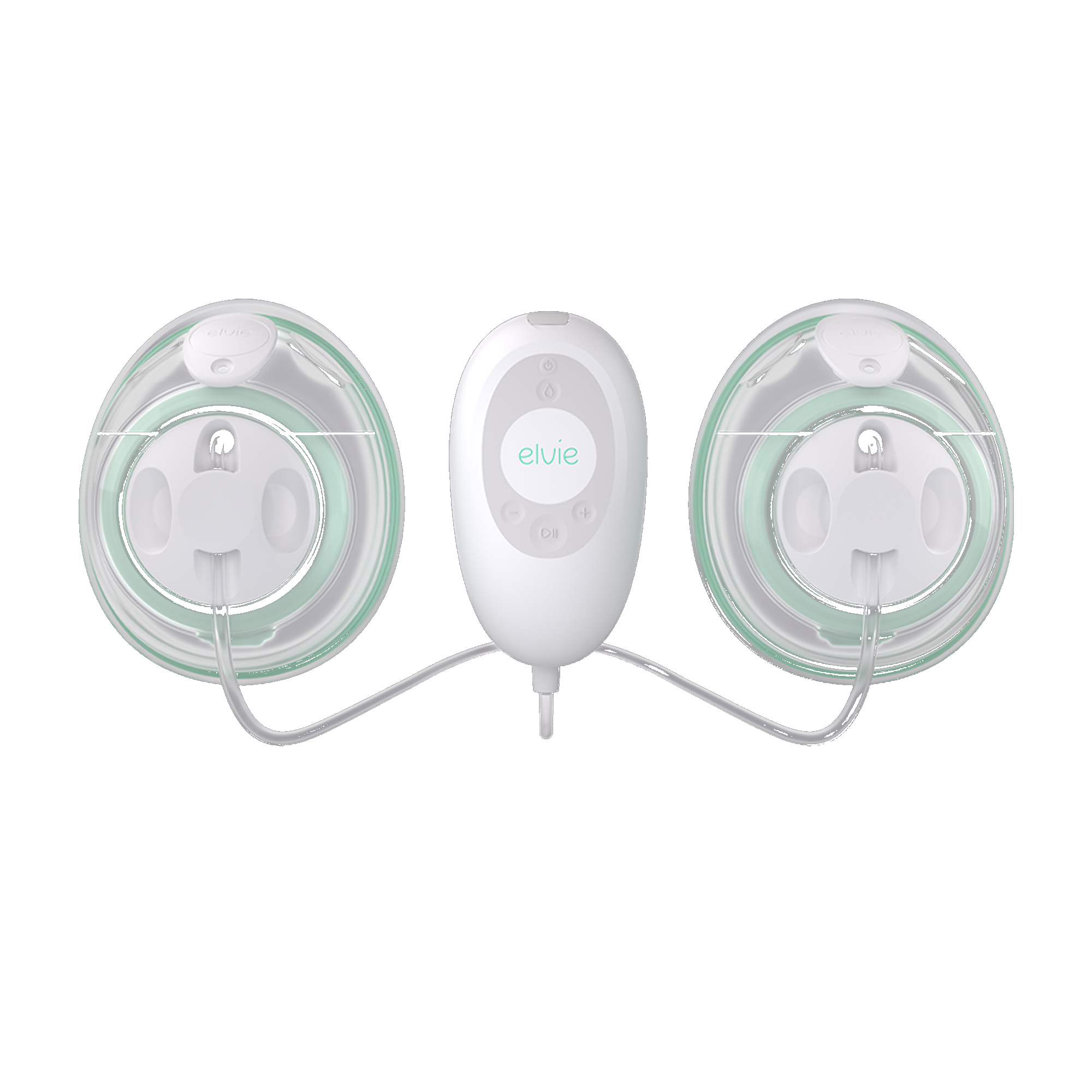
The most discreet pick that doesn’t sacrifice suction. Elvie Stride 2 is the upgrade pick for moms who want a true in-bra wearable with the same suction strength as a hospital pump. The motor hub is separate from the cups (clipped to a waistband), which keeps the cups light and cool against your skin and lets you swap inserts without taking the bra off.
Best for: Working moms who want to pump invisibly under work clothes, in conference calls, or at a desk without anyone hearing the motor.
Skip if: Your budget is under $250 or you need a pump that runs without any visible cord at all (the cord between cup and hub is short but visible if your shirt rides up).
Price tier: $$$. Comes with 5 silicone insert sizes (15, 17, 19, 21, 24mm). Battery: 2 hours.
2. Willow 360 (100% Leak-Proof at Any Angle)
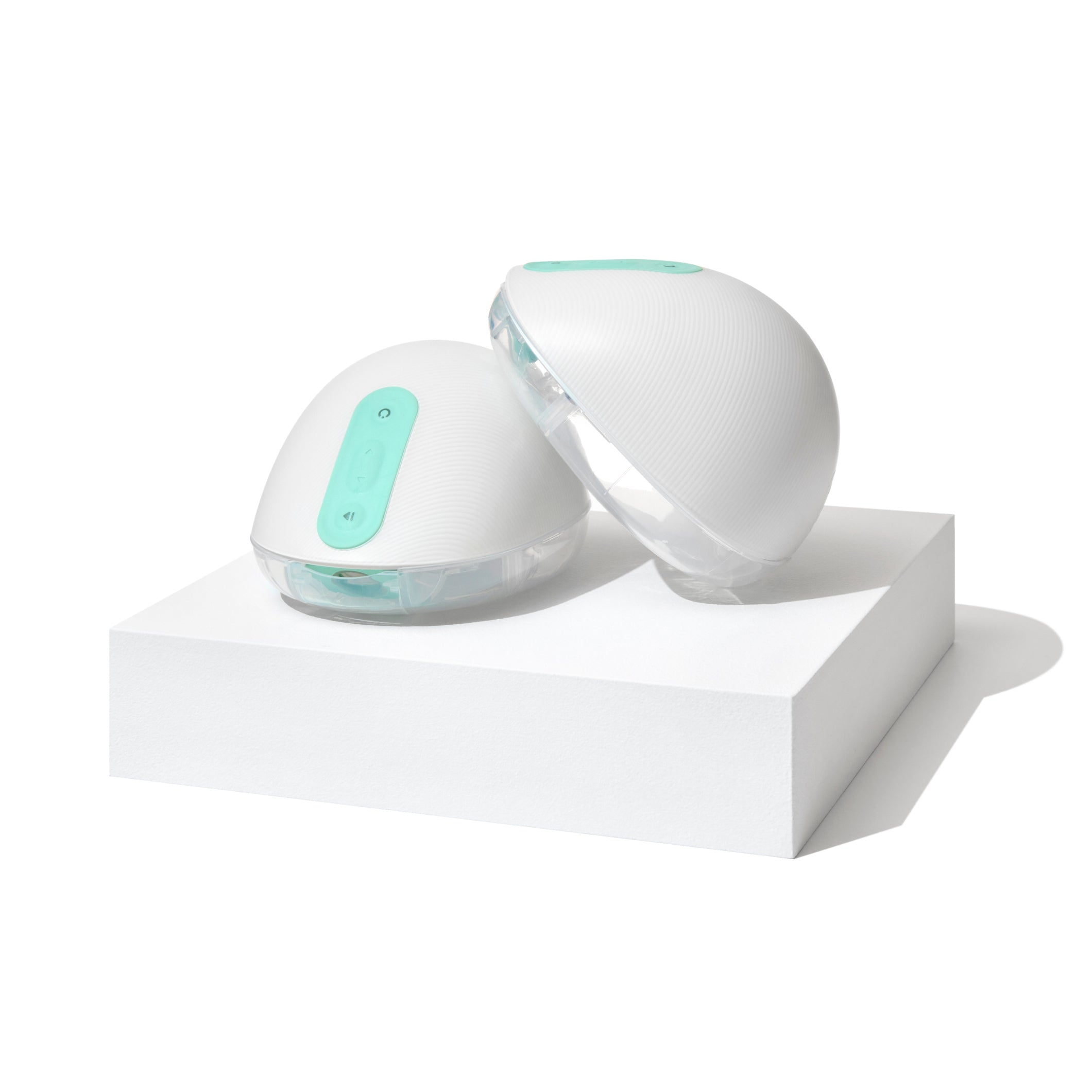
The only pump you can lie down with. Willow 360 is the wearable pump that uses spill-proof milk bags inside the cups, which means you can bend over, lay down on your side, even sleep with it on without a single drop leaking. No other pump can claim that. The trade-off is the lowest suction in this list at 245 mmHg, plus the proprietary milk bags add $0.40-0.60 per session in disposables.
Best for: Moms who want to pump during dream feeds, while side-lying with the baby, or in any position other than upright. Also great if you have leak anxiety from the office cup nightmare scenario.
Skip if: You need the strongest possible suction, you’re a high-output pumper (8+ oz a session pushes the bag limit), or you don’t want a recurring cost on top of the pump.
Price tier: $$$. Comes with 21mm and 24mm flanges. Battery: 5 sessions per charge.
3. Momcozy M5 (The Budget Hands-Free Pick)
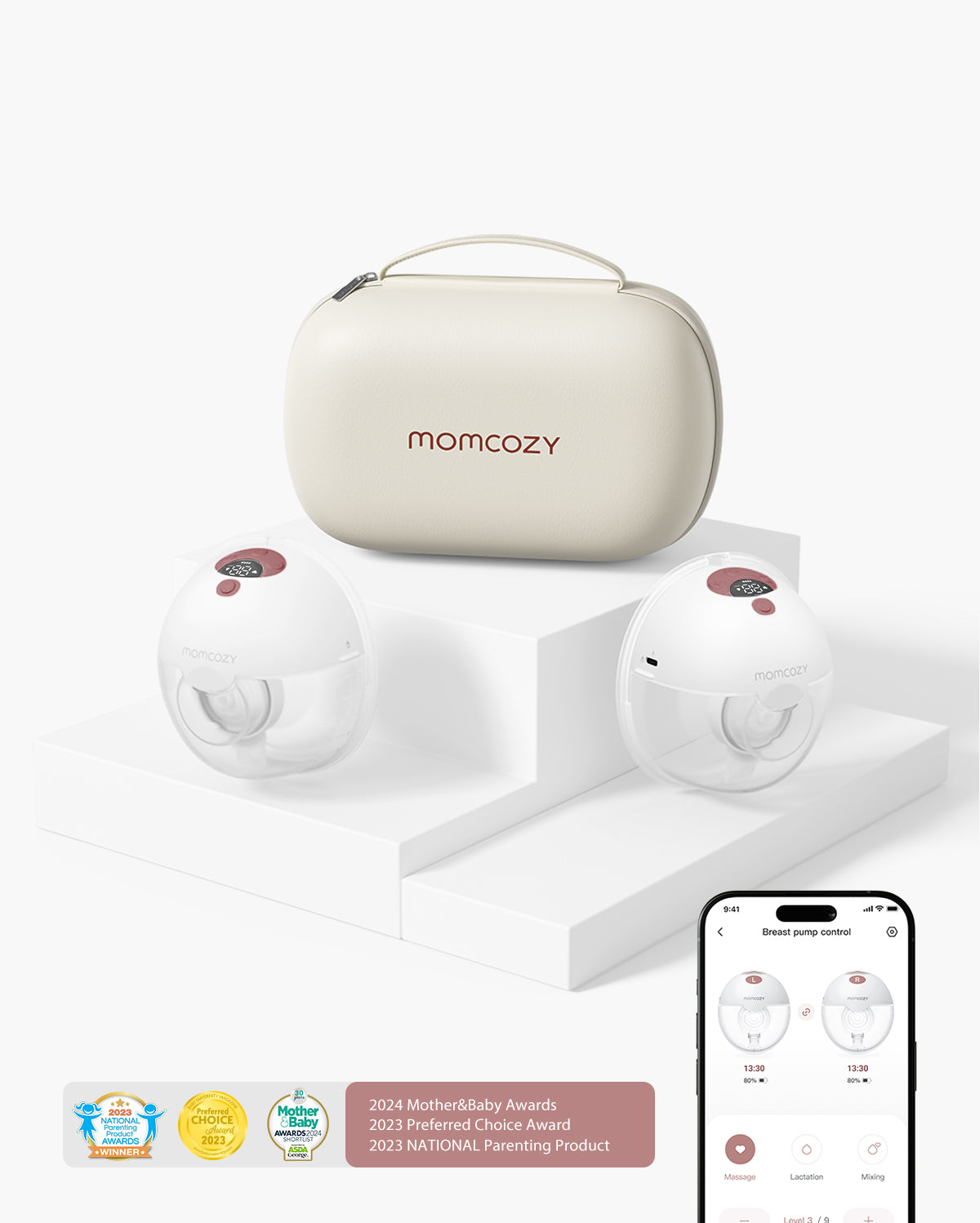
The cheapest pump that still hits hospital-grade suction. The M5 is what made wearable pumps actually work for budget-conscious moms. At under $180, it hits 285 mmHg suction, which is stronger than the Spectra S1 Plus and competitive with the Elvie Stride 2 at half the price. The app is decent. Battery is 3 hours. The motor noise is louder than Elvie or Medela, but it’s still under 50 dB.
Best for: First-time pumpers who don’t want to spend $400 on a pump before they know how often they’ll use it. Also great as a backup pump for moms who already own an insurance pump.
Skip if: You’re exclusively pumping and your supply is fragile (the motor isn’t quite hospital-grade and degrades faster than premium pumps under heavy daily use).
Price tier: $. Comes with 17, 19, 21, 24, 27mm flanges. Battery: 3 hours.
4. Baby Buddha 2.0 (Portable Powerhouse for Low Supply)
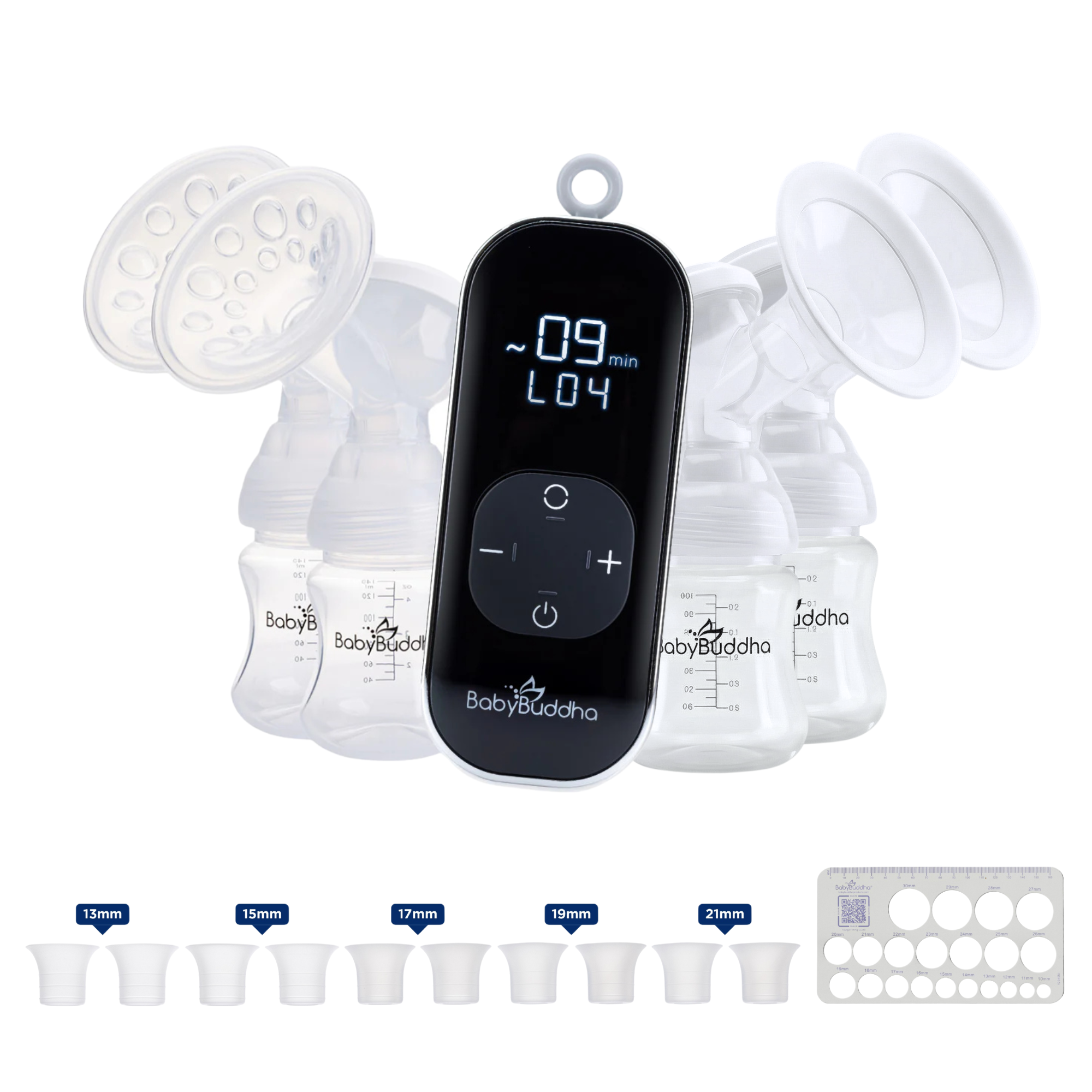
The hybrid pick: hospital-grade in your pocket. Baby Buddha 2.0 isn’t strictly a wearable; it’s a tiny motor (about the size of a phone) that you clip to a waistband, with tubing that runs to either traditional flanges OR wearable collection cups. This is the closest thing to a hospital-grade pump you can carry in a tote. Suction tops 300 mmHg in expression mode. The downside: the cord between motor and cups is more visible than a true in-bra wearable.
Best for: Low-supply pumpers, exclusive pumpers, NICU moms, anyone who needs the strongest possible suction in a portable form factor.
Skip if: You want the cleanest in-bra silhouette under a fitted work shirt (Elvie Stride 2 wins that head-to-head).
Price tier: $$. Ships with five flange sizes (13, 15, 17, 19, 21mm). Battery: 3-4 hours.
Track every feed without the spreadsheet
Latchly times each side, logs pumps, and shows you the patterns. Free to start.
5. Pumpables Genie Advanced (Best for Flange-Fit Struggles)
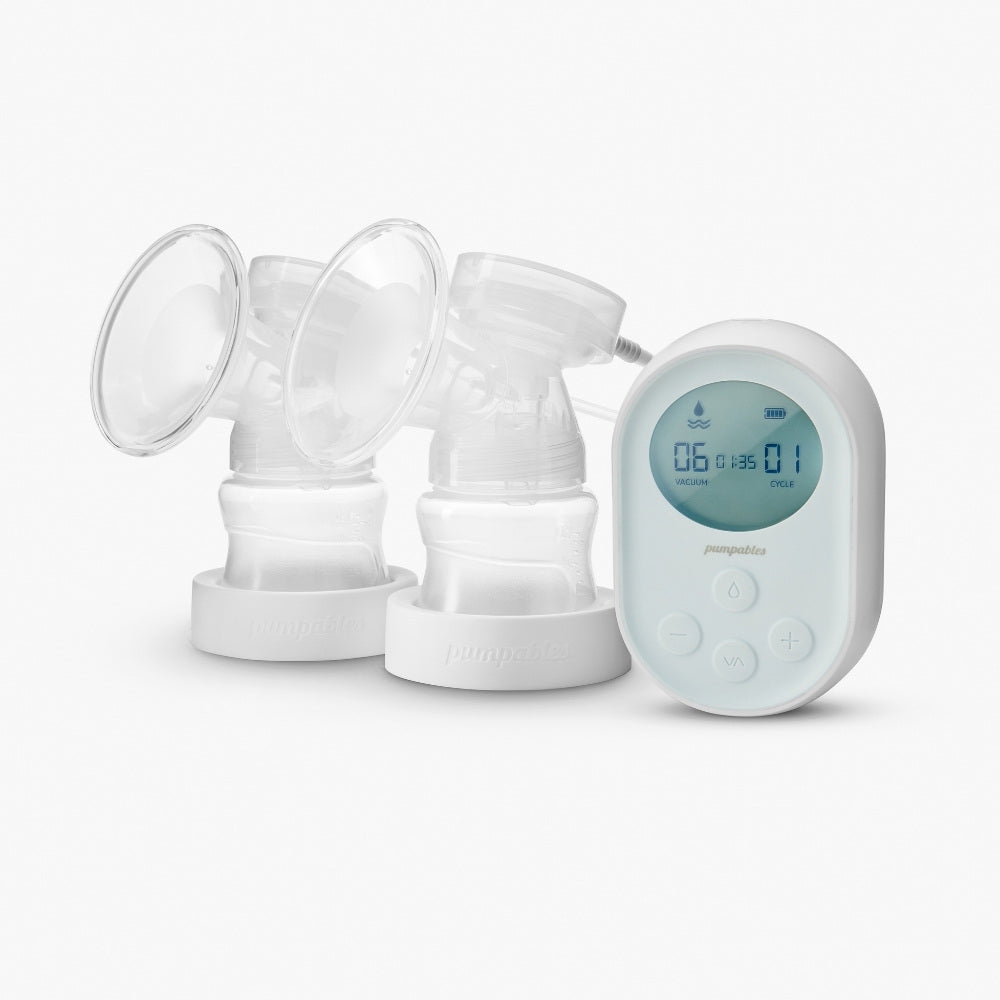
The pump for moms who can’t find a flange that fits. Pumpables built the Genie Advanced around customizable fit. The pump is compatible with Pumpables flanges (15, 17, 21, 24, 27mm), Maymom flanges, AND Spectra-style flanges, which means you can mix and match brands until you find the right fit. They also offer a free virtual fitting service. Suction is hospital-grade at 300 mmHg. The pump itself is small and portable but uses external tubing, so it’s a hybrid wearable rather than fully in-bra.
Best for: Moms with non-standard nipple sizes, moms who’ve already tried 2-3 pumps and had pain or low output, and anyone who values fit support over form factor.
Skip if: A clean in-bra silhouette is your priority (use Elvie Stride 2 instead).
Price tier: $$. Free virtual fitting service. Battery: 4 hours.
6. Spectra S1 Plus (The Workhorse for Exclusive Pumpers)
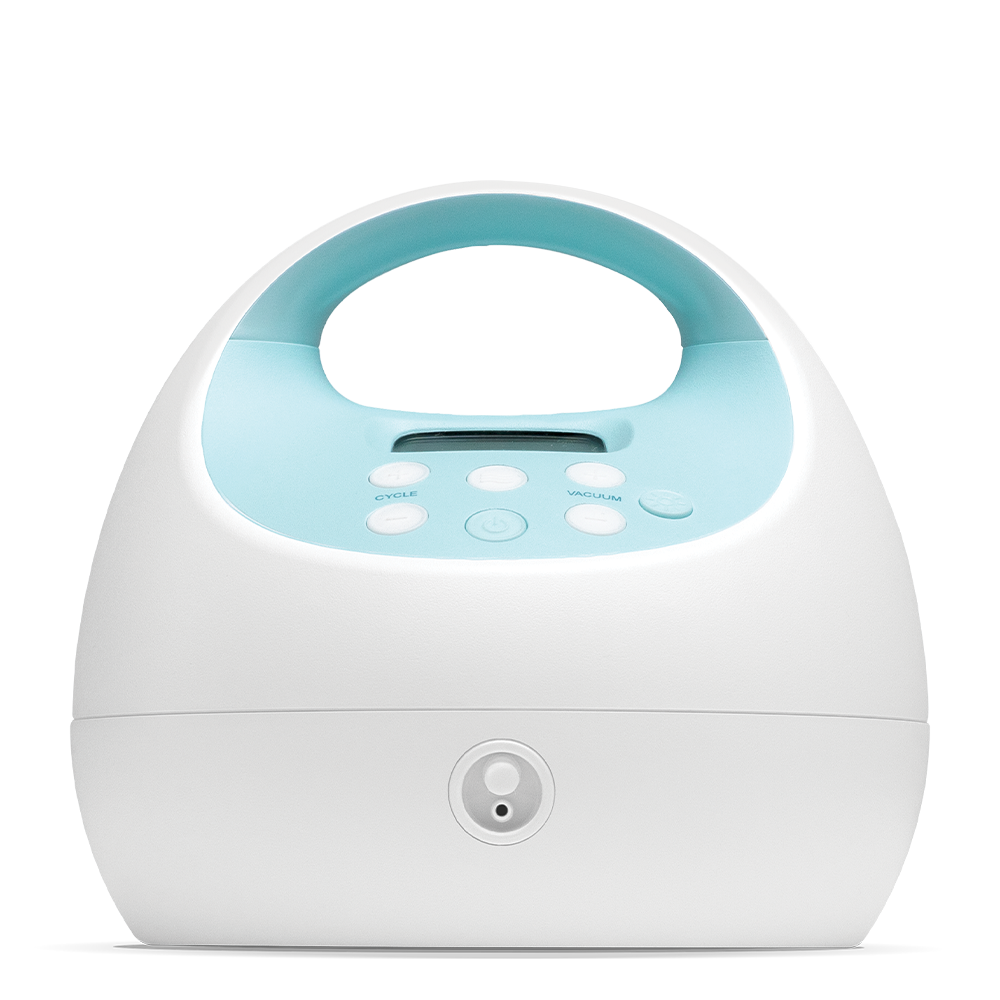
The pump that built the freezer stashes of an entire generation. The Spectra S1 Plus isn’t strictly a hands-free pump, but paired with Spectra’s hands-free collection cups (sold separately, around $80) it becomes the most reliable hospital-grade pump on this list. The motor is whisper-quiet (under 50 dB), the closed system is bulletproof, and the rechargeable battery gives you 3 hours away from a wall. Most insurance plans cover this one with no upgrade fee.
Best for: Exclusive pumpers, NICU moms building a freezer stash, anyone who values motor reliability over portability, anyone whose insurance covers it.
Skip if: You need to pump invisibly at a coworker’s desk or in a conference room with no privacy (the motor is small but it’s not in-bra).
Price tier: $$. Comes with 24mm and 28mm flanges. Battery: 3 hours.
7. Medela Freestyle Hands-Free (For Medela Loyalists)
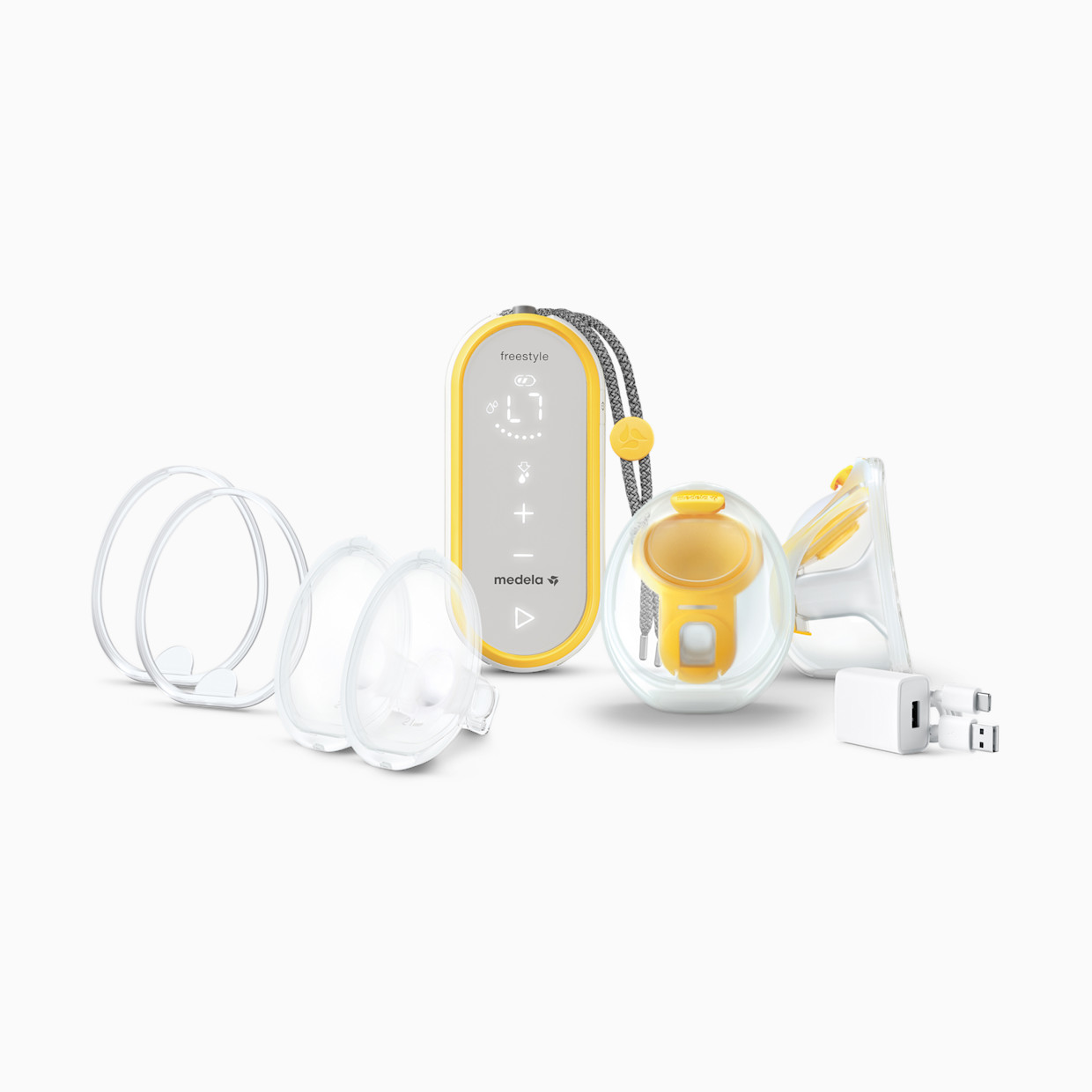
The pick if you already own Medela. Medela’s hands-free entry uses a small separate motor (worn on a lanyard or clipped) and the lightest in-bra cups on the market at 2.7 oz each. If you already own Medela bottles, valves, or storage bags from a previous pump, this one slots into that ecosystem with no parts to re-buy. Suction is solid at 280 mmHg. The 5 oz cup capacity is tighter than Elvie’s 7 oz, which is a real trade-off if you’re a high-output morning pumper.
Best for: Moms who already use Medela parts, moms who want the absolute lightest cup against their chest, and moms who travel a lot (Medela has the best international parts availability).
Skip if: Cup capacity matters (you produce 5+ oz per session per side) or you want the cheapest path to hospital-grade suction.
Price tier: $$$. Comes with 21 and 24mm breast shields, plus 17, 19, 24mm inserts. Battery: 6 sessions.
Pumps to skip
A few wearable pumps still on Amazon that we don’t recommend, even at a discount:
- Anything under $80. The motor won’t hit hospital-grade suction. Your output will drop in week 2.
- First-generation wearables (2018-2021). Even on resale, the motors are aging out. If you see a Willow Gen 2 or original Elvie Pump for cheap, pass.
- No-name brands with under 100 reviews. Pumps need a 12-month warranty and a real customer service line. No-name brands disappear in 6 months.
- Open-system pumps. Milk shouldn’t touch the motor or tubing. If the spec sheet doesn’t say “closed system,” walk away.
How to pick one pump
Decision tree, easiest path:
- Insurance covers it? Start with the Spectra S1 Plus (covered by most plans, no upgrade fee). Add the hands-free cups separately.
- Insurance doesn’t help and budget is tight? Momcozy M5. Strongest suction under $200.
- You want true in-bra discretion? Elvie Stride 2.
- You want to pump while lying down or sleeping? Willow 360.
- You’ve tried other pumps and had fit pain? Pumpables Genie Advanced (use their virtual fitting service first).
- You’re exclusively pumping or low-supply? Baby Buddha 2.0 or Spectra S1 Plus. (For the full session-count schedule, see our exclusive pumping schedule by age — it covers session counts, session lengths, and total daily minutes for every age band from newborn through 12 months, plus how to drop a pump without tanking supply.)
If you’re returning to work in less than 6 weeks, also read our full guide to pumping at work for the calendar blocks, HR email script, and pump bag list to bring on day 1.
Test ONE pump before stocking up
This is the single most-skipped step. Buy one pump first. Use it for 5 days. Watch your output, your comfort, your skin. Do not buy backup parts, extra flanges, or a second-pump bundle until you’ve confirmed the pump works for your body.
What we’ve seen: about 1 in 4 moms swap their first pump pick after week 1. Pump A might cause friction. Pump B might not match your nipple size. Pump C might leak in your work bag. Find out which one before your freezer stash depends on it.
If your pump fails the 5-day test, return it (most retailers accept unused-cup returns within 30 days) and try the next on your list. The decision tree above is in order of “most-loved by working moms,” so start at the top.

When to call your IBCLC or pediatrician
Some pump issues need a person, not a different pump. Call if you see any of these in week 1:
- Output drops by more than 30% across 3 consecutive days
- Nipple cracking, blistering, or bleeding (always a flange-fit issue, not a “tough nipples” issue)
- Pain that’s a 4 or higher on a 1-10 scale during pumping
- A clogged duct that doesn’t clear after one pump session and a warm shower (clogs that linger 24+ hours can become mastitis)
- Your supply doesn’t recover within 5-7 days of switching to a new pump
For supply that drops the first week back at work, also see our full guide to increasing milk supply before you change pumps. Most week-1 drops are pump-frequency issues, not pump-strength issues.
The thing I wish I’d known
The pump you pick matters less than the schedule you keep. A $400 pump used twice a day will lose to a $150 pump used four times a day. The wearable design is supposed to make the schedule easier, not the schedule shorter.
Pick one pump from this list. Test it for a week. If it works, build a routine around it and don’t second-guess it for 30 days. If it doesn’t, swap to the next one. Most moms find a pump that works on attempt 1 or 2.
The goal isn’t the pump. The goal is the milk in the freezer and the baby on the breast. The pump is just the tool that gets you there. Trust your body, watch your output, and don’t let Amazon reviews convince you that a pump that works for you is broken.
You’ve got this.
Sources: WHO and ACOG breastfeeding guidance; AAP Section on Breastfeeding clinical recommendations on milk supply; manufacturer-published suction strength specs (Elvie, Willow, Momcozy, Baby Buddha, Pumpables, Spectra Baby USA, Medela); IBCLC clinical experience with flange sizing.
Frequently asked questions
Are hands-free breast pumps as good as a regular pump?
The good ones are. Suction strength is what matters, not the form factor. The Spectra S1 Plus, Elvie Stride 2, Baby Buddha 2.0, and Pumpables Genie Advanced all hit hospital-grade suction (270-300 mmHg). Cheap wearable pumps under $100 often max out at 200 mmHg, which is the real reason moms see supply drops, not the wearable design itself.
Which hands-free breast pump has the strongest suction?
The Pumpables Genie Advanced and Baby Buddha 2.0 lead at 300+ mmHg. Momcozy M5 hits 285 mmHg. Elvie Stride 2 and Medela Freestyle Hands-Free are both around 280 mmHg. Willow 360 is the lowest of the premium pumps at 245 mmHg, traded for its full 360-degree leak-proof design.
Will a hands-free pump cause my supply to drop?
Not if you pick one with hospital-grade suction (270+ mmHg) and a flange that fits. Most supply drops from new wearable pumps come from a too-big flange or a too-cheap motor, not the wearable design. Test ONE pump for 7 days before swapping out your full pump routine, and watch your output, not your peace of mind.
Can I pump while driving with a hands-free breast pump?
You can with the Willow 360 because it’s 100% leak-proof at any angle, including bent forward in a car seat. The Elvie Stride 2 and Medela Freestyle leak if you bend forward more than about 45 degrees. Always pull over to set up. Never drive while attaching or detaching cups.
How long do the batteries last on hands-free breast pumps?
Most last 2-3 hours of pumping per charge, which is 4-6 sessions. The Baby Buddha 2.0 and Pumpables Genie Advanced lead at 4 hours. Charge fully overnight and bring a USB-C cable to work, just in case. Battery degrades after 12-18 months of daily use, which is one of the reasons we recommend insurance-covered pumps over personal-pay.
Are wearable breast pumps covered by insurance?
Some are, through the ACA insurance benefit. The Spectra S1 Plus, Medela Freestyle Hands-Free, Momcozy M5, and Pumpables Genie Advanced are commonly insurance-covered. Elvie Stride 2 and Willow 360 usually require an upgrade copay (typically $100-200 on top of the covered base pump). Check with your provider through Aeroflow, Babylist, or your insurance directly.