
TL;DR
Biting almost never happens while your baby is actively nursing, because the tongue covers the bottom teeth. It happens at the start (impatient for letdown) or the very end (milk slowed, baby bored). Stay calm, break the latch with your finger, set baby down for a second, and watch the pattern. Biting is a phase tied to teething, not a sign your baby is ready to wean.
It happens fast. One second your baby is nursing like always, the next there’s a sharp pinch and you’ve yelped loud enough to scare you both. Now the tiny culprit is looking up at you, maybe grinning, maybe crying because you startled them.
And the thought lands hard: are we done? Did I just lose breastfeeding to a couple of new teeth?
Here’s what I want you to know before the panic sets in. Biting is a phase, not the end. It’s incredibly common once teething starts, it has clear and fixable causes, and almost no baby weans because of it. You can stop it.
First, the part that will feel familiar. You’ve started bracing at every feed, half waiting for the next bite, and the dread is taking the calm out of nursing. That’s the worst part, more than the actual pinch. Let’s get you back to feeding without flinching.
What’s actually going on when your baby bites
The single most useful fact about biting is this: your baby cannot bite while actively nursing. When they’re latched deep and truly drinking, their tongue comes forward and covers their bottom teeth and gum. The mechanics make it impossible to suck and bite at the same time.
So if you’re getting bitten, it’s happening at one of two moments. Either right at the start, before your milk lets down, or at the very end, once the milk has slowed and your baby has stopped drinking. Knowing which one tells you most of what you need to fix it.
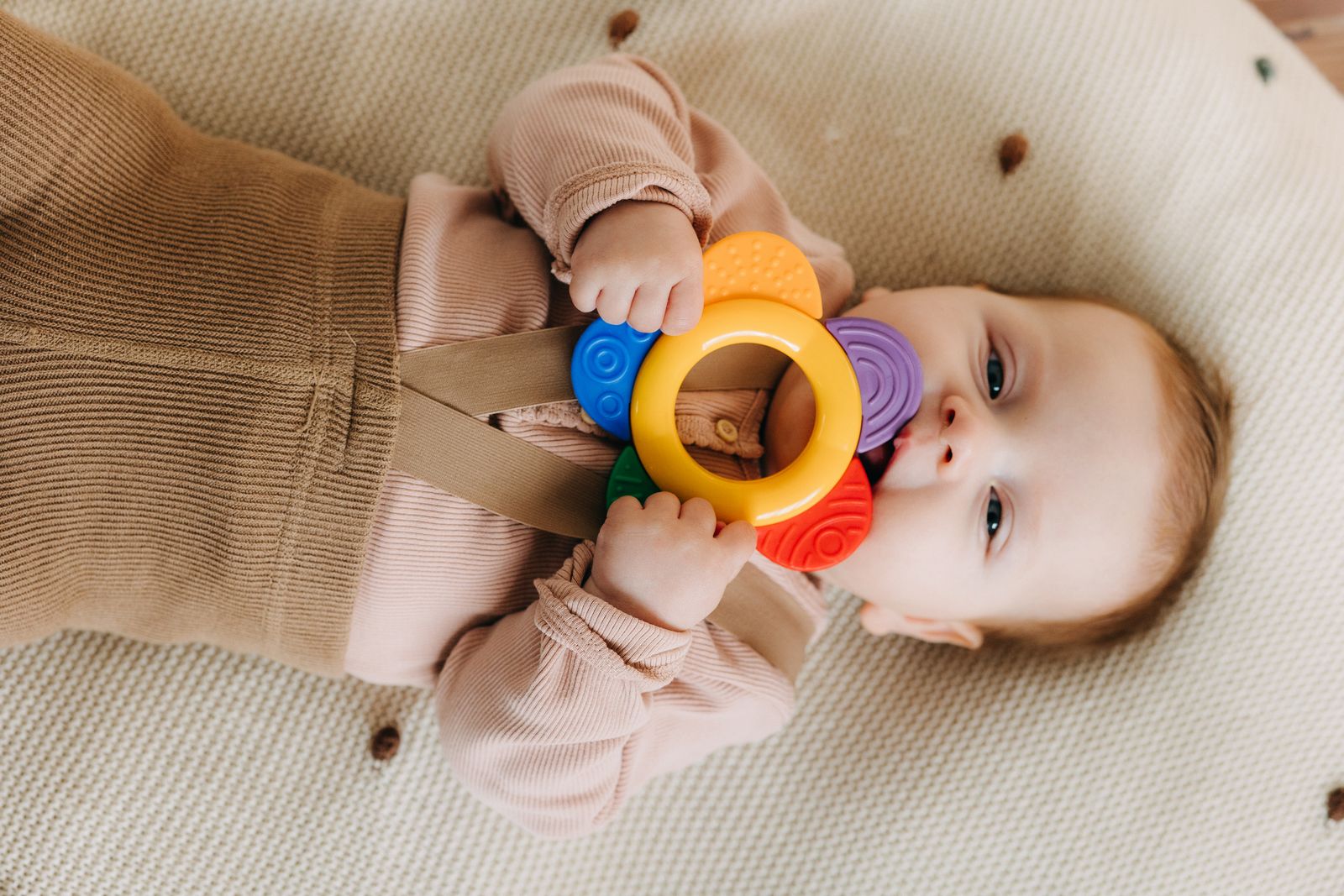
The usual reasons behind a bite are pretty simple once you look:
Teething. Sore, swollen gums want counter-pressure, and clamping down feels good on them. This is the big one, and it’s why biting tends to flare for a few days around each new tooth. If your baby is also drooling, gnawing fists, and waking more, teething is almost certainly the driver. Our guide to teething signs and relief covers the 6 ways to take the edge off sore gums before a feed, which is the fastest way to cut down on biting. These bursts often overlap with the fussiness of a growth spurt or developmental leap.
The feed is basically over. Once your baby is full and the flow drops off, the breast stops being food and starts being a toy. A bored, satisfied baby at the end of a feed is the most common biter of all.
Impatience at the start. Some babies clamp down waiting for letdown, especially if your flow is slow to start. They’re not being mean, they’re saying “where’s the milk.”
A stuffy nose or an ear infection. A baby who can’t breathe well through their nose, or whose ear hurts when they suck, may pull off and bite out of frustration. Biting that shows up suddenly with a cold is worth noticing.
Distraction. Around 4 to 6 months, babies get fascinated by everything. They turn their head to look at a noise without letting go first, and your nipple pays for it.
Why biting doesn’t mean it’s time to wean
This is the fear that sends moms to Google at 2am, so let’s settle it plainly. A baby who bites is not telling you they’re done nursing.
Self-weaning is a slow fade. It happens over weeks or months, usually well into the second year, as a baby fills up more on solids and asks for the breast less and less. It looks like gradually losing interest, not like an otherwise happy nurser who chomps down at the end of a feed and then wants to keep going.
Biting is the opposite of weaning, really. It usually means your baby is engaged, teething, and a little too comfortable. The nursing relationship is fine. You just have a short behavior problem to solve, and behavior problems have solutions.
If anything, the babies who bite are often the ones most attached to nursing. They want it for comfort through the misery of teething. Quitting now would take away one of their best tools for feeling better, and one of yours.
How to stop the biting, step by step
You teach a baby not to bite the same way you teach them anything: a calm, boring, consistent response, every single time. Here’s the sequence that works.
1. Stay calm and keep your reaction flat. I know the yelp is a reflex. Fight it as best you can. A huge dramatic reaction does one of two things, and both backfire: it either scares a sensitive baby off the breast for a few days, or it delights a social baby who now bites to see the show again. A level, unbothered “no biting” gives them nothing to chase.
Track every feed without the spreadsheet
Latchly times each side, logs pumps, and shows you the patterns. Free to start.
2. Break the latch with your finger, never by pulling. If your baby is still clamped down, slide a clean finger into the corner of their mouth to break the suction, then ease them off. Pulling a baby straight off a closed bite is how you turn a pinch into a real injury. Hook the corner, release, lift.
3. Set them down for a moment. Calmly take your baby off the breast and put them on the floor or in a safe spot for 10 or 20 seconds. No big lecture, just a quiet “we don’t bite” and a short pause. The feed stopping is the consequence that actually lands. Babies are wired to want to stay close, so a brief end to the cuddle teaches fast.

4. Watch for the end-of-feed slowdown and beat it to the punch. Most bites come right after your baby stops actively drinking. Learn that moment. When the deep rhythmic swallows turn into lazy flutter sucks, your feed is winding down. Slide your finger in and take them off before the bored chewing starts. Ending the feed on your terms is half the battle.
5. Keep your baby close and your attention on them. Biting often happens when a baby gets distracted or feels like they’ve lost your focus. Make eye contact, keep a hand on them, and nurse in a calmer room if your house is busy. A baby who feels connected during the feed is less likely to act out at the end of it.
6. Take the edge off sore gums before you start. If teething is driving it, offer something cold and firm to chew on right before the feed: a chilled teether, a clean wet washcloth from the fridge, or your own clean finger to rub the gums. Gums that already got their counter-pressure are far less likely to look for it on you. A good deep latch also keeps your baby’s tongue forward and working, which leaves no room to bite mid-feed.
7. Praise the good feeds. When a feed ends with no bite, make a tiny bit of warm fuss. “Such gentle nursing.” Babies repeat what gets them your happy attention. The calm response stops the biting, and the praise builds the habit you want.
What not to do
A few well-meaning moves make biting worse, so it’s worth naming them.
Don’t push your baby’s face into the breast. It’s an old piece of advice and it’s risky. A baby who can’t breathe will panic, and you want nursing to feel safe, not scary. Breaking the latch with your finger is the safe version.
Don’t flick, tap, or “bop” the cheek. It confuses a baby this young and adds a sting to feeding time. Calm removal teaches better than any correction.
Don’t power through bite after bite hoping it passes. It will pass, but a consistent response makes it pass much faster. Reacting the same calm way every time is what teaches the lesson.
When to call your doctor or an IBCLC
Most biting is a normal phase you can handle at home. A few situations are worth a call:
- A bite that broke the skin and is now red, swollen, warm, or leaking pus, since cracked nipples can get infected and turn into mastitis
- A fever along with a sore, hard, red patch on your breast
- Biting that started suddenly with cold symptoms, which can point to an ear infection making sucking painful
- A baby who suddenly refuses the breast for more than a day or two after a big reaction, which lactation folks call a nursing strike and an IBCLC can help you work through
- Pain at every feed that isn’t explained by biting, since that usually traces back to the latch
For anything latch-related, an IBCLC lactation consultant is worth the visit. A better latch keeps your baby’s tongue forward and working, and that alone solves a lot of biting.
The thing I wish I’d known

I wish someone had told me that the first bite feels like a betrayal and it absolutely is not one. Your baby isn’t rejecting you or nursing. They have a sore mouth and a fast-growing brain and no words yet, and a clamp-down is the only tool they’ve got in that moment.
So the next time it happens, take a breath before you react. Break the latch, set them down for a beat, say your calm “no biting,” and try again in a minute. Watch for the end-of-feed slowdown so you can beat it. Offer a cold teether before you start. Then let it go, because this really is a phase that ends.
If you track your feeds in Latchly, jot a quick note when a bite happens and roughly when in the feed it landed. After a few days you’ll see the pattern, almost always the very end, and you’ll know exactly when to unlatch first. As your baby grows into a more predictable feeding rhythm, the biting fades right along with the chaos.
You didn’t break anything. Your baby still wants you. You just hit the teething stretch, and you’re going to get through it the same way you’ve gotten through all of it: calm, steady, and one feed at a time.
Frequently asked questions
Does biting mean my baby is ready to wean?
Almost never. Biting is a phase that usually lines up with teething, a stuffy nose, or distraction, not a decision to stop nursing. Most babies who bite keep breastfeeding happily for months. A baby who’s truly self-weaning loses interest in the breast over weeks, they don’t bite at the end of an otherwise normal feed.
Why does my baby bite at the end of a feed?
Because that’s when the milk flow slows down and your baby’s job changes from drinking to playing. Once they’re full and the milk has slowed, the breast turns into something to chew, especially if gums are sore. Watch for the slowdown and take them off before the bored chewing starts.
Can a baby bite while actively nursing?
No, and this is the key to fixing it. When your baby is latched deep and actually drinking, their tongue covers their bottom teeth and gum. It’s physically impossible to bite at the same time. Biting only happens at the start before letdown, or at the end when they’ve stopped drinking.
Should I yell or say no when my baby bites?
Try hard not to yelp, even though it’s a reflex. A big startled reaction can scare a sensitive baby off the breast and trigger a few days of nursing refusal. Some babies also think a dramatic reaction is hilarious and bite again to see it. Aim for a calm, flat ‘no biting,’ break the latch, and set them down for a moment.
My nipple is cut or bleeding from a bite. What do I do?
Wash it gently, keep nursing on the other side if the bitten side is too painful, and treat the break like any cracked nipple with a little expressed milk or lanolin. Watch for spreading redness, swelling, warmth, or a fever, which can mean the broken skin got infected and needs a doctor.
How long does the biting phase last?
Usually a couple of weeks around each new tooth, not forever. Most babies bite for a stretch, learn from your calm consistent response, and stop. If you respond the same way every time, the phase tends to pass faster than it feels like it will at 2am.