
TL;DR
There is no single best sleep training method. Cry it out, Ferber, the chair method, pick up put down, and no-cry fading all work when you stay consistent. The right one depends on your baby's temperament, your baby's age (usually 4 to 6 months at the earliest), and which approach you can actually follow without quitting on night two. You also don't have to sleep train at all.
You have read every article. You have three tabs open at 1am, each one telling you a different method is the only right one, and each one making you feel like you’re already doing it wrong. One says let them cry. One says never let them cry. And your baby is awake again.
First, the part that will feel familiar. You’re not looking for a debate. You just want your baby to sleep, you want to stop feeling like a zombie, and you want to do it without feeling like you broke something. The pressure to pick the perfect method, and the guilt no matter which way you lean, is its own kind of exhausting.
Here’s the truth almost no one leads with. There is no single best sleep training method. Cry it out, Ferber, the chair method, and the gentle no-cry options all work, and they work about equally well when you stay consistent. The right one is the one that fits your baby and that you can actually follow on a bad night. Let’s compare them honestly, so you can pick with your gut instead of the loudest tab.
What Sleep Training Actually Is (And Isn’t)
Sleep training means helping your baby learn to fall asleep, and fall back asleep, without needing you to do it for them. That’s it. It is not the same as leaving your baby to cry alone forever, and it does not mean night weaning, though the two sometimes happen around the same time.
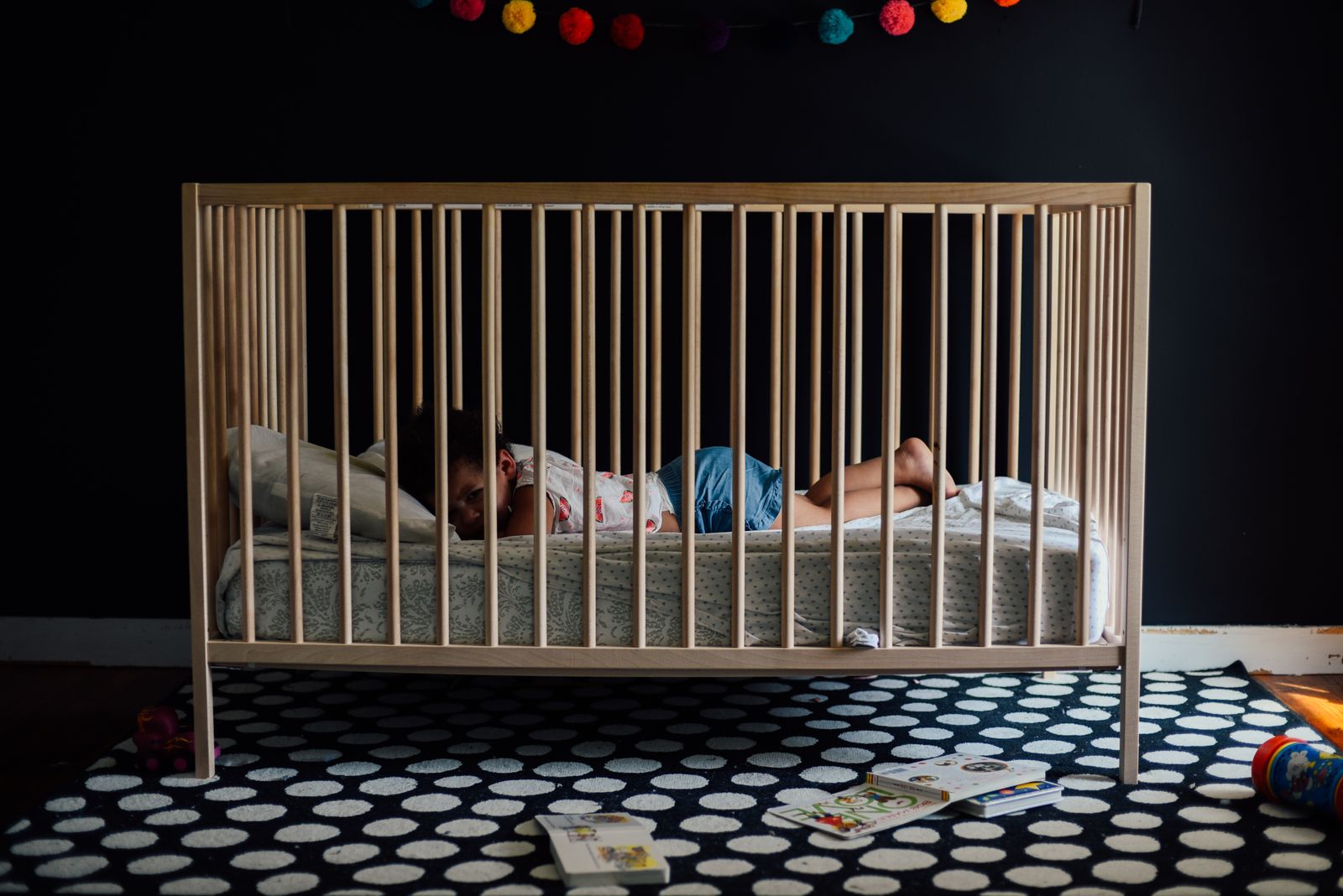
The reason babies wake and cry for you at night is usually a sleep association. If your baby always falls asleep being rocked, fed, or held, then when they surface between sleep cycles (which everyone does, adults included), they need that same thing to get back down. Sleep training gently shifts that association so your baby can bridge those wakings on their own.
A few things sleep training is not. It is not a personality test for your baby. It is not a measure of how good a parent you are. And it is not permanent if you try it and hate it. You can stop, wait a few weeks, and try again or not at all. This is one tool, and you’re allowed to put it down.
When to Start Sleep Training
Most experts point to 4 to 6 months as the earliest window, once your baby is developmentally ready for longer stretches of sleep. Before 4 months, a newborn’s sleep is still disorganized and they genuinely need to feed often, so formal sleep training doesn’t fit yet. In those early weeks, lean on a consistent bedtime routine, safe sleep, and feeding on demand instead.
Signs your baby may be ready around 4 to 6 months: they can go longer between night feeds, they’re settling into more predictable wake windows, and their newborn sleep has started to mature into real day-night rhythm. If you’re staring down the 4-month sleep regression, know that many families wait until it settles before starting anything, since sleep is chaotic mid-regression anyway.
Always run it by your pediatrician first, especially if your baby was premature, is on the smaller side, or has any feeding or weight concerns. Some babies genuinely still need those night calories, and no method should override that.
The 5 Sleep Training Methods, Compared
Here’s the honest side-by-side. All five are used by real families and backed by real experience. They mostly differ in one thing: how much crying you’re comfortable with, and how fast you want results.
| Method | How it works | Crying | Time to results |
|---|---|---|---|
| Cry It Out | Put down awake, don’t return until morning | Most | 3 to 5 nights |
| Ferber | Check at timed intervals, stretch them longer | Moderate | 3 to 7 nights |
| Chair Method | Sit by the crib, move farther away each night | Some | 1 to 2 weeks |
| Pick Up Put Down | Pick up to calm, put down drowsy, repeat | Less | 1 to 2 weeks |
| No-Cry Fading | Slowly reduce your help over many nights | Least | 2 to 3 weeks |
1. Cry It Out (Full Extinction)
You put your baby down awake, say goodnight, and don’t go back in until it’s time to get up. This is the fastest and the hardest to sit through. The idea is that your presence, if you keep returning, actually restarts the protest each time, so a clean break helps some babies learn quickest.
Best for: Parents who feel that checks make things worse, and babies who wind up more when they see you. It often works in 3 to 5 nights. Hardest part: The first two or three nights of crying with no visits are rough on you, full stop. Set a firm end time and lean on your partner.
2. The Ferber Method (Check and Console)
You put your baby down awake and check on them at set intervals that get longer each night, offering a quick calm reassurance without picking them up. So maybe you check at 3, 5, and 10 minutes on night one, then stretch those gaps as the nights go on. It’s the middle path most families land on.
Best for: Parents who want structure but need to lay eyes on their baby to feel okay. Results usually come in 3 to 7 nights. Hardest part: Keeping the visits short and boring. A long cuddle at each check can accidentally teach your baby to hold out for it.
3. The Chair Method (Camping Out)
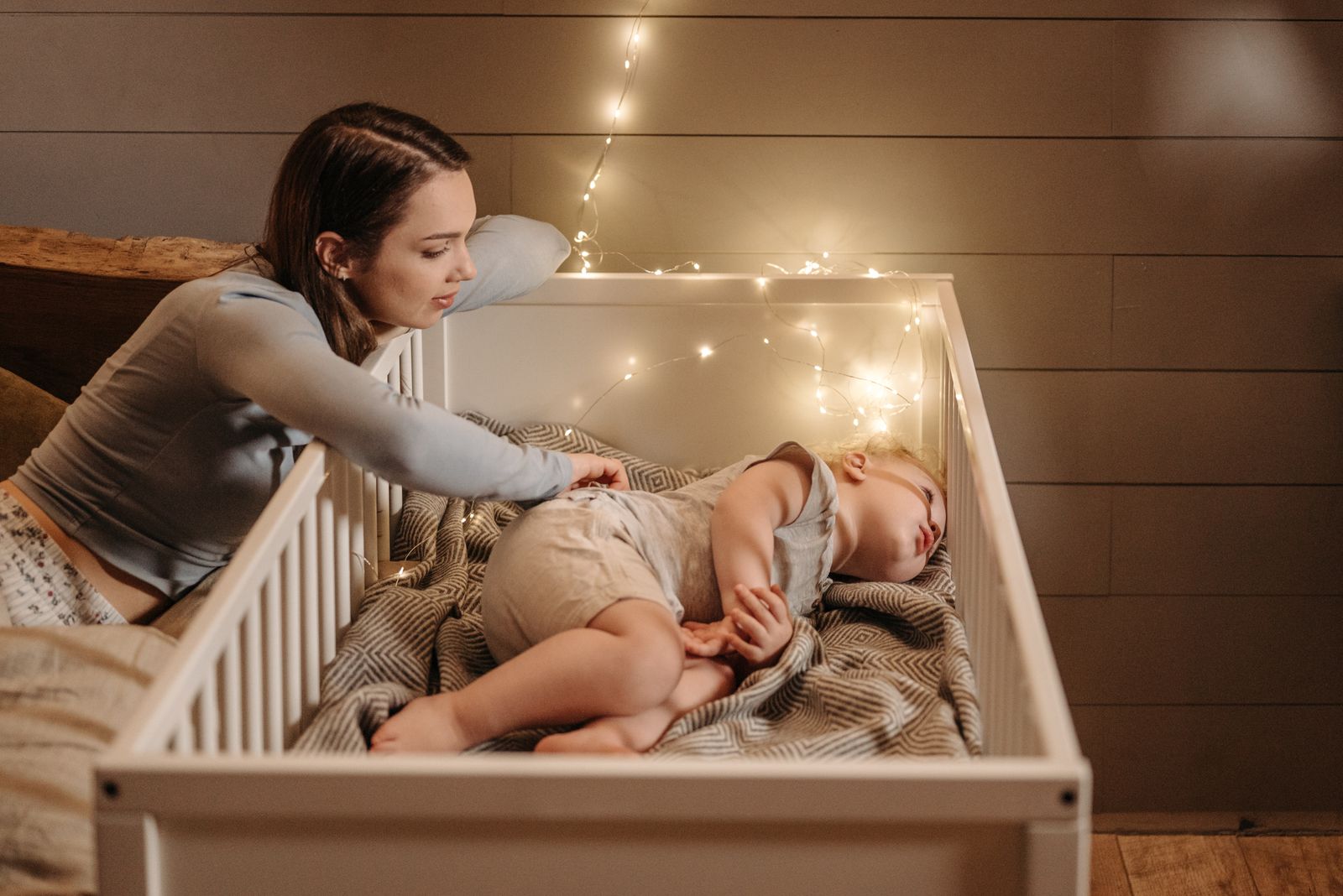
You sit in a chair right next to the crib until your baby falls asleep, then move the chair a little farther away every few nights until you’re out of the room. Your baby still has you there, just less hands-on over time. It trades speed for a gentler feel.
Best for: Babies with separation anxiety and parents who can’t do the door-closed methods. It takes 1 to 2 weeks. Hardest part: Sitting still and not intervening. The rule is you’re present but not the one putting them to sleep, which is harder than it sounds at 2am.
Track every feed without the spreadsheet
Latchly times each side, logs pumps, and shows you the patterns. Free to start.
4. Pick Up, Put Down
When your baby cries, you pick them up and calm them, then put them back down drowsy but awake, and repeat as many times as it takes. There can be a lot of reps early on. It’s hands-on and low-cry, which appeals to a lot of newborn-stage parents.
Best for: Younger babies (around 4 to 5 months) and parents who want to stay very responsive. Give it 1 to 2 weeks. Hardest part: The sheer repetition. Some nights you’ll pick up and put down twenty-plus times, and for some babies the picking up overstimulates them more than it helps.
5. Gentle No-Cry Fading
You slowly reduce whatever you’re doing to get your baby to sleep, one small step at a time, over many nights, so there’s very little crying. If you rock to sleep now, you rock a little less each night, then just hold, then just sit nearby. It’s the slowest and the calmest.
Best for: Parents for whom crying is a hard no, and families not in a rush. Expect 2 to 3 weeks or more. Hardest part: Patience and consistency over a long stretch. It’s easy to stall out because the change each night is so small you can’t always tell it’s working.
How to Pick the Method That Fits Your Baby
The best method is the one that matches your baby’s temperament and your own limits, because that’s the one you’ll actually stick with. Run through these quick gut checks:
- How does your baby react to seeing you? If checks calm them, Ferber or the chair method fits. If seeing you makes them cry harder and longer, a cleaner method like full extinction may honestly be kinder.
- What can you tolerate? Be brutally honest. If you know you’ll cave at 10 minutes of crying, don’t pick cry it out. Caving halfway teaches your baby that crying longer works, which is worse than picking a gentler method from the start.
- How fast do you need this? If you’re heading back to work Monday and running on empty, a faster method may be the compassionate choice for the whole family. If you have time and flexibility, a slower gentle approach is lovely.
- What’s your baby’s age? Younger babies (4 to 5 months) often do better with the hands-on, lower-cry methods. Older babies (6 months and up) can usually handle the interval methods.
There’s no wrong answer here, and you can switch. If a method isn’t working after a solid week of consistency, it’s fair to try a different one rather than force something that fights your baby’s wiring.
What Matters More Than the Method
Whatever you pick, consistency is the thing that actually makes it work, not the specific rules. Research comparing these methods keeps landing on the same finding: they all improve sleep, and the biggest difference maker is whether the parents stay consistent. A method followed loosely for a night and a half will fail. A gentler method followed steadily for two weeks will win.
So before you start, set yourself up:
- Pick a bedtime routine and run it the same way every night. Bath, book, song, bed. The routine becomes the cue, and it does half the work for you.
- Watch the wake windows. A baby who’s overtired or undertired will fight any method. Getting the timing right makes every approach smoother.
- Get your partner on the same page. Two people using two different rules at 2am is how good methods fall apart. Agree on the plan and who does what.
- Give it a full week before you judge it. Nights two and three are often the worst. Many parents quit right before it clicks.
And keep night feeding separate in your head. If your baby still needs a feed or two overnight, you can sleep train the falling-asleep skill while still feeding when they’re genuinely hungry. Those are two different things.
When to Call Your Pediatrician
Sleep training is generally safe for healthy babies, but check in with your doctor before you start, and reach out along the way if you notice:
- Your baby is under 4 months, or was premature and hasn’t hit their adjusted milestones yet.
- Your baby is losing weight, not gaining, or having fewer wet diapers.
- The crying sounds like pain, not protest, or your baby seems sick, feverish, or is vomiting.
- Your baby has reflux, a medical condition, or a history that makes you unsure night feeds are optional.
- You’re feeling hopeless, panicky, or like you can’t cope. Your mental health counts here too, and there is real help for that.
You know your baby. If a method feels like it’s fighting something deeper than a habit, trust that and ask.
The Thing I Wish I’d Known
The method matters far less than the story you tell yourself about it. You are not a gentler parent for choosing no-cry, and you are not a tougher one for choosing extinction. You’re a tired parent making a reasonable choice for a specific baby on a specific night, and that’s exactly the right thing to be doing.

Pick the one that fits your gut. Commit to it for a week. And if it’s not right, change it without guilt, or stop entirely, because plenty of babies learn to sleep on their own timeline with nothing but a steady routine and a little more time. There’s no medal for the method, and there’s no method that will love your baby more than you already do.
One day soon you’ll put your baby down, walk out, and not hear a peep. However you get there, held or trained or simply grown into it, you’ll have gotten there together. That’s the only part that lasts.
Frequently asked questions
What is the best sleep training method?
There isn’t one best method for every baby. Studies find cry it out, Ferber, and gentler fading methods all improve sleep within one to two weeks. The strongest predictor of success is not the method, it’s whether you can stay consistent with it. Pick the one you can actually follow on a hard night.
What age can you start sleep training?
Most experts say 4 to 6 months at the earliest, once your baby is developmentally ready for longer sleep stretches. Before 4 months, focus on safe sleep, routine, and feeding on demand instead. Always check with your pediatrician before you start, especially if your baby was premature or has any weight concerns.
Is cry it out harmful to babies?
The research we have does not show lasting harm to babies from graduated methods like Ferber. Studies following children years later found no difference in attachment, behavior, or stress. That said, if letting your baby cry feels wrong to you, a gentler method works too. The best method is one you can stick with.
How long does sleep training take to work?
Most methods show real improvement within 3 to 7 nights, though it often gets worse before it gets better. Gentler, no-cry methods can take 2 to 3 weeks. Consistency is what makes any of them work, so give a method at least a week before you decide it failed.
Do I have to sleep train my baby at all?
No. Sleep training is a choice, not a requirement. Plenty of babies grow into good sleep on their own with a consistent routine and time. If contact naps and night wakings are working for your family, you’re allowed to keep going. Do what lets everyone get the most rest.
Which sleep training method involves the least crying?
The chair method, pick up put down, and no-cry fading involve the least crying because you stay in the room and comfort your baby. They usually take longer than cry it out or Ferber, but many parents feel calmer using them. There’s no prize for the fastest method, only the one that fits your family.