![Newborn Sleep Patterns by Month [0-6 Month Chart]](/blog/images/posts/newborn-sleep-patterns/hero.jpg)
TL;DR
Newborns sleep 14 to 17 hours a day in short 2 to 4 hour stretches, and their rhythm looks chaotic because their internal clock is still forming. Day/night confusion usually clears by 8 weeks, real sleep patterns start around 3 months, and most babies have a loose routine by 6 months. Here's the month-by-month chart of what's actually normal.
Newborn sleep looks broken. They sleep for 30 minutes, wake up furious, eat for 40, doze for an hour, grunt through a whole nap, and then conk out cold in the middle of a diaper change. You feel like you’re doing something wrong. You’re not. Newborn sleep is its own weird, chaotic thing, and it follows a pattern once you know what you’re looking at. This guide walks you through what newborn sleep actually looks like month by month from birth to 6 months, why it looks so strange, and exactly when each piece starts to feel more normal.
First, the part that will feel familiar. It’s 3am. Your baby was dead asleep in your arms 90 seconds ago. You put them down slowly enough to defuse a bomb. And now, somehow, they are wide awake and screaming as if you abandoned them in a forest. You stand there in the dark doing math. How many hours was that? Was that even a nap? Is this a growth spurt? Am I supposed to feed again?
You’re not broken. Your baby isn’t broken. This is just what the first few months look like.
What are newborn sleep patterns?

Newborn sleep patterns are the way babies distribute their sleep across the day and night in the first 6 months. They’re very different from adult sleep. Newborns sleep in short stretches of 2 to 4 hours, don’t tell day from night, and spend about half their sleep in an active, twitchy, dream-like state called REM.
Here’s the short version of what “normal” looks like:
- 0 to 4 weeks: 14 to 17 hours total sleep. Short 2 to 3 hour stretches day and night. No schedule.
- 4 to 8 weeks: 14 to 16 hours total. One 4 to 5 hour stretch starts to appear, usually at the start of the night.
- 2 to 3 months: 14 to 16 hours. Longer night stretches, 5 to 6 hours at a time. Day/night confusion fading.
- 3 to 4 months: 14 to 15 hours. Nights lengthen to 6 to 8 hours. Daytime naps start to organize.
- 4 to 6 months: 12 to 15 hours. Nights can stretch 8 to 10 hours. Usually 3 daytime naps settling toward 2.
None of this is a contract. Your baby may be slightly ahead or behind any of these windows and be completely fine. The point is the shape of the curve, not the exact day something happens.
Why newborn sleep looks so weird
Your newborn is running on biology, not a clock. Three things explain almost every strange sleep behavior you’re seeing in the first 3 months.
1. Their circadian rhythm hasn’t formed yet. The circadian rhythm is the internal 24-hour clock that tells adults when to sleep and when to be awake. Babies aren’t born with one. It starts developing around 6 to 8 weeks and takes until about 3 to 4 months to really kick in. This is why a 2-week-old has no concept of “night.”
2. Sleep cycles are short. An adult sleep cycle is about 90 minutes. A newborn’s is 40 to 50 minutes. They pass through a light-sleep wake window every 40 minutes, whether it’s 2pm or 2am. If they can’t resettle on their own yet, you see it as a “short nap” or a wake-up.
3. Half their sleep is active REM. About 50% of newborn sleep is active sleep where they twitch, grunt, flutter their eyelids, make faces, and even cry out without waking up. Adults only spend 20 to 25% of sleep in REM. Active sleep is critical for brain development, but it looks restless and it sounds loud. Some of that grunting is also gas working its way through, which is why a quick burp + bicycle legs before bedtime gets you a calmer first stretch. The full newborn gas relief routine takes 5 minutes and ends most “why is she squirming so much?” wake-ups.
Put those three together and you get a tiny human who sleeps in chopped-up pieces, has no schedule, and makes a lot of weird noises. That’s not a problem to fix. That’s the design.
Newborn sleep by month, 0 to 6

Here’s the fuller month-by-month picture. Use it as a reference, not a checklist.
Month 1 (weeks 0 to 4)
Total sleep: 14 to 17 hours. Longest stretch: 2 to 4 hours. This is the hardest month on paper. Your baby has no day/night sense, wakes every 2 to 3 hours to eat, and sleeps right through noise but wakes up the second you lower them into the bassinet. Almost every sleep is in your arms, a wrap, a swing, or directly on your chest. That’s normal. Don’t fight it.
Month 2 (weeks 4 to 8)
Total sleep: 14 to 16 hours. Longest stretch: 3 to 5 hours. Somewhere in this window the first longer night stretch usually appears. It’s often the first 4 to 5 hours after bedtime. Day/night confusion starts clearing. You may notice brief alert periods where your baby is just looking around, taking it in. Naps are still unpredictable.
Month 3 (weeks 8 to 12)
Total sleep: 14 to 16 hours. Longest stretch: 5 to 6 hours. The circadian rhythm comes online. Melatonin starts being produced by your baby’s own body, not just what they got from you. Nights get noticeably longer. Many babies do a 5 to 6 hour stretch at the front of the night and then wake 1 to 2 more times. Daytime naps still wander.
Month 4
Total sleep: 14 to 15 hours. Longest stretch: 6 to 8 hours. This is the month where some babies start doing longer stretches at night. It’s also the month of the famous 4-month sleep regression, where the pattern you thought you had suddenly falls apart. That’s not a regression in the bad sense. It’s a real brain shift as sleep cycles start to mature toward adult patterns. Ride it out for 2 to 6 weeks and it resolves on its own. This is also the window when first teeth start showing up, so if the night waking comes with drooling and constant chewing, check teething signs and relief before assuming it is all sleep. Itchy skin can cost sleep too, so if your baby is scratching at red, rough patches, that points more to eczema than the harmless scalp scales of cradle cap, which do not disturb sleep at all. By this point your own body is also still healing in the background — see our postpartum recovery timeline for what’s still settling for you between months 3 and 6.
Month 5
Total sleep: 13 to 15 hours. Longest stretch: 7 to 9 hours. Naps start to organize into 3 daytime sleeps (morning, midday, late afternoon). Some babies settle into a loose schedule built around wake windows, the amount of time baby can happily stay awake between naps. Night feeds drop to 1 or 2 for many breastfed babies.
Track every feed without the spreadsheet
Latchly times each side, logs pumps, and shows you the patterns. Free to start.
Month 6
Total sleep: 12 to 15 hours. Longest stretch: 8 to 10 hours. Most babies have a clear day-night pattern. Naps often settle at 2 per day. Some babies sleep straight through without a feed. Others still take a quick feed at 4 or 5am. Both are normal.
How to work with your baby’s sleep, not against it
Stop trying to make a newborn follow a schedule. A schedule isn’t available to a baby who doesn’t have a circadian rhythm yet. Instead, work with the pattern they already have. These are the things that actually move the needle in the first 3 months.
1. Expose your baby to daylight every morning. Open the blinds, take them near a window, or go outside within the first 2 hours of being awake. Daylight is the single strongest cue that helps their brain start building a day/night pattern. This alone often breaks day/night confusion by 6 to 8 weeks.
2. Keep nights boring. When your baby wakes to feed overnight, keep the lights low (a dim amber nightlight, not a white overhead), skip chatter, skip diaper changes unless it’s dirty, and put them right back down. Your goal is “nothing interesting happens at night.” Being able to peek at the crib without opening the door helps here, which is the whole job of a monitor. Here are 8 baby monitors ranked, plus 5 kinds to skip. Pair this with 7 night-feeding tips to get through 3am for the full setup.
3. Watch wake windows, not the clock. In the first 3 months, a newborn can usually only stay awake 45 to 90 minutes before needing to sleep again. By 4 to 6 months, it stretches to 1.5 to 2.5 hours. Watch for the sleepy cues (red eyebrows, zoning out, yawning) and put them down at the first sign. An overtired baby fights sleep harder than a tired one.
4. Let cluster feeding do its job in the evening. Evening cluster feeds, where baby wants to eat every 30 to 60 minutes for hours, often show up between 2 weeks and 12 weeks. They’re tanking up before a longer night stretch. If you’re in the thick of it, here’s what cluster feeding actually is and how it ends.
5. Safe sleep basics every time. On the back. Firm mattress. No loose blankets, bumpers, pillows, or stuffies until 12 months. Your baby in their own sleep space (bassinet, crib, or bedside sleeper) in your room for the first 6 months. These rules cut the risk of SIDS dramatically. A stack of 4-6 muslin or zip-up swaddles is one of the few baby items that earns a spot on our postpartum essentials checklist for the first 4 months, then you switch to sleep sacks. If you’re picking which one to actually buy, start with the Halo SleepSack Swaddle and switch to Love to Dream if baby breaks out arms-down.
Day/night confusion and how to fix it
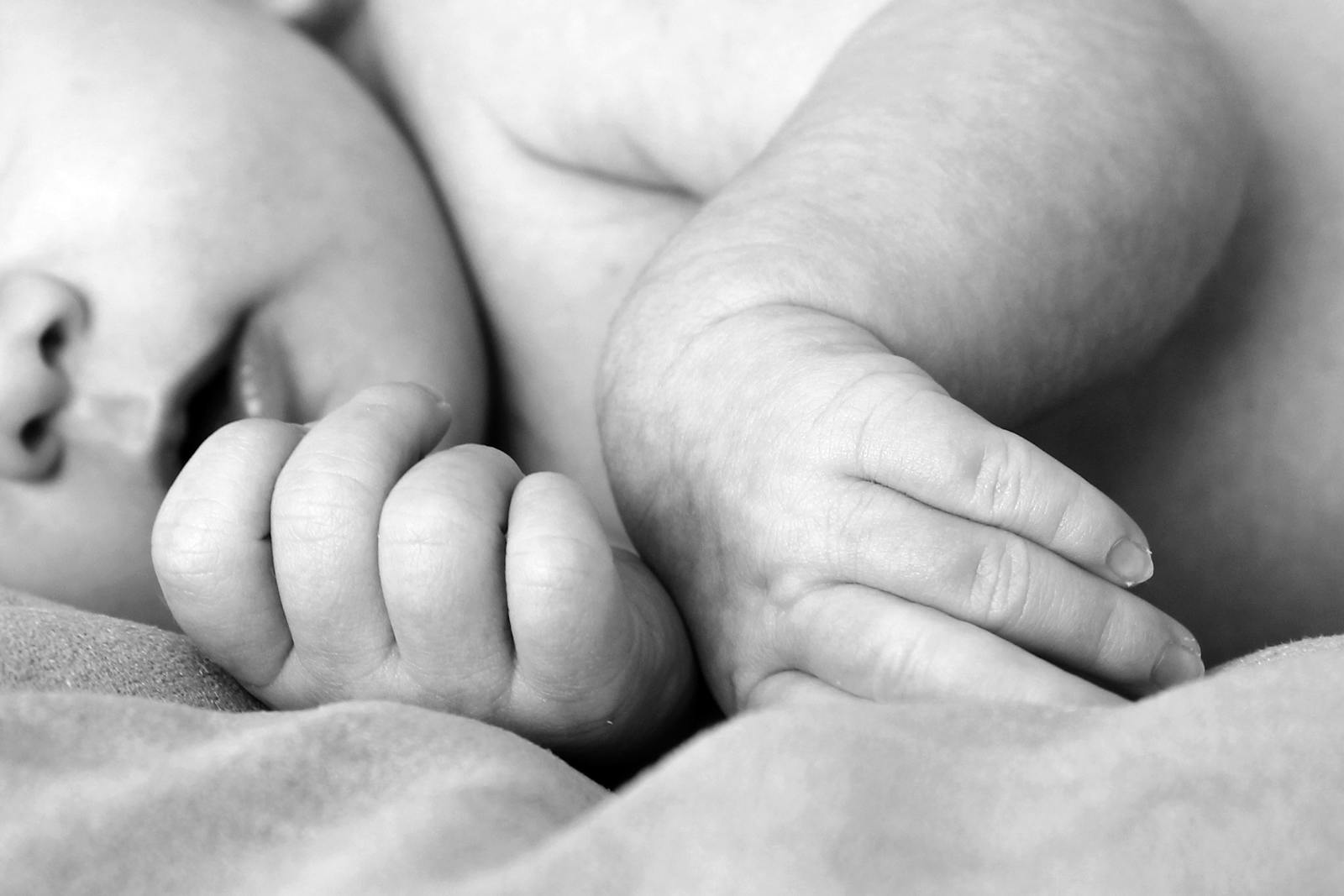
Day/night confusion is when your baby treats nighttime like playtime and daytime like deep sleep time. It feels personal. It isn’t. In the womb, your movement during the day rocked your baby to sleep and your stillness at night let them be active. They’re still running on that calendar for a few weeks.
To help it clear faster:
- Day feeds are loud, bright, and engaging. Talk to your baby. Let the room be naturally lit. Don’t tiptoe.
- Night feeds are dim, quiet, and fast. Amber light, no conversation, straight back down.
- Morning reset. Every day, around the same time, open the blinds and say good morning. This is a cue your baby’s brain learns faster than you’d expect.
Most babies flip the pattern between week 4 and week 8. By 10 weeks, if your baby is still doing their longest sleep between 10am and 2pm, bring it up with your pediatrician.
When to call your pediatrician
Most newborn sleep weirdness is totally normal. A few things are worth a call:
- Your baby sleeps more than 18 hours a day and is hard to wake to eat
- Fewer than 6 wet diapers in 24 hours after day 5
- Your baby hasn’t regained birth weight by 2 weeks
- Extreme lethargy, floppy body, or grayish skin
- Loud snoring, gasping, or long pauses in breathing during sleep (ordinary snorty breathing is usually just newborn congestion, which is common and easy to treat, but gasping and pauses are not)
- Any sudden change in the direction of more sleep, less feeding, or less responsiveness
Trust your gut. If something feels off, call. That’s exactly what pediatricians are there for.
And one call most moms don’t make but should: the one about your own mood. Chronic sleep deprivation is one of the biggest triggers for postpartum depression, and PPD can show up late — often around the 4-month regression or when you return to work. If you’re still crying daily past 2 weeks postpartum, or the weight of it all isn’t lifting, our guide on baby blues vs postpartum depression walks through the 2-week rule and the exact signs that mean it’s time to call your doctor, not just your pediatrician.
The thing I wish I’d known
You’re not supposed to understand newborn sleep yet. You’re supposed to be confused by it. Every mom I know stared at her baby at 4am in the first month and wondered if this was their new life forever. It isn’t. The curve is real. Month 1 is survival. Month 2 is the first glimmer. Month 3 is when you start to feel human again. Month 4 to 6 is when the shape of a rhythm actually shows up.
You don’t have to teach a newborn to sleep. They already know how. Your only job right now is to feed them, hold them, keep them safe, and survive the nights. The sleep patterns build themselves. Whether your baby is doing 2 hours or 5 hours at a stretch, whether they nap in a crib or only on your chest, whether you’re getting 3 good hours or 6, you’re doing this right.
The nights get longer. The naps get more predictable. Your baby will sleep. And you will sleep again too.
Frequently asked questions
How many hours do newborns sleep a day?
Newborns sleep 14 to 17 hours a day in the first month, spread across short 2 to 4 hour stretches. By 3 months, total sleep drops to 14 to 16 hours with longer night stretches. By 6 months, most babies sleep 12 to 15 hours total with a 6 to 8 hour overnight chunk.
Why does my newborn only sleep 20 to 30 minutes at a time?
Newborn sleep cycles are about 40 to 50 minutes long, and your baby wakes slightly between cycles. If they can’t resettle on their own yet, you see them wake up instead of linking back into the next cycle. This is biologically normal until around 3 to 4 months, when they start sleeping through short wake windows on their own.
When do babies sleep through the night?
Most babies can sleep a 6 to 8 hour stretch by 4 to 6 months. Sleeping a full 10 to 12 hours without waking usually happens between 6 and 12 months. Every baby is different, and feeding style affects this a lot. Breastfed babies often wake once overnight well past 6 months.
What is day/night confusion and how long does it last?
Day/night confusion is when your newborn sleeps long stretches during the day and wakes up a lot at night. It’s because their circadian rhythm hasn’t formed yet. Most babies sort it out by 6 to 8 weeks, especially if you expose them to daylight in the morning and keep nights dark and boring.
Is it normal for a newborn to sleep all day?
In the first 2 weeks, yes. Newborns can sleep 16 to 18 hours and still be totally healthy as long as they wake to feed every 2 to 3 hours and have enough wet diapers. If your baby sleeps through feeds and is hard to rouse, call your pediatrician.
When do newborns start having real sleep patterns?
A loose pattern usually shows up between 8 and 12 weeks. Real, predictable nap times and bedtimes form between 3 and 6 months. Before 8 weeks, sleep is almost completely driven by feeding needs, not a schedule.