
TL;DR
Stop swaddling the moment your baby shows any sign of rolling, usually between 8 and 12 weeks. Do not wait for a set age. Move one arm out for a few nights, then the other, then switch to a sleep sack. Expect a few bumpy nights while the startle reflex settles.
You finally cracked the swaddle. Your baby sleeps in that little burrito, and for the first time in weeks you are getting real stretches of sleep. So the last thing you want to hear is that you have to take it away. I get it. But there is a point where the swaddle stops being safe, and knowing when to stop swaddling matters more than almost any other sleep decision you will make this year.
First, the part that will feel familiar. You are standing over the bassinet at 2am, staring at your perfectly swaddled baby, wondering if that little wiggle you saw earlier was the start of rolling. You are half hoping it was not, because you know what rolling means. It means the burrito days are ending.
Here is the good news. Coming out of the swaddle is not the sleep disaster everyone warns you about. Do it at the right time, in the right order, and most babies adjust in about a week.
What “outgrowing the swaddle” really means
Stopping the swaddle is not about age. It is about movement. The swaddle is safe while your baby lies still on their back. The moment they can flip themselves over, a snug wrap turns from soothing into dangerous, because a baby who rolls onto their tummy while swaddled cannot use their arms to push up or turn their head to breathe.

That is why the guidance is not “stop at 4 months.” It is “stop the day you see rolling.” For some babies that is 12 weeks. For a strong, early mover, it can be as early as 8 weeks. Your job is to watch your baby, not the calendar.
If you are still setting up your newborn’s sleep space and picking a wrap, our guide to the best swaddles for newborns walks through arms-up versus arms-down and which one to start with. This post is about the other end of that story, when it is time to let the arms go.
Why the timing matters so much
A swaddle restricts exactly the movements a rolling baby needs to stay safe. Free arms let a baby lift and turn their head, shift their weight, and push back over if they end up face down. Take that ability away at the wrong moment and you remove their only tools.
This is not about being anxious. It is one of the clearest safe-sleep rules there is, right up there with back sleeping and a firm flat surface with nothing loose in it. If you want the full picture of what safe newborn sleep looks like night to night, our newborn sleep patterns guide covers the whole 0 to 6 month stretch.
The other reason timing matters is habit. The longer you swaddle past the rolling point, the more attached your baby gets to that tight feeling, and the harder the change can feel later. Catching it early makes the whole thing gentler for both of you.
7 signs your baby is ready to stop swaddling
You do not need all seven. Any single one of the first three means the swaddle comes off now.
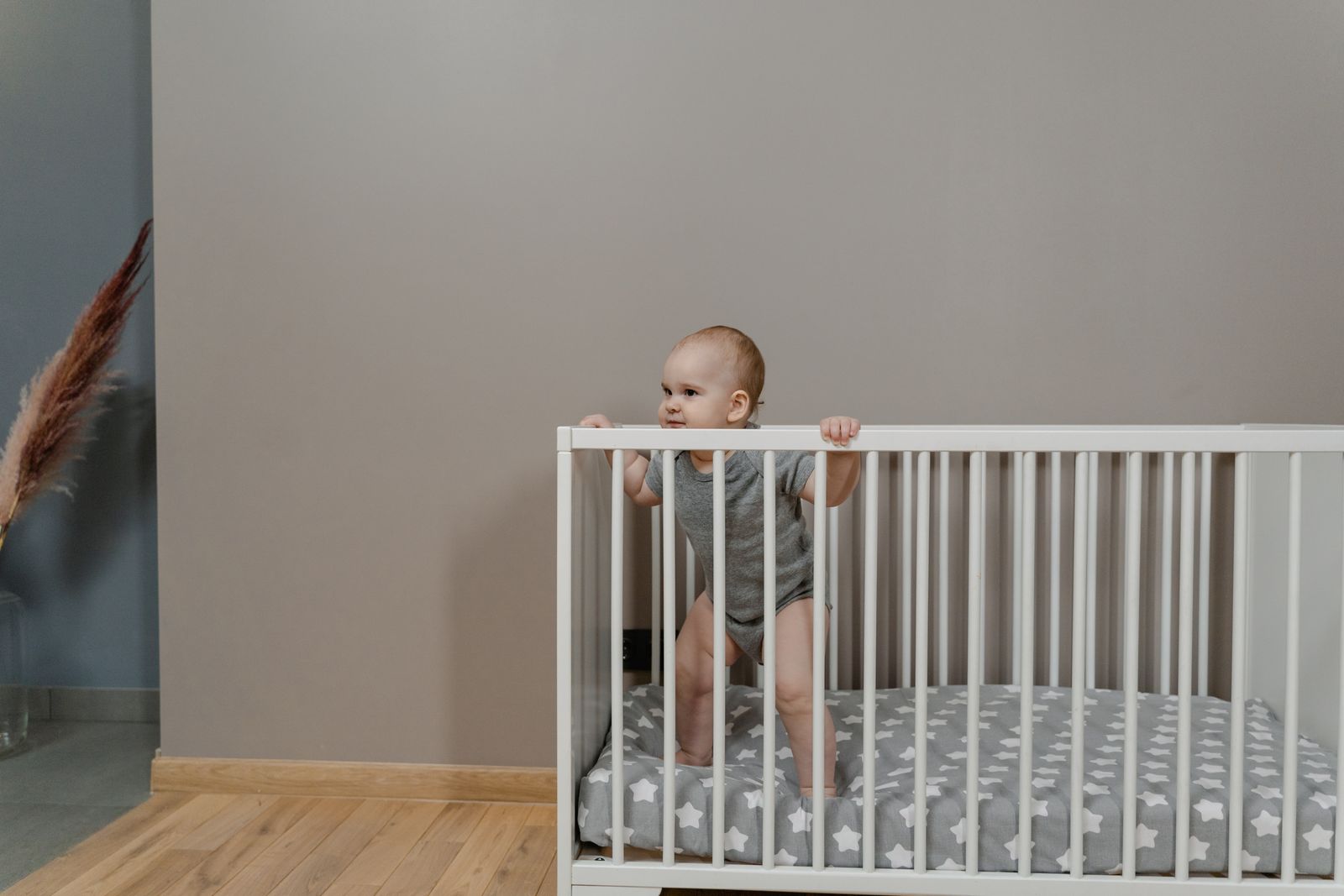
- Your baby rolls, or tries to. This is the big one. Any twist from back toward side or tummy, even a failed attempt, is your signal. Do not wait for a clean roll. The try counts.
- They push up during tummy time. Strong neck and arm control during the day means they have the strength to shift position at night too. That strength is what makes a swaddle risky.
- They break out of the swaddle every night. If you find an arm free every single morning, your baby is telling you they are done. A half-escaped swaddle is more of a loose-blanket hazard than a wrap.
- The startle reflex is fading. Early on, that big flinch (the Moro reflex) is what jolts babies awake, and the swaddle muffles it. As it calms down, usually around 3 to 4 months, the swaddle loses its main job.
- They fight being swaddled. Crying, squirming, and yanking against the wrap at bedtime is a clear opinion. When the swaddle causes more upset than calm, it is time.
- They seem cramped. If your baby stretches, kicks the wrap loose, and looks like they want room to move, give them room.
- They are sleeping worse in it, not better. A swaddle that used to buy you long stretches but now leads to more waking has stopped working. That is a normal sign of a growing baby, not a problem to fix by wrapping tighter.
How to transition out of the swaddle, step by step
Go slow and go one arm at a time. The whole point is to let your baby get used to the new freedom in small doses instead of all at once. Here is the plan most families can do in about a week.
- Nights 1 to 3: one arm out. Swaddle as usual but leave one arm free on top of the wrap. Your baby still gets the familiar snug feeling on their body, with one arm loose to start learning. Pick either arm, it does not matter which.
- Nights 4 to 6: both arms out. Now free the second arm and keep the swaddle around the chest and hips only, or switch to a sack that leaves both arms out. This is usually the biggest adjustment, so give it a few nights before you judge it.
- Night 7 and on: full sleep sack, arms free. Move to a wearable blanket with both arms completely out. No wrap, no loose blanket, just a cozy sack that keeps them warm and lets them move.
- Keep everything else identical. Same bedtime, same room, same white noise, same order of steps. When one thing changes, hold all the other things steady so your baby has plenty that still feels normal.
- Give it a full week before you decide it is not working. A rough first night or two is expected, not a sign to go back. Consistency is what gets you through.
If your baby only ever settles in your arms and the crib feels impossible no matter what they are wearing, that is a different puzzle, and our post on what to do when your baby only sleeps when held tackles it directly.
Track every feed without the spreadsheet
Latchly times each side, logs pumps, and shows you the patterns. Free to start.
What to use instead of a swaddle
Reach for a wearable blanket, also called a sleep sack. It zips up over your baby’s clothes, keeps them warm without any loose fabric near their face, and leaves their arms free to move and self-soothe. It is the simple, safe answer for almost every baby coming out of the swaddle.
Some babies do well with a transition product first, the kind with zip-off arm wings, so you can drop from arms-in to arms-out without buying anything new. Either path is fine. The only rule that matters is arms out and nothing loose in the bed.
Skip weighted sleep sacks and weighted swaddles. Safety guidance has moved away from anything weighted on a sleeping baby, so keep it simple with a plain, breathable sack in a fabric weight that suits your room temperature.
When your baby fights the change
Expect a few bumpy nights, and know that most of them come from the startle reflex, not from you doing anything wrong. Without the wrap to contain it, that reflex can jerk your baby awake mid-sleep. It is temporary. It fades on its own by around 4 to 5 months, and then this all gets easier.
A few things that smooth the ride:
- Warm the room slightly. Babies used to the coziness of a swaddle sometimes wake because they feel cooler with arms out. A sleep sack in the right weight closes that gap.
- Lean hard on your wind-down routine. Predictable steps before bed do a lot of the soothing the swaddle used to do.
- Give daytime practice. Lots of tummy time and floor play builds the strength your baby needs to manage their own arms at night.
- Do not tighten and retreat. If night two is rough, resist going back to the full swaddle. Bouncing between the two just drags the transition out.
If this lines up with a sudden stretch of terrible sleep around the 4-month mark, you may be dealing with two things at once. Our guide to the 4-month sleep regression explains how to tell them apart, and matching feeds and naps to your baby’s wake windows by age helps everything settle faster.
When to call your pediatrician
Most of this is normal newborn stuff you can handle at home. Check in with your pediatrician if:
- Your baby is rolling much earlier than expected and you are unsure how to keep sleep safe.
- Sleep does not settle at all after a couple of weeks out of the swaddle.
- Your baby seems to have unusually low muscle tone, feels floppy, or is not meeting movement milestones.
- You are ever unsure whether your baby’s sleep setup is safe. That question is always worth a quick call.
The thing I wish I’d known
Nobody tells you that giving up the swaddle can feel like a tiny loss. That wrap was the first thing that worked, the trick that finally bought you sleep, and letting it go can feel like you are handing back the one tool you had figured out.

Here is what I wish someone had said to me. Those free little arms are not the swaddle failing. They are your baby getting strong enough to move on their own, which is exactly what you have been waiting for since day one. The startle reflex settles. The rough nights end. And pretty soon you will find your baby asleep with both arms flung up over their head, completely content, no burrito required.
You did not lose your trick. Your baby just outgrew it. That is the whole job working.
Frequently asked questions
What age should you stop swaddling?
There is no magic age. Most babies need to be out of the swaddle between 8 and 20 weeks, but the real trigger is rolling, not a birthday. The second you see any attempt to roll, the swaddle comes off, even if your baby is only 7 weeks old.
How do I transition my baby out of the swaddle?
Go one arm at a time. Swaddle with one arm out for 2 to 3 nights, then both arms out for 2 to 3 nights, then move to a sleep sack with arms fully free. The whole thing usually takes about a week.
Why is my baby sleeping worse after we stopped swaddling?
The startle reflex is waking them. It fades on its own by about 4 to 5 months. A sleep sack, a slightly warmer room, and a consistent wind-down help you ride out the handful of rough nights until it settles.
Can I just keep swaddling if my baby sleeps better that way?
Not once they can roll. A swaddled baby who rolls to their tummy cannot push back up or turn their head freely, and that is a suffocation risk. Better sleep is not worth that. Free the arms as soon as rolling starts.
What do I use instead of a swaddle?
A wearable blanket or sleep sack with the arms out. It keeps your baby warm without any loose bedding and lets their arms move so they can roll safely and self-soothe. Some babies also like a transition product with removable arm wings.
Is it too late to stop swaddling at 5 months?
It is not too late, but it is overdue if your baby is rolling. Take the arms out now. Older babies sometimes protest the change more, so keep the rest of the bedtime routine exactly the same to give them something familiar to hold onto.