TL;DR
Baby eczema is dry, red, itchy patches, usually on the cheeks first, and it comes from a sensitive skin barrier your baby was born with, not from your milk or anything you ate. The itch is the giveaway. The fix is not fancy: moisturize a lot with a thick fragrance-free cream, keep baths short and lukewarm and seal the skin right after, cut the fragrance out of soaps and laundry, and dress your baby in soft cotton. Ask your pediatrician about a steroid cream for bad flares. Call the doctor if the skin looks infected with yellow crust, pus, or fever, or if the itch is stealing your baby's sleep.
You spotted it during a diaper change or a feed. A patch of skin on your baby’s cheek that looks dry, red, and rough, maybe a little scaly, and your baby keeps turning their face into your shoulder to rub at it. Your stomach drops. Is it an allergy? Something in my milk? Did I use the wrong soap? Here is the short version so you can breathe. It is most likely eczema, it is one of the most common skin conditions babies get, it is very treatable, and it is not your fault.
First, the part that will feel familiar. You have already zoomed in on a photo, held your baby’s cheek up to the light, and read three conflicting articles at 1 a.m. Maybe you switched detergents or cut a food from your own plate just in case. Every parent of an eczema baby does some version of this. The good news is that once you understand what eczema actually is, the day-to-day plan gets simple, and most of it is things you can start tonight.
What baby eczema actually is
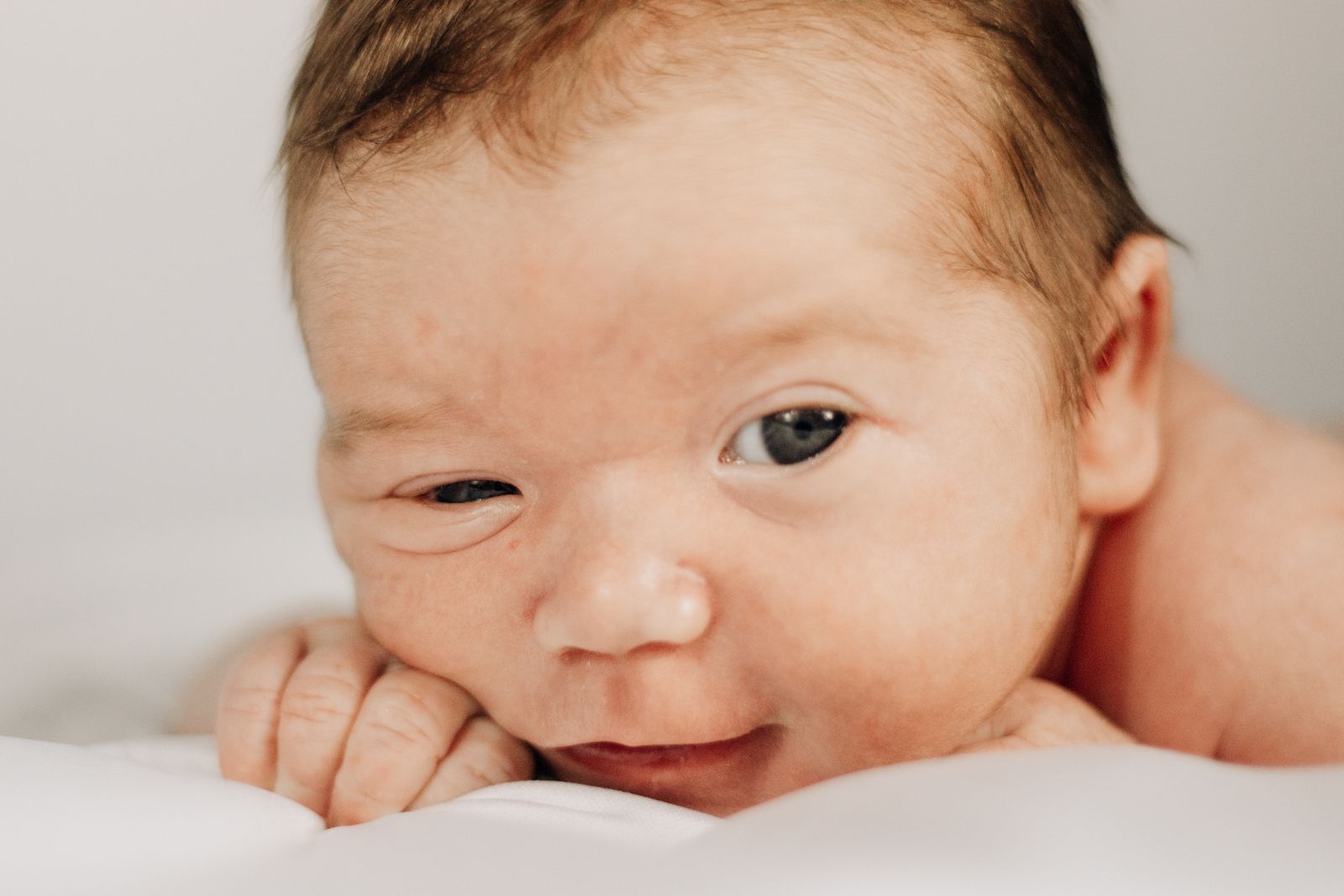
Baby eczema, also called atopic dermatitis, is dry, red, itchy, rough skin that shows up in patches. In babies it usually starts on the cheeks and scalp, then the forehead, and from there it can spread to the outsides of the arms and legs and the chest. As your baby grows into a toddler, it often moves into the creases instead, the insides of the elbows and the backs of the knees.
It is common. Somewhere around 1 in 5 children get eczema at some point, and it most often starts in the first year, frequently between 2 and 6 months. So if it feels like half the babies at your play group have a patchy cheek, you are not imagining it.
The single most useful thing to know is the itch. That is what sets eczema apart from most other baby rashes. Baby acne and cradle cap do not really bother your baby, but eczema does. It itches, and an itchy baby is a fussy baby who rubs their face on the sheet, squirms during feeds, and wakes more at night. If the skin is dry and scaly and your baby seems genuinely uncomfortable, that itch is your biggest clue that you are looking at eczema.
Why babies get eczema
Two things are going on under the surface, and neither one is about anything you did. First, eczema skin has a weaker barrier. Think of healthy skin as a brick wall that holds water in and keeps irritants out. In eczema, the mortar between the bricks is thin, so water escapes and the skin dries out and cracks, and irritants slip in more easily. Second, the immune system in that skin is a bit trigger-happy, so it flares into redness and itch when it meets things that would not bother other babies.
Both of those are mostly written in from birth. Eczema runs in families. If you, your partner, or a grandparent has eczema, asthma, or hay fever, your baby was more likely to land in the eczema group. That family thread is called the atopic march, and it is the biggest reason a particular baby gets eczema. It is genetics and skin biology, not a parenting grade.
So here is what does not cause it, so you can put the guilt down. Baby eczema is not caused by anything you ate. It is not a reaction to your breast milk. It is not from a dirty face, a bath you skipped, or the wrong wipe, and it is not something your baby caught from anyone. Flares can be nudged along by dry air, heat and sweat, drool, harsh soaps, fragrance, and scratchy fabrics like wool, but those are triggers that stir up skin that was already prone to it. They are not the underlying cause, and none of them are a moral failing on your part.
Is it eczema or something else?
Most dry, itchy patches on a baby are eczema. But a few look-alikes are worth knowing, because they change what you do next.
Baby acne is the most common mix-up on the cheeks. Acne is small red or white bumps, sometimes with tiny whiteheads, and the giveaway is that it does not itch and does not bother your baby at all. Eczema is dry, rough, and scaly rather than bumpy, and it clearly itches. If you are staring at the cheeks trying to decide, the baby acne guide walks through the difference in detail.
Cradle cap is the scalp look-alike. Cradle cap is greasy, yellow, scaly patches on the scalp and eyebrows, and like acne it does not itch. Eczema on the scalp is drier, redder, and itchier. The two can even show up around the same time, so if the scalp is the main event, the cradle cap guide covers that one.
Heat rash and diaper rash round out the list. Heat rash is tiny bumps that appear after your baby has been hot or overdressed and fades once they cool down. A red, sore bottom in the diaper area is usually diaper rash rather than eczema, and it responds to a barrier cream instead. When you are not sure, that is exactly what your pediatrician is for.
7 gentle fixes for baby eczema
None of these are complicated, and most of them are about being boringly consistent rather than buying the perfect product. The goal is simple: keep the skin soft and sealed so it cracks and itches less. Go gentle every time.
1. Moisturize, then moisturize again. This is the whole game, so do it more than you think you need to. Slather a thick, fragrance-free cream or ointment on your baby at least twice a day, and again any time the skin looks dry. The thicker the better, so a cream or an ointment beats a thin, watery lotion. Most babies with eczema need moisturizer every single day, flare or no flare, forever, and that is normal.
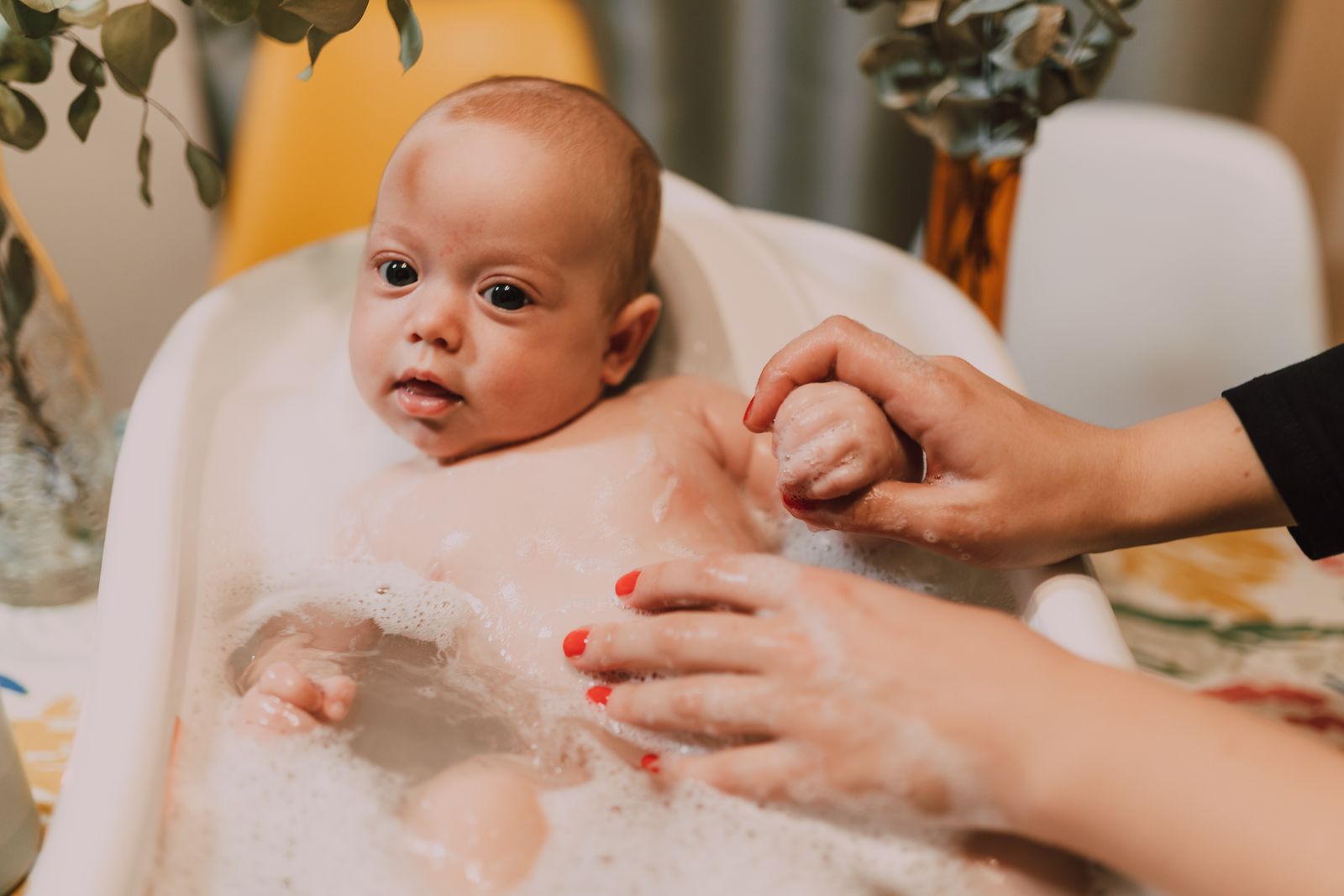
2. Bathe short and warm, then seal it in. A short bath of about 5 to 10 minutes in lukewarm, not hot, water is fine and even helpful. The trick is what happens next. Pat your baby dry gently, leaving the skin a little damp, and put moisturizer on within about 3 minutes to lock that water in. This soak-and-seal habit does more than almost anything else.
Track every feed without the spreadsheet
Latchly times each side, logs pumps, and shows you the patterns. Free to start.
3. Switch to fragrance-free everything. Fragrance is one of the most common eczema triggers, and it hides in a lot of baby products. Use a mild, fragrance-free cleanser instead of scented soap or bubble bath, wash clothes and bedding in a fragrance-free detergent, and skip fabric softener and dryer sheets. Boring and unscented is exactly what eczema skin wants.
4. Dress your baby in soft cotton and keep them cool. Rough fabrics like wool and scratchy seams rub eczema the wrong way, and heat and sweat make the itch worse. Dress your baby in soft, breathable cotton, skip the extra layer when the room is warm, and do not bundle them so much that they sweat. Cool and cottony calms the skin.
5. Keep nails short and stop the scratch. Scratching tears the skin, makes the patches worse, and is how a plain eczema patch turns into an infected one. Keep your baby’s nails trimmed short, and for bad nights, soft cotton mittens or scratch sleeves keep those little nails off the skin. You are not stopping the itch here, you are protecting the skin from the scratching.
6. Ask about a steroid cream for flares. When a patch is angry and moisturizer alone is not calming it, a low-strength steroid cream like hydrocortisone is often what actually settles it, and your pediatrician can tell you which one and how to use it. Used correctly, in short bursts on the flare, these creams are safe and effective. The bigger risk is usually leaving a bad flare untreated, so do not be afraid of the cream your doctor recommends.
7. Find and dodge the triggers. Watch for what sets your baby off, because it is different for every baby. Common culprits are dry winter air, heat and sweat, drool sitting on the chin and neck, pet dander, dust, and scented products. When you spot a pattern, dodge that trigger where you can. A humidifier in a dry room and wiping drool off gently after feeds are two easy wins.
What not to do
A few common moves make eczema worse, so cross these off the list.
- Do not use hot water or long baths. Hot water and long soaks strip the skin’s natural oils and leave it drier and itchier than before.
- Do not skip the moisturizer to let it breathe. Eczema skin does not need air, it needs water sealed in. Bare, un-moisturized skin cracks and flares faster.
- Do not use scented soaps, bubble baths, or wipes. Fragrance is a top trigger. Plain and unscented wins every time.
- Do not cut foods from your own diet to fix it. Eczema is not a reaction to your milk, and elimination diets can hurt your supply and nutrition for nothing. Only change your diet if a doctor finds a specific, tested allergy.
- Do not reach for adult eczema or acne products. They are too strong for baby skin. Use only what your pediatrician recommends for a baby.
Does breast milk help baby eczema?
You have probably seen the tip that a dab of breast milk clears eczema, so here is a straight answer. Breast milk is not a proven eczema treatment. It does have some antibodies and soothing properties, which is why the idea gets passed around, but there is no strong evidence it clears eczema, and milk left to dry on already-irritated skin can sting and make things worse. A thick, fragrance-free moisturizer does far more for eczema than breast milk ever will.
There is a bigger reassurance hiding in this question. How you feed your baby did not cause the eczema, and it is not going to be what fixes it either. Breastfeeding may slightly lower the odds of eczema for some higher-risk babies, but the research is mixed, and plenty of exclusively breastfed babies get eczema anyway. If your baby has it, that is not a sign your milk is wrong or that you should have done something differently in those early feeding days. Feed your baby the way that works for your family, and treat the skin separately with moisturizer.
One more thing worth clearing up, because it causes a lot of worry. Moderate or severe eczema does raise the odds of food allergies down the road, but the answer is not to hold foods back. Current guidance is the opposite: offering common allergens like peanut and egg early and often, once your baby is ready for solids around 6 months, actually helps prevent allergies. So eczema is a reason to talk to your pediatrician about starting solids thoughtfully, not a reason to delay them.
When to call your pediatrician
Eczema is usually something you manage at home, but call your pediatrician when it stops looking like plain eczema:
- Skin that looks infected, meaning yellow or honey-colored crust, weeping or oozing, pus, warmth, swelling, or a fever
- Painful blisters or clusters of small punched-out sores, especially with a fever, which need to be seen quickly
- Eczema that is not improving even with good moisturizing and the treatment your doctor suggested
- Itch that is bad enough to wreck your baby’s sleep or make feeds a struggle
- Patches that are spreading fast or covering a large part of the body
- Any time you are not sure it is eczema at all
Your pediatrician can tell eczema apart from an infection, acne, or a heat rash in about a minute, and can set you up with the right moisturizer and, if needed, a prescription cream. There is no prize for toughing it out if the skin looks angry or your baby is miserable.
The thing I wish I’d known
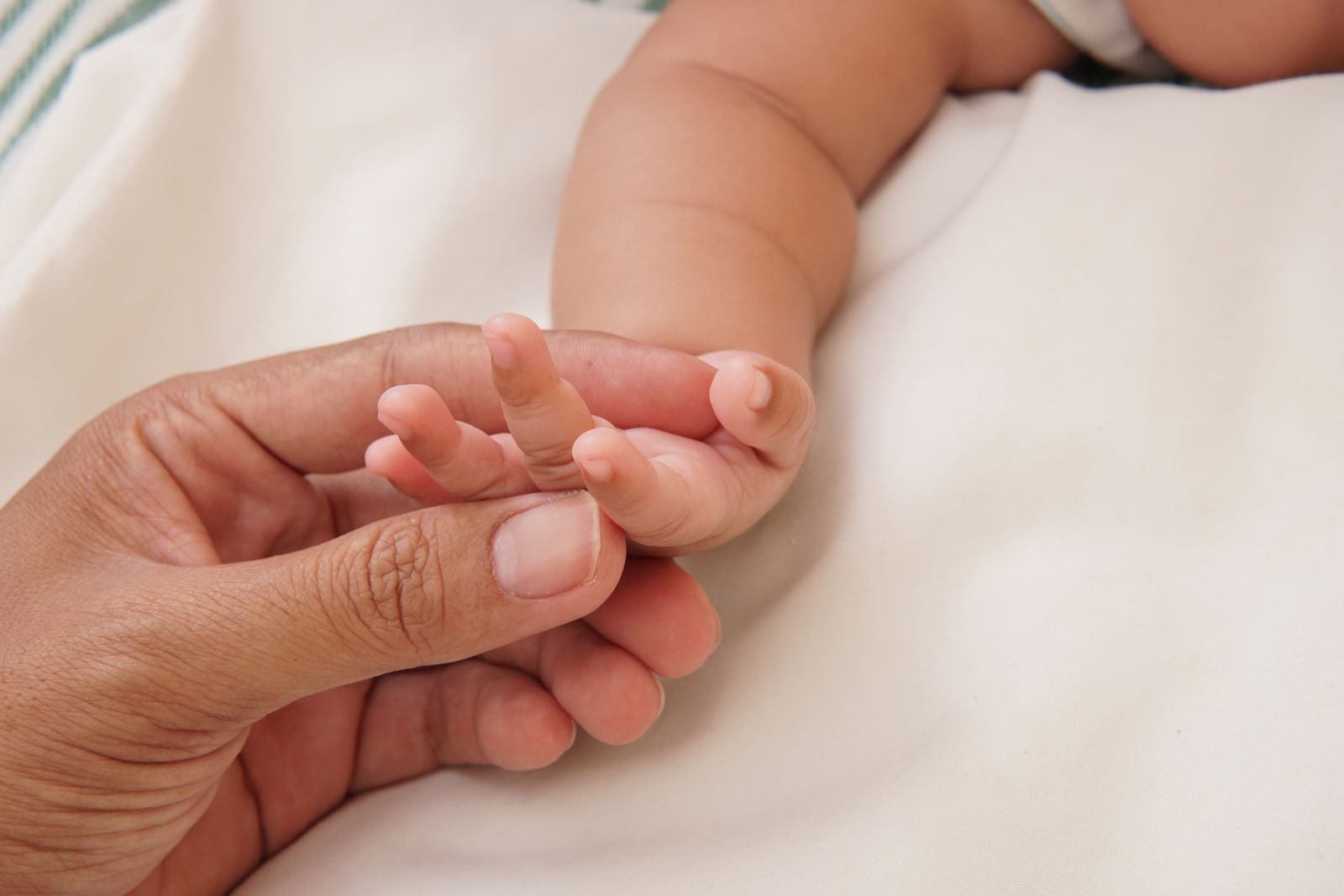
I spent the first few weeks of my baby’s eczema quietly convinced I had done something wrong. I changed detergents, cut a food from my own plate, and wiped that little cheek so often I probably made it worse. Nobody had told me that eczema is mostly something a baby is simply born prone to, and that the job is not to find the one thing I broke, but to build a boring little routine and stick to it. Moisturize, short warm baths, soft cotton, dodge the triggers, and a cream from the doctor when a flare digs in.
If your baby has eczema, you did not cause it and you cannot love it away, but you can absolutely keep that skin comfortable while your baby grows out of the worst of it. It comes in waves, and the calm stretches get longer as you get the routine down. On the hard, itchy nights, be as gentle with yourself as you are with those soft, patchy little cheeks. You are reading this at 1 a.m. because you are a good parent, not because you did anything wrong. And that little face will be smooth and calm again soon.
Frequently asked questions
What causes baby eczema?
Baby eczema comes from a skin barrier that is a little leaky and an immune system that overreacts, and both of those are mostly baked in from birth. It tends to run in families alongside asthma and hay fever. It is not caused by anything you ate, your breast milk, or a dirty face, and it is not contagious.
How do I tell baby eczema from baby acne?
Baby acne is red or white bumps, mostly on the cheeks, that do not itch and do not bother your baby. Eczema is dry, rough, scaly patches that clearly itch, so your baby is fussy and rubs at the skin. If it is dry and itchy, think eczema. If it is bumpy and calm, think acne.
Does breast milk help baby eczema?
You can dab a little on and it almost certainly will not hurt, but there is no strong proof that breast milk clears eczema, and milk left to dry on the skin can actually irritate it. A thick fragrance-free moisturizer does far more for eczema than breast milk does. Save the milk for feeding.
Is baby eczema caused by something I ate while breastfeeding?
Almost never, and you should not start cutting foods from your diet to fix it. Eczema is a skin barrier thing, not a reaction to your milk, and elimination diets can hurt your supply and your nutrition for no payoff. Only change your diet if your doctor finds a specific, tested allergy.
How long does baby eczema last?
Eczema comes in flares, so it flares up and calms down rather than clearing in one straight line. Many babies see it ease a lot by their first or second birthday, and a good number outgrow it by school age. You are managing it and keeping the skin comfortable, not curing it overnight.
When should I worry about baby eczema?
Call your pediatrician if the skin looks infected, meaning yellow or honey-colored crust, weeping, pus, warmth, or fever, or if you see painful blisters. Also call if good moisturizing is not helping, or the itch is wrecking your baby’s sleep and feeds. Those are signs the eczema needs more than lotion.