TL;DR
Baby acne is a harmless rash of small red or white bumps on a newborn's face, driven by leftover pregnancy hormones, not by your milk or anything you ate. It does not bother your baby and clears on its own within a few weeks to a few months. Wash the face once a day with warm water, keep milk and drool off it, skip lotions and oils, and never pick at the bumps. Call your pediatrician if the acne first shows up after 6 weeks, the bumps look infected, or the skin seems dry and itchy like eczema.
You are looking at your baby’s smooth new face and there they are. A spray of little red bumps across the cheeks, maybe the nose and forehead too, some with tiny white tips. They were not there last week. Your mind races. Is it an allergy? A reaction to my milk? Did I use the wrong wipe? Here is the short version so you can breathe. It is baby acne, it is harmless, it does not bother your baby, and it is not your fault.
First, the part that will feel familiar. You have probably already taken a close-up photo, zoomed in, and compared it to a dozen pictures online at 2 a.m. Maybe you switched laundry detergents or stopped eating something just in case. Every new mom does some version of this. Baby acne looks like it should mean something is wrong, but it is one of the most common and least serious things a newborn’s skin does.
What baby acne actually is
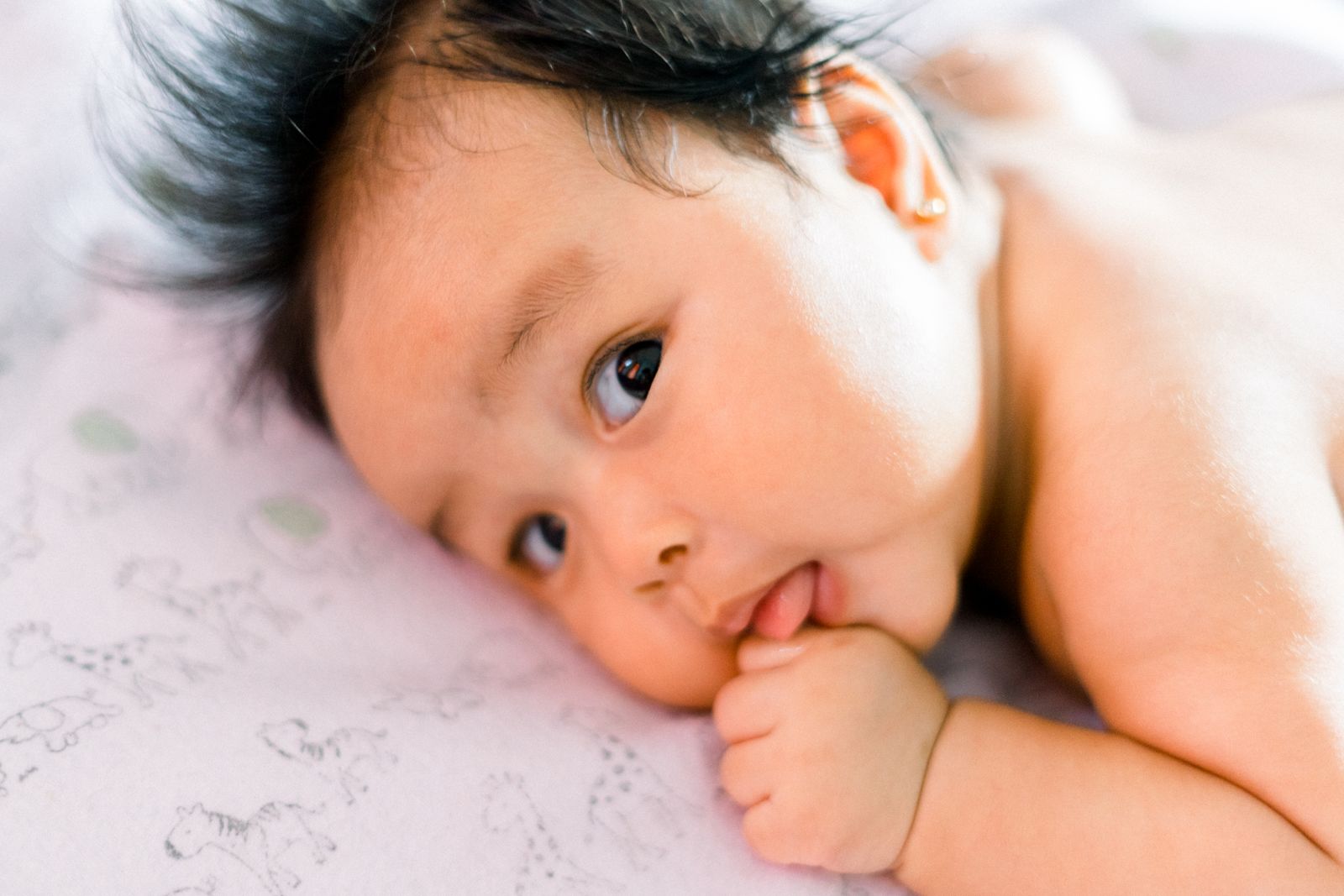
Baby acne, or neonatal acne, is a rash of small red or pink bumps that shows up on a newborn’s face. Some of the bumps have tiny white or yellow tips, so they can look like the whiteheads you know from your own skin. It usually lands on the cheeks first, then the nose, forehead, and chin, and sometimes it spreads to the scalp, neck, or upper back.
It is common. Somewhere around 2 in 10 babies get it, so if you compare notes with other new parents, plenty of them have seen the same thing. It tends to appear when your baby is about 2 to 6 weeks old, which catches a lot of parents off guard, because those first newborn days were often smooth-skinned and this shows up later.
The most important thing to know is how it feels to your baby, which is to say, it does not. Baby acne is not itchy and not painful. Your baby is not bothered by it at all. You are the one staring at it in the good light by the window. That single fact takes the panic down a notch, because the rash that worries you is not making your baby uncomfortable.
Why babies get baby acne
Nobody can point to one single cause, but the picture is pretty clear, and it starts with hormones. Near the end of pregnancy, your hormones crossed the placenta to your baby. Those hormones give your baby’s oil glands a little nudge, and in the first weeks after birth the glands are still running a bit hot. Extra oil plus brand-new skin that is still learning to shed old cells adds up to clogged pores and small bumps.
Those same leftover pregnancy hormones are behind a lot of the strange changes in these first months, including your own. If your hair is falling out by the handful right now, that is the flip side of the same hormone shift, which you can read about in postpartum hair loss. Your body and your baby are both recalibrating after nine months of shared chemistry. This is also why baby acne and cradle cap so often show up around the same time. They come from the same hormone story, one on the face and one on the scalp.
A normal skin yeast called Malassezia seems to play a part too. It lives on everyone’s skin and it is nothing to worry about, but in the oil-rich skin of a newborn it can stir up some of the bumpiness. This is why baby acne is not an infection you caught and not something you can pass to anyone.
Here is what does not cause it, so you can put the guilt down for good. Baby acne is not caused by anything you ate. It is not a reaction to your breast milk. It is not from a dirty face, the wrong wipe, or a laundry detergent. It is not an allergy, and it is not a sign your baby is missing anything. You do not need to cut dairy or sugar or change your diet to clear it. It is just oil glands and hormones doing their thing on new skin.
Is it baby acne or something else?
Most of the time, red bumps on a young baby’s face are baby acne and nothing more. But a few look-alikes are worth knowing, because they change what you do next.
Milia are the most common mix-up. These are tiny, firm, pearly white spots, usually on the nose, cheeks, and chin. Unlike acne, they are often there from birth, they do not look red or inflamed, and they are not really bumps you can pop. Milia are just trapped skin flakes and they clear on their own with zero treatment. If the spots are white and calm rather than red and blotchy, you are probably looking at milia.
Eczema is the one to take more seriously. Baby acne is red bumps that come and go and do not bother your baby. Eczema looks dry, rough, and scaly, often on the cheeks first and then the folds of the arms and legs, and the giveaway is that it itches. An itchy baby is a fussy baby. If the skin looks dry and flaky rather than pimply, or your little one seems uncomfortable and rubs at their face, that points more toward eczema and is worth a mention to your pediatrician.
Heat rash and cradle cap round out the list. Heat rash is tiny bumps that pop up after your baby has been hot or overdressed, usually in skin folds and covered areas, and it fades once they cool down. Cradle cap is greasy yellow scales, mostly on the scalp, not the pimply bumps of acne. When acne creeps up toward the hairline, it can be hard to tell them apart, so if you are unsure, the cradle cap guide walks through that one.
When it really is just baby acne, you have time and you have options. Nothing about it is urgent.
7 gentle fixes for baby acne
None of these are emergencies, because baby acne clears on its own even if you do nothing. Think of these as ways to keep the skin calm and comfortable while it sorts itself out. Go slow and gentle every time.
Track every feed without the spreadsheet
Latchly times each side, logs pumps, and shows you the patterns. Free to start.
1. Wash the face once a day with warm water. A single gentle wash a day is plenty. Wet a soft cloth or your clean hand with plain warm water and lightly clean your baby’s face, then move on. Washing more than that can dry and irritate the skin, which makes the bumps look angrier, not better.
2. Use a mild, fragrance-free baby cleanser, not adult products. If you want a little cleanser, pick a plain, tear-free baby wash with no added scent. Skip anything made for grown-up acne. Face washes with benzoyl peroxide, salicylic acid, or retinol are far too strong for newborn skin and can burn it.
3. Pat the skin dry, never scrub. After washing, gently pat the face with a soft towel until it is dry. Rubbing or scrubbing at the bumps tears the delicate skin and makes everything redder. Baby skin is thin, so a light touch does more than a firm one.
4. Keep milk, spit-up, and drool off the face. Dried milk and spit-up sitting on the cheeks can irritate the skin and make baby acne look worse. After feeds, gently wipe your baby’s face and the folds of the neck with a soft, damp cloth. This one small habit often makes the biggest difference.
5. Skip the lotions, oils, and creams. It is tempting to slather something on, but most lotions and oils clog newborn pores and can make baby acne worse. The skin does not need extra moisture to clear this. Plain and bare beats greasy every time, unless your pediatrician tells you otherwise.
6. Never pick, squeeze, or pop the bumps. The little whiteheads look pick-able, but resist. Squeezing tears the skin, spreads irritation, and is exactly how a harmless bump turns into an infected one. Hands off is the whole strategy here.
7. Be patient and leave it alone. This is the hardest fix and the most effective. Baby acne comes and goes over days and weeks, and most of it clears by itself within a few weeks to a few months. Doing less, not more, is usually what finally works. Resist the urge to try a new product every few days.
What not to do
A few common moves do more harm than good, so cross these off the list.
- Do not use adult acne products. Benzoyl peroxide, salicylic acid, and retinoids are made for grown-up skin and are too harsh for a baby’s face. Only use a medicated product if your pediatrician tells you to.
- Do not scrub or use exfoliants. Newborn skin is thin and easily damaged. Firm scrubbing causes the very irritation you are trying to avoid.
- Do not pile on lotions or oils. Heavy creams and oils clog pores and tend to feed the bumps instead of soothing them.
- Do not pop or pick the bumps. It tears the skin and invites infection. There is nothing inside worth getting out.
- Do not change your diet to fix it. Baby acne is not a food reaction and not a milk problem. You do not need to cut dairy, sugar, or anything else. How you feed your baby has nothing to do with it.
Does breast milk clear baby acne?
You have probably seen the tip passed around that a dab of breast milk clears baby acne, and it is worth a straight answer. Breast milk is not a proven acne cure. It does have some antibodies and mild germ-fighting properties, which is why the idea sticks around, but there is no solid evidence that it clears these bumps, and leaving milk to dry on the skin can actually irritate it.
So here is the honest take. If you want to dab a tiny bit on, it almost certainly will not hurt, and you can try it. Just do not count on it, and do not feel like you are failing your baby if you skip it. A gentle daily wash with plain water does more for baby acne than any home remedy, including this one. If anything, the more useful milk habit is the opposite. Wipe milk and spit-up off the face after feeds rather than letting it sit, and while you are at it, keeping the early feeding days as calm as you can is worth more to your baby’s skin than any dab of anything.
When to call your pediatrician
Baby acne on its own rarely needs a doctor. Call if it stops looking like plain baby acne and starts looking like something more:
- Acne that first shows up after your baby is 6 weeks old, since acne that starts later can be a different kind that sometimes needs treatment
- Any bump that looks infected, meaning pus, warmth, swelling, tenderness, or fast spreading
- A fever along with the rash
- Blistering, oozing, or a honey-colored crust
- Skin that is dry, rough, scaly, and itchy in a way that fits eczema better than acne, or a baby who seems uncomfortable
- Bumps that are widespread, very inflamed, or just will not improve after a few months
Your pediatrician can sort baby acne from milia, eczema, a heat rash, or an infection in about a minute, and can suggest a gentle treatment if it is ever needed. There is no prize for waiting it out if something looks off to you.
The thing I wish I’d known
I remember staring at those bumps on my baby’s cheeks and quietly running through everything I might have done wrong. I switched a soap, cut a food, wiped and rewiped that little face until it was pink. Nobody had warned me that a brand-new baby’s skin does all kinds of dramatic things that look worse than they are. Baby acne, cradle cap, diaper rash, peeling hands and feet, blotchy patches that come and go by the hour. It is a long list, and almost none of it means anything is wrong. The same goes for newborn hiccups after every feed or a snuffly little nose. Loud and dramatic, and usually nothing at all.
If your baby has baby acne, you did not cause it and you cannot fail at it. Wash gently once a day, keep milk and drool off the skin, and leave the rest alone. One day soon you will look at that little face in the same window light and realize the bumps are gone and you cannot remember when they left. Until then, be as gentle with yourself as you are with those soft new cheeks. You are doing this exactly right.
Frequently asked questions
What causes baby acne?
Baby acne is mostly driven by hormones your baby got from you at the end of pregnancy, which give their oil glands a little push. A normal skin yeast plays a part too. It is not caused by anything you did, ate, or missed, it is not an allergy, and it is not contagious.
How long does baby acne last?
Newborn acne usually shows up around 2 to 6 weeks old and clears on its own within a few weeks to a few months, often with no treatment at all. If bumps first appear after 6 weeks or hang on for many months, check with your pediatrician, since that can be a different kind of acne.
Should I put breast milk on baby acne?
You can dab a little on if you want to, and it is very unlikely to hurt. But there is no strong evidence that breast milk clears baby acne, and leaving milk sitting on the skin can actually irritate it. Gentle washing with plain water works better, so do not feel like you are missing a trick if you skip it.
Is baby acne caused by something I ate while breastfeeding?
No. Baby acne is a hormone and skin thing, not a food reaction, and it is not a sign your milk is off. You do not need to cut dairy, sugar, or anything else from your diet to fix it. How you feed your baby has nothing to do with it.
How do I tell baby acne from milia?
Baby acne is red or pink bumps, sometimes with tiny whiteheads, that come and go and can look inflamed. Milia are tiny, firm, pearly white spots that are usually there from birth, sit mostly on the nose and cheeks, and do not look red. Both are harmless and both clear on their own, so you do not need to treat either one.
When should I worry about baby acne?
Call your pediatrician if the acne first appears after 6 weeks of age, if any bump looks infected with pus, warmth, or fast spreading, if there is fever, or if the skin is dry, scaly, and itchy in a way that fits eczema better than acne. Blistering or honey-colored crust also needs a doctor. Plain baby acne is calm and does not bother your baby.