
TL;DR
A fever in a baby is 100.4F (38C) or higher taken rectally. Under 3 months, that number is an automatic call to your doctor or a trip to the ER, no waiting and no fever medicine first. From 3 months on, how your baby is acting matters more than the number on the thermometer.
Your baby feels hot, the thermometer says a number you’ve never had to think about before, and your whole body goes cold. Here’s the short version: 100.4F is the line, your baby’s age decides what happens next, and under 3 months you don’t wait and see. Everything else below is how to tell the difference between a call-now fever and a push-fluids-and-rest fever.
First, the part that will feel familiar: you take the temperature three times in a row hoping one of them comes back lower.
What counts as a fever in a baby?
A fever is 100.4F (38C) or higher, taken rectally. That’s the number every pediatric guideline uses, and it isn’t a rounded-off suggestion. 100.3F is not a fever. 100.4F is.
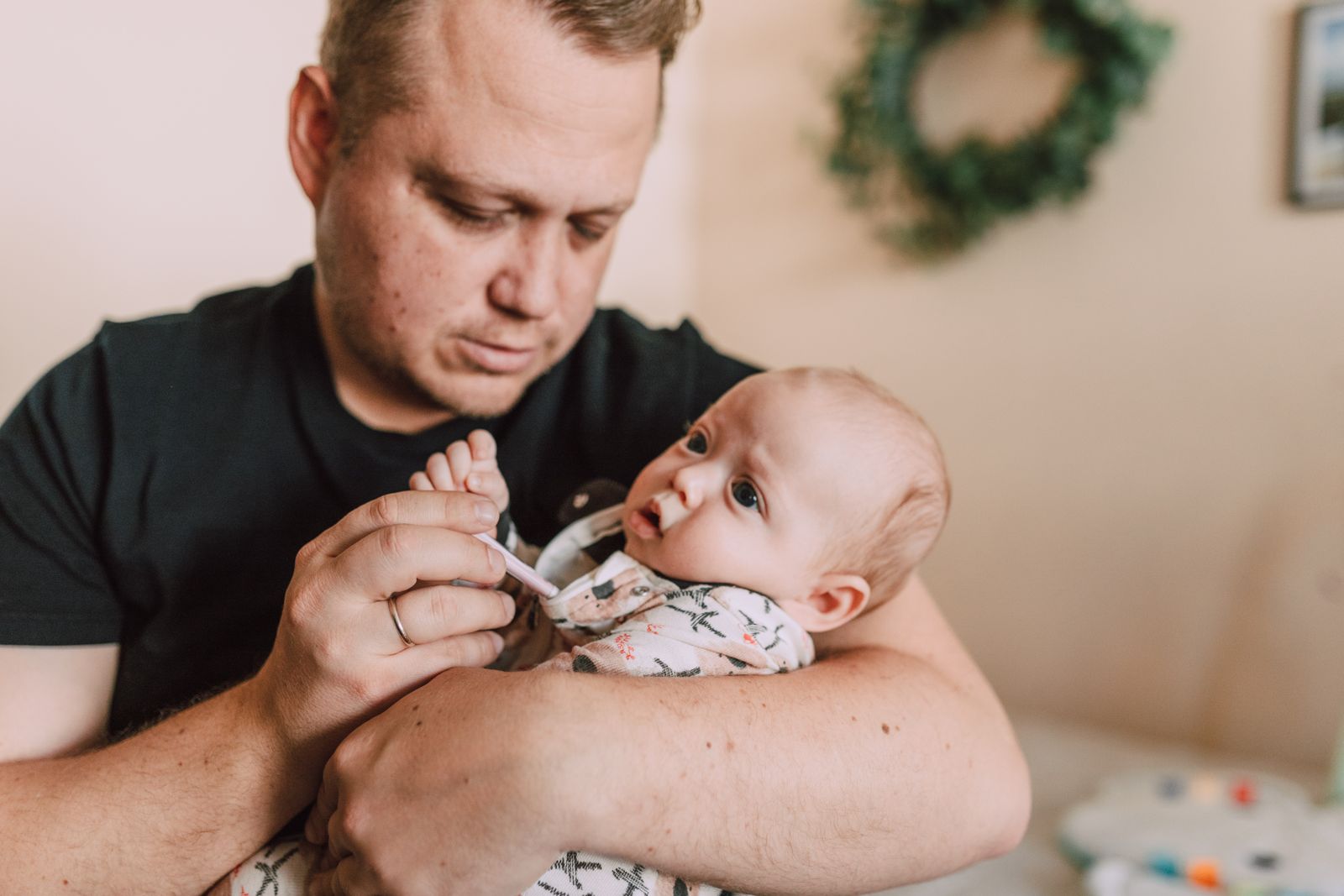
A lot of warm babies don’t have fevers at all. Babies run hot after a long cry, after a feed, after a nap in a sunny room, or under one blanket too many. Their skin is a bad thermometer, and so is your hand. If your baby feels warm, strip them down to a diaper, wait fifteen minutes, and take an actual reading.
Fever itself isn’t the illness. It’s your baby’s immune system turning the heat up on purpose to make their body a worse place for a virus to live. The fever is the smoke alarm, not the fire. What you’re really looking for is what set it off.
How to take your baby’s temperature
Rectal is the only reading that counts under 3 months. It’s the one your doctor will ask for, and if you tell them a forehead number they’re going to ask you to go back and do it again.
Here’s how, without the dread:
- Use a digital thermometer labeled for rectal use. Not a glass one, not the same one you use in your own mouth. Keep it in the nursery so you’re not hunting at 2am.
- Put a little petroleum jelly on the tip. This is the step people skip, and it’s the one that makes it easy.
- Lay your baby on their back and lift their legs like you’re changing a diaper, or lay them face down across your lap.
- Slide the tip in about half an inch. No more. Hold it steady with one hand and keep your other hand on their bottom or back so they can’t roll.
- Wait for the beep, then read it. Thirty seconds, usually less. Label whatever you write down as rectal so you can tell your doctor exactly what kind of reading it was.
Forehead and ear thermometers are fine for a quick check on a baby over 3 months when you already know what you’re dealing with. Armpit readings run low and are only a screening tool. Don’t add a degree to an armpit reading. That old trick turns a guess into a different guess, and it’s how babies end up getting seen too late. If the armpit number worries you, take a rectal one.
Why your baby’s age changes everything
This is the part most articles bury, and it’s the only thing that really decides what you do tonight.
Under 3 months: 100.4F means call right now. Not in the morning. Not after a dose of Tylenol. A newborn’s immune system can’t wall off an infection the way an older baby’s can, and at this age a fever is sometimes the only sign that something serious is going on. Your baby may look completely fine and still need to be seen. If you can’t reach your pediatrician or the after-hours line within a few minutes, go to the emergency room. Nobody there will think you overreacted.
Also under 3 months: don’t give fever medicine before they’re evaluated. It can bring the number down and hide how sick your baby actually is, which makes your doctor’s job harder.
3 to 6 months: call the same day. Your baby has a little more immune backup now, but this is still an age where your pediatrician wants to hear about a fever rather than read about it later. Call for anything at or above 102F, and call for a lower fever too if your baby seems off, won’t feed, or is harder to wake than usual.
6 months and up: watch the baby, not the number. A 103F fever in a baby who is drinking, making wet diapers, and willing to smile between miserable stretches is much less worrying than a 100.6F fever in a baby who has gone limp and quiet. Call if the fever lasts more than 2 to 3 days, climbs above 104F, or if anything about how your baby is acting scares you.
That last line is doing real work. You are allowed to call because your gut says something is wrong. Parents catch things thermometers don’t, and no good pediatric office has ever been annoyed by that phone call.
Track every feed without the spreadsheet
Latchly times each side, logs pumps, and shows you the patterns. Free to start.
What to do at home
Once your baby is old enough that you’re managing a fever rather than reporting one, the job is comfort and fluids. That’s genuinely it.
- Keep the fluids going. Under 6 months that means breast milk or formula only, no water. Offer more often than usual and expect shorter, sloppier feeds. A sick baby who nurses for five minutes every hour is doing fine. If you’re worried about intake, our guide on how to tell if your baby is getting enough milk walks through the signs. If you caught the same bug, keep nursing. Here’s what to take when you’re sick while breastfeeding.
- Count wet diapers. This is your best at-home dehydration check. You want a wet diaper at least every 6 to 8 hours. Fewer than that, or dark concentrated urine, is worth a call. Here’s what normal wet diaper counts look like by age. Watch the poop too: watery diapers much more often than usual add to dehydration, and our baby poop color guide covers what else to look for.
- Dress them light. One light layer, no extra blanket, no space heater. Bundling a hot baby traps the heat and pushes the fever higher.
- Skip the cold bath. Cold water and rubbing alcohol are both off the table. They cause shivering, and shivering raises body temperature right back up. A lukewarm bath is fine if your baby likes it, but it’s for comfort, not for treatment.
- Use medicine for comfort, not for the number. If your baby is over 3 months, miserable, and your pediatrician has given you the go-ahead, acetaminophen can help them rest and feed. Ibuprofen isn’t for babies under 6 months. Dosing is by weight, never by age, so get the exact amount from your pediatrician or the weight chart on the package, and use the syringe that came in the box instead of a kitchen spoon. Never give aspirin to a baby or child.
- Write down the times. Temperature, the reading, when you gave medicine, how many wet diapers. At 3am you will not remember, and your doctor is going to ask.
You do not have to medicate every fever. A baby with a 101F temperature who’s playing and drinking doesn’t need anything but a lighter outfit and more milk.
Fever myths that scare parents for no reason
Teething does not cause a fever. Teething can make a baby feel a touch warm and generally wretched, but it doesn’t push a temperature to 100.4F. If your baby hits that number, something else is going on, and blaming the teeth is how real infections get missed. Our post on what teething actually looks like covers what does and doesn’t belong on the teething list.
A high fever doesn’t cause brain damage. This is the fear almost every parent carries, and it comes from mixing up fever with heatstroke. Fevers from everyday infections don’t reach the temperatures that harm the brain. Your baby’s body has a ceiling and it holds it.
A fever that doesn’t respond to medicine isn’t automatically scarier. Some fevers only come down a degree or so, and that’s normal. What matters is whether your baby perks up at all when the number dips.
Colds, stuffiness, and low fevers travel together. A fever alongside congestion in an older baby usually means an ordinary virus running its course. If the stuffiness is the bigger problem, this is how to clear it.
When to call your pediatrician
Call, any age, for:
- A rectal temperature of 100.4F or higher in a baby under 3 months, immediately
- A fever of 102F or higher in a baby 3 to 6 months
- A fever above 104F at any age over 6 months
- A fever lasting more than 2 to 3 days
- Fewer wet diapers than usual, no tears when crying, a dry mouth, or a sunken soft spot
- Refusing to feed, or feeding far less than normal
- In a newborn, yellow skin or eyes that are spreading or getting deeper (our newborn jaundice guide explains when that needs a same-day call)
- A fever that goes away for more than a day and then comes back
- Your gut telling you something is wrong, with or without a reason you can name
Go to the ER or call emergency services now for:
- Trouble breathing, fast breathing, grunting, or the skin pulling in between the ribs
- Blue, gray, or mottled lips or skin
- A baby who won’t wake up, or won’t stay awake
- A limp, floppy baby, or one who cries weakly and can’t be comforted at all
- A stiff neck, a bulging soft spot, or a seizure
- A rash of small red or purple spots that doesn’t fade when you press a glass against it
That last one is worth memorizing. Press a clear glass to the rash. If the spots stay visible through it, go now.
The thing I wish I’d known
The first fever is the one that takes a year off your life. You will stand in the dark with a thermometer in your hand, reading the same three digits over and over, trying to decide if you’re the kind of parent who calls at 2am or the kind who waits.
Call. That’s the whole answer. Pediatric after-hours lines exist for exactly this, the nurse on the other end has taken this call a thousand times, and the number of parents who get told off for checking is zero. You will never regret the call you made. You might regret the one you talked yourself out of.
And the second fever? Still not fun, but you’ll know what to do. You’ll reach for the right thermometer, strip the extra layer, start the diaper count, and watch your baby instead of the number. That’s not instinct you were born with. That’s just the first fever, teaching you.
Tonight, do one thing: put a rectal digital thermometer and a small tube of petroleum jelly in the nursery, where you can reach them in the dark. Future you, at 2am, will be so grateful.
Frequently asked questions
What temperature is a fever in a baby?
A fever is 100.4F (38C) or higher taken rectally. Anything under that is not a fever, even if your baby feels warm to the touch.
My baby is under 3 months and has a fever. What do I do?
Call your pediatrician right now, or go to the ER if you can’t reach anyone within a few minutes. A fever under 3 months is treated as an emergency because it can be the only sign of a serious infection. Don’t give fever medicine first, since it can mask how sick your baby actually is.
Can teething cause a fever?
No. Teething can make your baby feel slightly warm, but it doesn’t cause a true fever of 100.4F or higher. If your baby hits 100.4F, treat it as a fever and look for another cause instead of blaming teeth.
Is a forehead or ear thermometer good enough?
They’re fine for a quick check on an older baby, but under 3 months you need a rectal reading before you call. Armpit readings run low and should never be adjusted by adding a degree. Take a rectal temperature instead.
Does a high fever mean brain damage?
No. Fever from an everyday infection doesn’t climb high enough to hurt your baby’s brain. How your baby is acting, breathing, and feeding tells you far more than the number does.
Can I give my baby Tylenol for a fever?
Not under 3 months without your doctor telling you to. Ibuprofen isn’t for babies under 6 months at all. Dosing goes by your baby’s weight, not their age, so get the exact amount from your pediatrician and use the syringe that came in the box.