
TL;DR
Breastfed baby poop is usually mustard yellow, loose and seedy, and green, orange or tan can all be normal too. The 3 colors to never ignore are white or chalky, red, and black after the first few days. Pay more attention to how often your baby poops in the first 6 weeks than to the exact shade.
You open the diaper, see something green, and suddenly you’re googling at 3am with one hand. Every new mom does this. Breastfed baby poop changes color more than anyone warns you, and almost all of it is fine. A few colors aren’t, though, and those are the ones worth knowing cold.
First, the part that will feel familiar: you’ve taken a photo of a diaper. Maybe more than one. You may have texted it to someone.
What breastfed baby poop normally looks like
Normal breastfed baby poop is mustard yellow, loose, and a little seedy. It can look like cottage cheese stirred into mustard. Some days it’s runny enough to soak into the diaper. The smell is mild, almost sweet, nothing like adult poop.
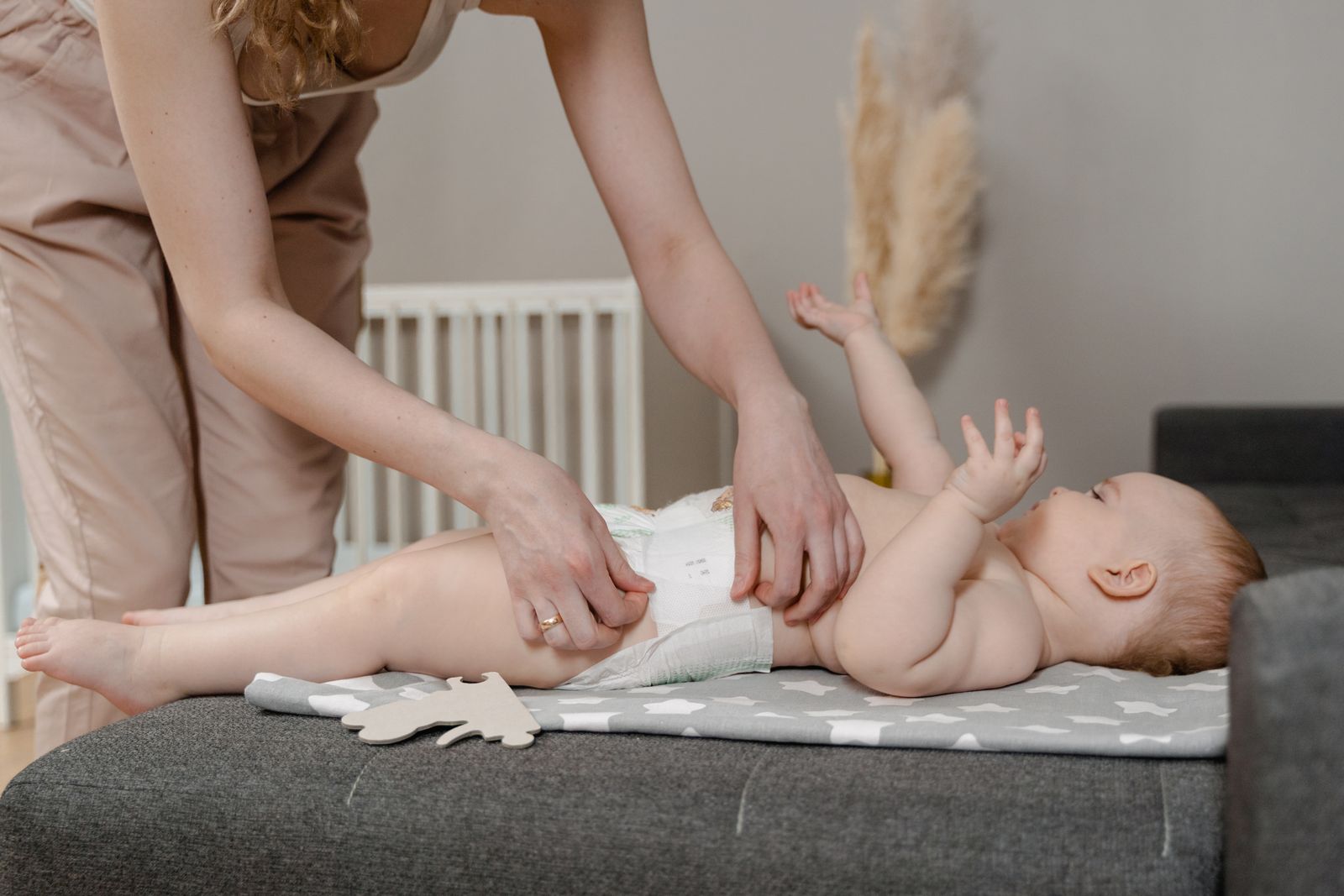
Those seeds are just milk fat your baby didn’t fully digest. They’re harmless.
The color also changes on purpose in the first week, and this is the part that worries a lot of moms for no reason:
- Days 1 to 2: meconium. Black or dark green, thick and sticky like tar. This is what was in your baby’s gut before birth. It’s normal and expected.
- Days 3 to 4: transition poop. Greenish brown and looser. This shift is a good sign. It means your milk is coming in and moving through.
- Day 5 on: yellow. By the end of the first week, most breastfed babies have yellow poop. If you’re still seeing dark, sticky meconium on day 5, call your pediatrician. It can mean your baby isn’t getting enough milk yet. Low poop output in the first week also lets bilirubin build up, which is how newborn jaundice in breastfed babies usually starts.
The breastfed baby poop color chart
Here’s what each color usually means. Read it once, then stop checking every shade, because one odd diaper on its own almost never means anything. Patterns matter more.
1. Mustard yellow. The textbook breastfed poop. Your baby is eating and digesting well.
2. Orange or orange-yellow. Also normal. It’s a slightly different mix of the same thing.
3. Light brown or tan. Common if your baby gets any formula, and common as babies get older. Formula poop tends to be thicker, like peanut butter.
4. Green. Usually fine. Poop can turn green after it sits in the diaper and meets air. Green can also show up if your baby has a cold, is teething, or is on medicine. If it’s bright green and frothy most of the time, see the section below.
5. Dark green or almost black, day 1 to 3. That’s meconium. Normal.
6. Black after day 5. Not normal. Call your pediatrician. Iron drops can turn poop very dark green, but true black, tarry poop after the first week needs a check.
7. Red, or red streaks. Call your pediatrician. It’s often something small, but it’s never something to guess about.
8. White, pale gray, or chalky. Call your pediatrician today. This is the rarest one and the most important.
The 3 colors to never ignore

White, red and black are the three that always get a call. Here’s why.
White or chalky poop. Poop gets its color from bile, which comes from the liver. If poop is pale, chalky, or the color of putty, bile may not be reaching the gut. That can be a sign of a liver problem called biliary atresia. It’s rare. It’s also treated best when it’s caught in the first weeks of life, which is why you call the same day. If your baby is also still yellow in the skin or eyes past 2 weeks, mention that too. Take a photo of the diaper next to a white wipe so the doctor can see the true shade.
Red poop or red streaks. The most common causes are small ones. A tiny tear around your baby’s bottom from straining can leave a streak. Blood from a cracked nipple can be swallowed and show up later. Streaks of red mixed with mucus can also be a sign of a cow’s milk protein allergy, where dairy in your diet bothers your baby’s gut. All of these are worth a check, and none of them are something you need to figure out alone.
Track every feed without the spreadsheet
Latchly times each side, logs pumps, and shows you the patterns. Free to start.
Black poop after the first week. Once meconium has passed, black, sticky poop can mean old blood from higher up in the gut. Swallowed blood from a cracked nipple is again a common, harmless cause. Your pediatrician will want to know either way.
What about green, frothy poop?
Bright green, frothy, explosive poop is usually a feeding pattern, not an illness. It often shows up when a baby gets a lot of the thinner milk from the start of a feed and less of the fattier milk that comes later. That extra milk sugar moves through fast and makes poop green, foamy, and gassy.
This happens most with oversupply or a fast letdown. Your baby fills up quickly, comes off, and then the next feed starts on the other side. If this sounds like you, our guide to oversupply and overactive letdown has gentle fixes, like finishing one side before switching. If your baby is also gassy and fussy after feeds, the newborn gas relief tips help too.
A baby who is gaining well with green poop is fine. You don’t need to change anything unless your baby seems uncomfortable.
How often should a breastfed baby poop?
In the early weeks, how often your baby poops tells you more than the color does.

Here’s a simple guide:
- Day 1: at least 1 poop.
- Day 2: at least 2.
- Day 3: at least 3.
- Day 4 to week 6: at least 3 to 4 a day, each at least the size of a quarter. Many babies poop after almost every feed, and that’s great.
- After 6 weeks: many breastfed babies slow down a lot. Some go once a day. Some go once every few days. Some go a week. If the poop is still soft when it comes, and your baby is feeding well and gaining, this is normal.
Fewer than 3 poops a day in the first few weeks is worth a call. It can be an early sign your baby isn’t getting enough milk. Check it alongside wet diapers, using our wet diaper chart by day, and the other signs your baby is getting enough milk.
Texture matters too
Color gets all the attention, but texture is just as useful.
- Loose and seedy: normal.
- Watery, much more often than usual, or spraying out the diaper: this can be diarrhea, not just runny breastfed poop. Watch closely for dehydration, especially with a fever. If your baby has a fever too, our guide to a baby’s first fever walks you through when to call.
- Hard, dry, or pebble-like: rare in a fully breastfed baby, and more common with formula or solids. Our guide to baby constipation explains how to tell real constipation from a normal slow week.
- A little mucus now and then: often from drool or a cold. Lots of mucus, every diaper, or mucus with blood is worth a call.
When solids start, everything changes. Poop turns browner, thicker, and much smellier. You’ll see bits of carrot or banana. That’s normal. Our starting solids guide covers what else to expect.
How to check a diaper without spiraling
Look at the pattern over a day, not one diaper. Here’s a quick way to do it.
- Check the color right away. Poop that sits can darken or turn green.
- Note the time. In the first 6 weeks, count poops the same way you count feeds.
- Compare against a white wipe. Diaper liners can make colors look off.
- Take a photo if anything looks strange. Doctors find a photo far more useful than a description.
- Look at the whole baby. Feeding well, peeing well, alert when awake? That counts for more than any one shade.
When to call your pediatrician
Call the same day if you see:
- White, gray, chalky, or clay-colored poop
- Red poop or red streaks, with or without mucus
- Black, tarry poop after day 5
- Still passing meconium on day 5
- Fewer than 3 poops a day in the first 6 weeks
- Watery poop much more often than usual, especially with a fever
- Fewer than 6 wet diapers a day after day 5
- Yellow skin or eyes that last past 2 weeks, or get worse
- A baby who is too sleepy to feed, or who is feeding much less than usual
Trust your gut. If something seems off and you can’t say why, call anyway. That’s what the nurse line is for.
The thing I wish I’d known

Nobody tells you how much of early motherhood happens over a changing pad. You’ll study diapers like they’re a test you might fail. That’s not silly. In the first weeks, diapers really are one of the best ways to know your baby is getting enough.
But the shade will change all the time, and almost all of it is your baby’s body doing its job. Learn the 3 colors that matter, count the poops for the first 6 weeks, and let the rest go. You don’t need to photograph every green one.
Tonight, just glance at the next diaper and ask one question: is it white, red, or black? If not, you’re done. Close the diaper and go back to bed.
Frequently asked questions
What color should breastfed baby poop be?
Mustard yellow is the classic color, with a loose, runny texture and little seed-like bits. Light brown, orange-yellow and green-yellow are all normal too. The shade can change from one diaper to the next and that’s fine.
Is green poop normal for a breastfed baby?
Usually, yes. A green diaper here and there is common, and poop that sits in the diaper can turn green as it meets air. Frequent bright green, frothy poop can be a sign your baby is getting lots of lower-fat milk, which often happens with oversupply or a fast letdown.
How often should a breastfed baby poop?
From about day 4 to week 6, expect at least 3 to 4 poops a day, each at least the size of a quarter. After 6 weeks, many breastfed babies slow down a lot. Going several days without a poop can be normal at that age as long as it’s soft when it comes and your baby is feeding and gaining well.
What does white or pale baby poop mean?
Chalky white, pale gray or clay-colored poop can mean bile isn’t reaching the gut, which can point to a liver problem. It’s rare, but it’s time-sensitive. Call your pediatrician the same day and take a photo of the diaper.
Why is there blood in my breastfed baby's poop?
A few red streaks are often from a tiny tear around the bottom or from blood your baby swallowed from a cracked nipple. Red streaks with mucus can also be a sign of a cow’s milk protein allergy. Any red in the diaper deserves a call to your pediatrician so they can check the cause.
Does breastfed baby poop change when starting solids?
Yes, a lot. Once your baby starts solids, poop gets thicker, browner and smellier, and you may see bits of food in it. That’s a normal change, not a sign something is wrong.