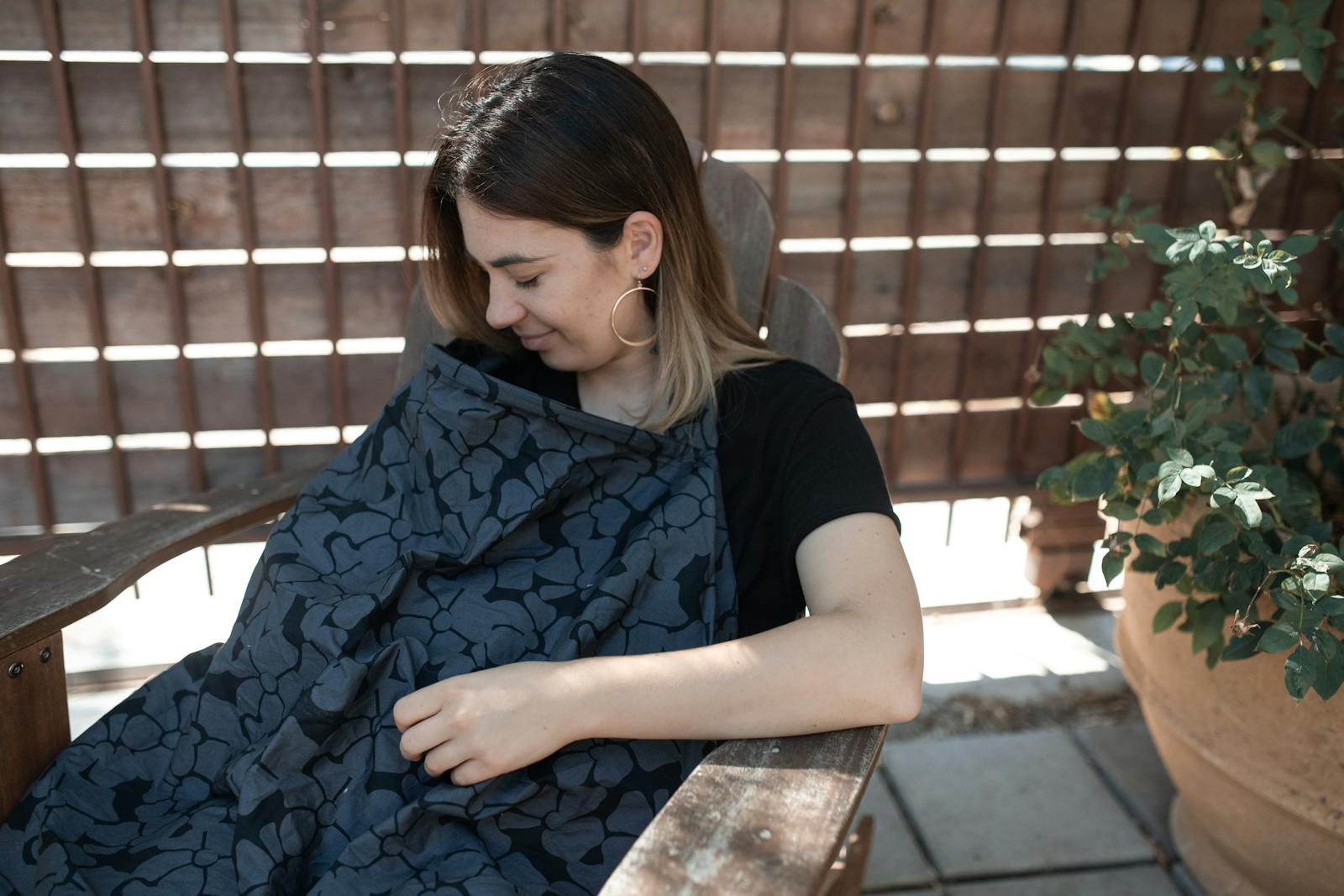
TL;DR
Breastfeeding in public is legal in all 50 US states, and the truth is, almost nobody notices. The 6 steps below (wear easy access tops, scout your spot, practice the position once at home, pack 4 essentials, prep one calm script for if anyone says anything, and just go) take the first outing from terrifying to forgettable. Most moms say the second time out is barely a thing.
You are sitting in your car in the parking lot of a coffee shop, your baby is starting to root, and you are doing the math on whether you can get home before this turns into a full feed. You cannot breastfeed in your driveway forever.
The first public feed is a wall every breastfeeding mom hits. Not because it’s actually hard. Because the idea of it is loud. You picture the worst-case scenario (a stranger glaring, a manager asking you to move, a nipple slip in front of someone’s grandfather) and the picture is so vivid you stop leaving the house.
Here is what actually happens the first time you breastfeed in public: nothing. You latch the baby. They go quiet. You drink your coffee. Twelve minutes later you are walking to your car. Almost nobody looked up.
This guide is the 6 steps that get you from “I can’t” to “that was fine,” plus the scripts and the legal piece, so the picture in your head matches the reality.
What “breastfeeding in public” actually means
Breastfeeding in public means feeding your baby anywhere outside your home, with or without a cover, in any space you and your baby are allowed to be. That includes cafes, restaurants, parks, malls, airplanes, libraries, churches, doctor offices, the DMV, and the line at Target.
It is legal in all 50 US states. Every single one has passed a law protecting your right to nurse where you and your baby legally are. You do not have to use a cover. You do not have to move to a bathroom. You do not have to ask permission. Federal law (the PUMP Act, 2022) covers nursing and pumping protections at work.
The fear isn’t really about the legality. It’s about the eyes. And the eyes are mostly imaginary.
Why the first time is the hardest (and the only hard one)
Most moms say their first public feed was the scariest moment of early breastfeeding, and the second time was already mostly fine. There’s a reason:
- You’re rehearsing the wrong scene. The brain replays a stranger making a comment. In real life, the comment almost never happens.
- You haven’t practiced the move yet. Lifting a shirt while latching a wiggly baby in a booth seat is a skill. Doing it once at home in front of a mirror takes 90% of the awkwardness out.
- You’re judging yourself by old internet drama. The viral “mom kicked out of restaurant” stories are rare events that go viral because they’re rare. They are not the norm.
Once you get one calm, uneventful public feed under your belt, the fear collapses. The trick is just stacking up that first one.
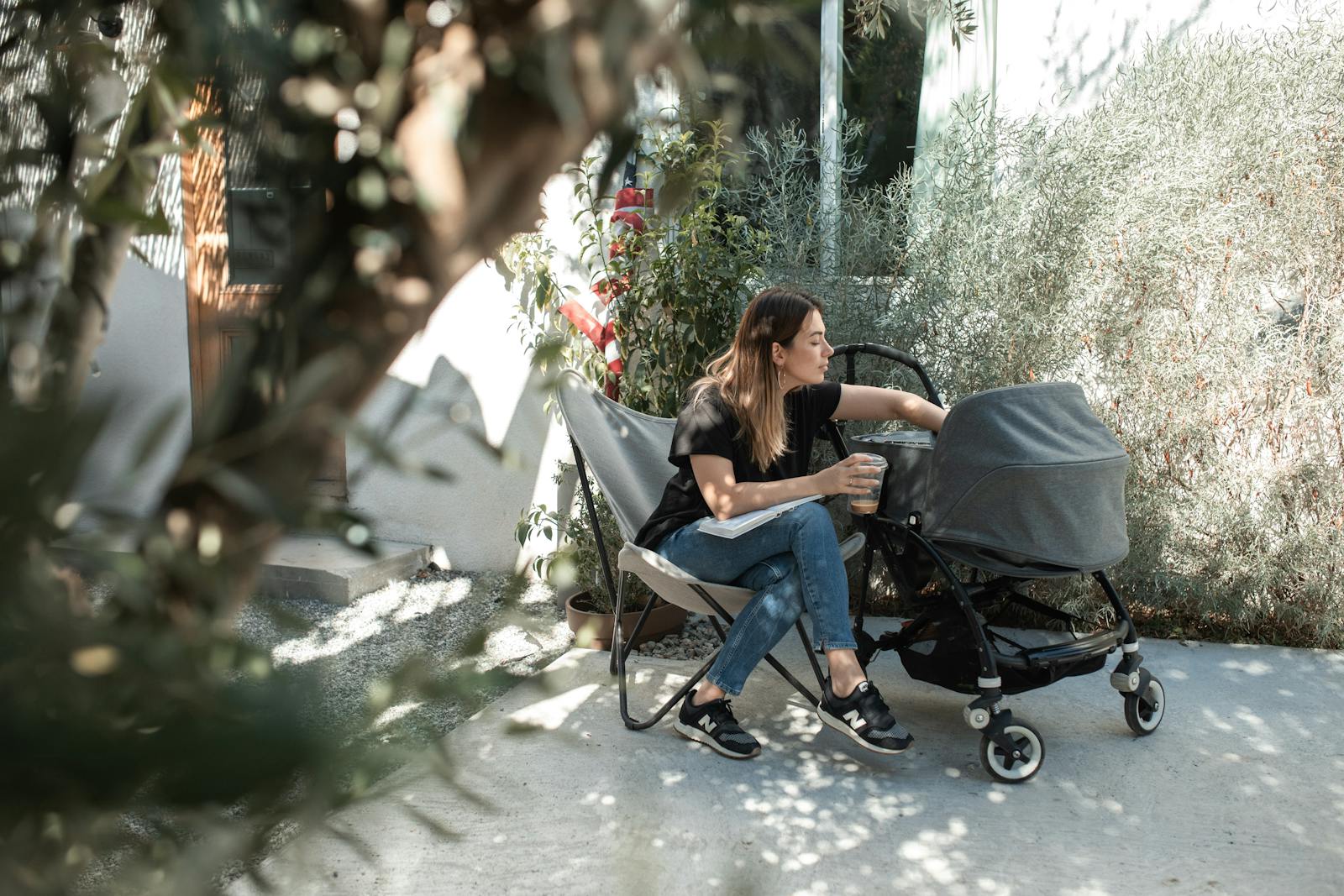
How to breastfeed in public, step by step
1. Pick the right outfit
A two-piece, stretchy or button-friendly top is your best friend. The easiest options:
- Nursing tank under any regular shirt. Lift the shirt, pull down the tank cup. The shirt covers the top of your breast, the tank covers the bottom. Almost no skin shows. This is the move 80% of nursing moms use.
- Button-front shirt. Unbutton from the bottom up, only as far as you need.
- Wrap dress or V-neck. Pull the neckline aside or down.
- Skip: one-piece dresses without nursing access, complicated layers, anything tight that fights you when you lift it.
A cardigan or loose flannel adds a side panel of extra cover if you want it.
2. Decide on a cover (and own the decision)
Covers are a personal call. Try both at home first.
- Pro cover: privacy, focus for distractible babies (around 4-5 months), helps if you’re nervous.
- Con cover: can overheat baby, can draw more attention than no cover (a flapping cloth is more eye-catching than a calm baby), older babies yank them off.
A muslin swaddle, a nursing scarf, or just your shirt all work. There’s no medal for using a cover and no medal for not using one. Pick what helps you relax.
3. Scout your first spot
For your first outing, pick a location where you can predict the layout.
- Friendly first picks: a park bench in a quiet corner, a quiet cafe at off-peak hours (10am or 3pm), a friend’s house, a bookstore reading chair, your car.
- Save for later: loud restaurants on a Friday night, crowded events, anywhere you’d be embarrassed if the baby cried for 5 minutes solid.
Walk in. Find a spot with your back to a wall or a corner if it helps. You don’t need privacy. You just need a low-stakes setting for round one.
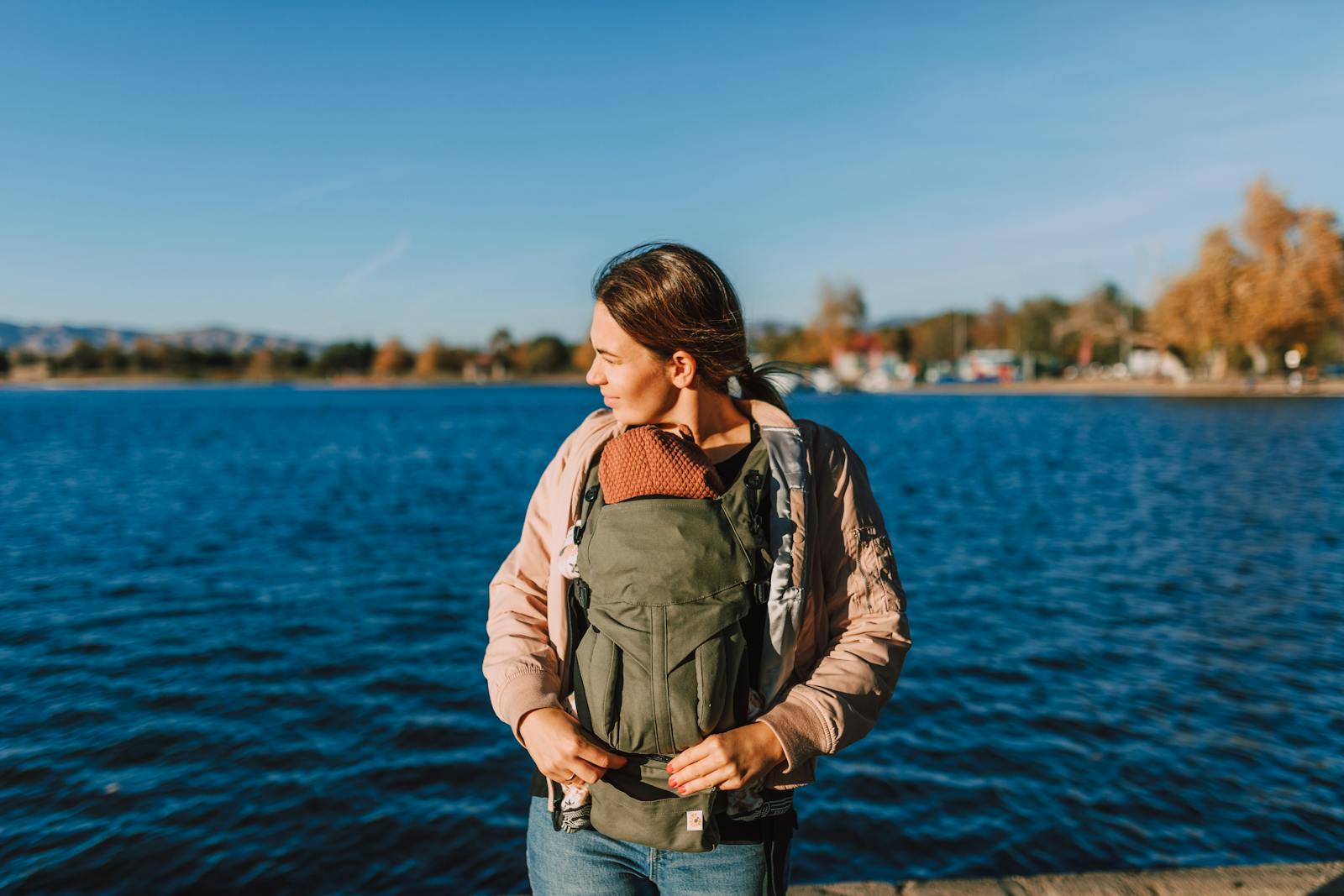
4. Pack the 4 essentials
Your diaper bag for a public feed needs less than you think:
- A burp cloth or muslin (doubles as a cover if you want one mid-feed)
- One spare onesie (in case of a milk overflow or blowout)
- 2 diapers + wipes
- A water bottle for you (breastfeeding makes you thirsty, especially in public when you can’t snack as freely)
That’s the kit. Anything more is bag bloat. If you want a fuller starter kit, our postpartum essentials checklist covers the items that earn their spot for the early weeks.
Track every feed without the spreadsheet
Latchly times each side, logs pumps, and shows you the patterns. Free to start.
5. Practice the latch position once at home
Sit on a kitchen chair (similar to a cafe chair). No cushions. Lift your shirt the way you will in public. Pull the tank cup down. Latch the baby in your normal cradle, cross-cradle, or laid-back position. Time how long it takes. Most moms get it under 30 seconds with practice.
If your normal latch is shaky, fix that piece first before adding “in public” to the difficulty. Our deep latch breastfeeding guide walks through getting a comfortable, pain-free latch from any seated position. Some moms also find specific breastfeeding positions (like the football hold) easier in tight spaces like booth seats.
6. Prep one calm script (just in case)
The odds someone says something to you are very low. Prepping a line anyway means you don’t freeze if it does happen.
- “I’m allowed to feed my baby here, thanks.”
- “She’s eating. We’ll be done in a few minutes.”
- (To your partner or friend) “Can you grab me water? I’m fine, just want to focus on her.”
Say it once flat and don’t argue. You are not auditioning for someone else’s comfort. You are feeding your baby.
If a business asks you to leave for breastfeeding, that may be illegal in your state. You can report it later. In the moment, just leave calmly with the baby still latched if you have to.
The truth about whether people stare
Here is the honest answer, from thousands of moms who’ve done it:
- About 80% of the time, nobody notices at all. People are on their phones. They are talking. They are eating. They glance at a baby for half a second the way they’d glance at a dog and look away.
- About 18% of the time, someone smiles or nods. Other moms in particular will give you a knowing look. It feels nice.
- About 2% of the time, someone gives a weird look or makes a comment. Almost always a much older person, almost never a manager. The script in step 6 handles it.
The math is way more in your favor than the brain wants to admit. The fear is loud, but the actual experience is forgettable, which is exactly what you want.
What about pumping in public?
Same legal protections, slightly different logistics. Most public-pumping moms use a wearable pump (Elvie, Willow, Momcozy) under a loose top, or a hand pump in a parked car. The PUMP Act guarantees private space and break time at work. If you’re building a freezer stash before a return-to-work date, our pumping schedule and freezer stash guide walks through the rhythm.
For the times you can’t bring baby and need to pump on a feed schedule, storing breast milk safely covers the cooler bag and ice pack rules so the milk you express is still good when you get home.
When to call your pediatrician (or your OB)
Most public-feed worries are emotional, not medical. But a few signals are worth a call:
- Pain that’s new or sharp during a public feed, especially with a wedge of redness on your breast (possible mastitis, our engorgement and clog relief guide covers the difference).
- Baby refusing the breast in public but feeding fine at home for more than a couple of days (could be distraction, could be a flow or supply shift).
- Persistent dread or panic about leaving the house that lifts when you skip the outing. If the avoidance is taking over your week, that crosses into postpartum anxiety territory and is worth a call. Our baby blues vs postpartum depression guide walks through when avoidance becomes something more.
The thing I wish I’d known
The first time I breastfed in public, my heart was pounding and I was sure everyone in the cafe was watching. I lifted my shirt, latched my daughter, and stared at the table for the entire feed. When it was done I looked up. Nobody had moved. The barista was making a latte. The guy in the corner was on his laptop. Two women were laughing at something on a phone.
Nothing had happened. Nothing.
That was the moment I realized the audience I was so scared of was a story my brain wrote, not a thing that existed in the room.
You will not regret leaving the house. You will regret the months you didn’t, because the loneliness of an inside-only postpartum is a real and heavy thing. The first outing is the wall. Walk through it once and the wall is gone.
Tomorrow, pick the easiest spot you can think of. A friend’s porch. A quiet park bench. The bookstore where you used to go before the baby. Bring water. Wear your nursing tank. Latch your baby. Drink your coffee. Look up.
Almost nobody will be looking back.
Frequently asked questions
Is it legal to breastfeed in public?
Yes. All 50 US states (and DC and Puerto Rico) have laws protecting your right to breastfeed anywhere you and your baby are legally allowed to be. You do not need permission. You do not have to move to a bathroom. The federal PUMP Act also covers nursing and pumping at work.
Do I have to use a nursing cover?
No. Covers are a personal choice, not a requirement. Some moms find them helpful for focus and privacy, especially in the early weeks. Others find covers draw more attention or overheat the baby. Either choice is fine. Babies past 3-4 months often pull covers off anyway.
What should I wear to breastfeed in public?
A two-piece outfit with stretchy or unbuttonable access on top. Easy options: a nursing tank under any regular shirt (lift the shirt, pull down the tank cup), a button-front shirt, a wrap dress, or a stretchy V-neck. Skip one-piece dresses unless they have nursing access. A loose cardigan adds extra cover.
What if my baby cries or unlatches in the middle of a public feed?
Stay calm. The first 30 seconds of a public latch are the loudest part. Once baby is on, they go quiet fast. If they unlatch, calmly relatch the way you would at home. Nobody will pay as much attention as you think. Most people glance and move on.
What do I say if someone tells me to cover up or move?
You can keep it short and confident. ‘I’m allowed to feed my baby here, thanks.’ If they push, repeat the same line and stop engaging. You don’t owe a stranger an explanation. If a business asks you to leave, that may be illegal in your state and you can report it.
When can I take my baby out for the first time?
There is no fixed rule. Many pediatricians okay short outings (a quiet park, a friend’s porch, a low-key cafe) within the first 1-2 weeks if mom and baby are doing well. Avoid crowded indoor spaces and sick contacts in the first 6-8 weeks while baby’s immune system is building.