
TL;DR
Postpartum anxiety is worry that won't switch off, a racing heart, trouble sleeping even when the baby sleeps, and scary what-if thoughts you can't shake. It is common, it affects up to 1 in 5 new moms, and it is very treatable. The big difference from normal new-mom worry is that this kind takes over your day and does not ease up on its own past the two-week mark. Talk to your provider, because therapy and medications that are safe while breastfeeding both work. And if you ever have thoughts of harming yourself or your baby, or your thoughts start to feel real, call or text 988 or go to the nearest ER now.
It is 2 a.m. The baby is finally asleep. You should be asleep too. Instead you are lying there with your heart pounding, replaying every worst-case thing that could happen, checking the monitor for the tenth time to make sure the little chest is still rising and falling. You are exhausted past words and your brain will not turn off. If that is you, please hear this first: you are not going crazy, you are not a bad mom, and you are not alone. What you are describing has a name, it is common, and it gets better with the right help.
First, the part that will feel familiar. You have probably googled your symptoms at 3 a.m. and landed on something scary. Maybe you have not told anyone how loud the worry has gotten because you are afraid of how it sounds, or afraid someone will think you cannot handle your own baby. Almost every mom with postpartum anxiety does some version of this quiet, white-knuckle coping. The moment you put a name to it, though, the fog gets a little thinner, and there are real, doable things that help.
What postpartum anxiety actually is
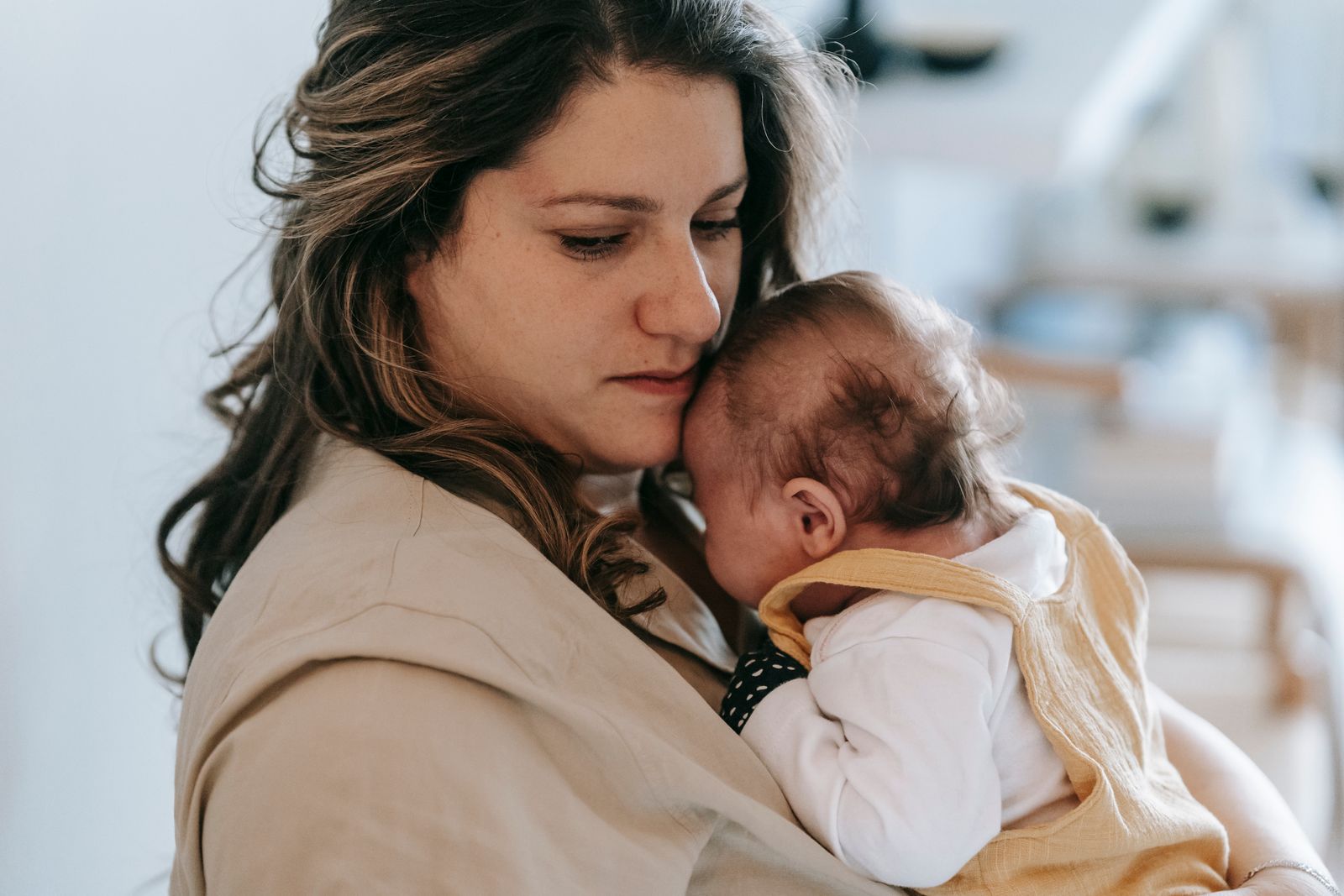
Postpartum anxiety is excessive, hard-to-stop worry and fear in the weeks and months after having a baby. It is one of the perinatal mood and anxiety disorders, the same family that includes postpartum depression, and it is thought to affect up to 1 in 5 new moms. For a long time nobody talked about it, partly because worry in a new mom gets waved off as normal, so a lot of moms suffer through it thinking this is just what having a baby feels like.
It is not only in your head, either. Postpartum anxiety shows up in your body. A racing or pounding heart, a tight chest, shortness of breath, dizziness, nausea, a jittery can’t-sit-still feeling, and clenched muscles are all part of it. Those physical waves can be so strong that moms end up in urgent care sure that something is medically wrong, when the real driver is anxiety.
Here is the part worth underlining. Postpartum anxiety is a medical condition, not a character flaw or a sign you are not cut out for this. A big drop in estrogen and progesterone after birth, brutal sleep loss, and the sheer weight of keeping a tiny human alive all stack up on your nervous system. Add a history of anxiety, a hard birth, a NICU stay, or a colicky baby, and the odds go up. None of that is something you did wrong.
Postpartum anxiety vs normal new-mom worry
Every new parent worries. Worry is not the problem. The problem is when the worry takes the wheel. So how do you tell ordinary new-mom concern from something more?
Normal worry comes and goes. Postpartum anxiety does not switch off. Regular worry flares up when there is something to worry about, like a fever or a feeding that went badly, and then it settles once the moment passes. Postpartum anxiety hums in the background all day and spins up over things that are unlikely or already fine. You solve one worry and three more take its place.
Normal worry lets you live. Anxiety gets in the way. If the worry is stopping you from eating, sleeping when you could, leaving the house, or enjoying your baby at all, that is past typical. When fear is running your day instead of just visiting it, that is the line.
The baby blues fade by two weeks. This does not. The baby blues are the weepy, tender, up-and-down feelings that hit a few days after birth and lift on their own by about two weeks. Postpartum anxiety lasts longer, feels more intense, and does not clear up by itself. That two-week mark is the single most useful line to watch. If the worry is still heavy past day 14, or it is getting worse instead of better, it is worth a call.
9 signs it’s postpartum anxiety, not just worry

No one has all nine, and having a few does not make it official. But if a handful of these sound like your last couple of weeks, it is a strong nudge to talk to your provider.
1. The worry never shuts off. Your mind races from one what-if to the next and you cannot steer it somewhere calmer, even when everything is actually fine right now.
2. You can’t sleep even when the baby is asleep. You are wiped out, the house is quiet, and you still lie there wired, listening, unable to drop off. This one is a classic, and it makes everything else worse.
3. Your body is on high alert. A racing heart, a tight chest, shortness of breath, nausea, dizziness, or a shaky, keyed-up feeling with no medical cause behind it.
4. You check on the baby over and over. Standing over the crib to confirm the breathing, replaying safety scenarios, waking to check even when the baby has not stirred. A little checking is normal. Checking that steals your sleep is not.
5. Scary what-if thoughts and images keep intruding. Vivid flashes of something terrible happening to the baby that come out of nowhere and horrify you. (There is a whole section on these below, because they scare moms the most and are the most misunderstood.)
6. You start avoiding things. Skipping outings, not letting anyone else hold the baby, dreading car rides, canceling plans, all to keep the worry from spiking.
7. You feel on edge, irritable, or full of rage. Anxiety and anger are close cousins. A short fuse, snapping at your partner, or waves of anger that feel bigger than the moment can all ride along with postpartum anxiety.
8. You feel like something bad is about to happen. A constant sense of dread, like you are waiting for the other shoe to drop, even with no reason in front of you.
9. It’s lasted more than two weeks and it’s not easing up. Past the two-week mark, still heavy or getting worse, is the sign that this is not the blues passing through.
Those scary thoughts: what intrusive thoughts really are
This is the part almost no one says out loud, so let me say it plainly. Intrusive thoughts are unwanted, upsetting thoughts or images that pop into your head against your will, and they are extremely common with postpartum anxiety. They often center on harm coming to the baby: a flash of dropping them, of something on the stairs, of an accident. They can be graphic, and they can leave you shaking.
Here is the reassurance to hold onto. The fact that these thoughts horrify you is the whole point. Intrusive thoughts feel awful precisely because they go against everything you want and everything you are. That distress, that “why would my brain even show me that,” is the signature of anxiety, not of intent. Moms who have these thoughts are not dangerous to their babies. They are anxious, exhausted, and terrified by their own minds, which is a very different thing.
Track every feed without the spreadsheet
Latchly times each side, logs pumps, and shows you the patterns. Free to start.
You can and should tell your provider about them. Naming them out loud to someone who understands takes away a lot of their power, and it is exactly the kind of thing a good perinatal therapist hears every week without blinking.
There is one important line to know. Intrusive thoughts feel wrong and you push them away. That is anxiety, and it is treatable. A different and rare condition, postpartum psychosis, is a medical emergency: it can involve losing touch with reality, believing things that are not true, hearing or seeing things, or thoughts of harm that start to feel reasonable or true rather than horrifying. If your thoughts ever stop feeling scary and start feeling like a plan, or reality starts to feel slippery, skip the wait-and-see and get help immediately. Call or text 988, or go to the nearest ER.
When anxiety shows up at the breast
For a lot of moms, feeding time is when the anxiety peaks, and that catches people off guard. If you are watching the clock, doing the math on every ounce, and bracing yourself before each feed, breastfeeding can turn into a pressure cooker instead of a break. The worry about supply, about whether the baby is getting enough milk, about doing it right, is real anxiety fuel.
There is also a specific, less-known thing worth naming. Some moms feel a sudden wave of dread, sadness, or hollowness right as their milk lets down, lasting only a minute or two before it passes. That is called dysphoric milk ejection reflex, or D-MER, and it is a brief hormonal dip at letdown, not a sign that something is wrong with you or your bond. Knowing it has a name helps a lot of moms stop panicking about it.
Two things are true at once here. Feeding a baby around the clock on almost no sleep will crank up anxiety in anyone, and getting help for your anxiety does not mean you have to stop nursing. If feeds have become a source of dread, that is worth mentioning to your provider too, because it is fixable.
What actually helps

You cannot just decide to stop being anxious, and anyone who tells you to relax has never had postpartum anxiety. Here is what genuinely moves the needle.
1. Tell your provider, and be honest about how bad it is. This is the first and biggest step. Your OB, midwife, or primary care doctor can screen you, rule out things like a thyroid issue that mimics anxiety, and point you toward treatment. Say the real version out loud, including the scary thoughts. They have heard it before.
2. Get connected to therapy. Talk therapy, especially cognitive behavioral therapy, is one of the most effective treatments for postpartum anxiety. It gives you concrete tools to catch and calm the spiral instead of riding it. Ask for someone who works with new moms if you can.
3. Know that medication is on the table, and it is safe while nursing. If your anxiety is severe or therapy alone is not enough, medication helps and you do not have to wean to take it. SSRIs like sertraline are among the best studied and are widely considered compatible with breastfeeding. Getting treated is good for your baby, not a risk to them. Let your provider weigh the options with you.
4. Protect sleep in whatever chunks you can. Sleep loss and anxiety feed each other. Trade night shifts with a partner so you each get one longer stretch, and use the night feeding survival tricks that let you rest more between feeds. Even a four-hour block helps your nervous system reset.
5. Move your body a little. A short walk outside, ideally with some daylight, lowers the stress hormones that keep anxiety idling high. It does not have to be a workout. Around the block with the stroller counts.
6. Put down the phone at 2 a.m. Doomscrolling worst-case stories and comparing yourself to filtered feeds pours gas on the fire. Set the searches down, especially in the middle of the night when everything feels worse than it is.
7. Let people in. Say the true thing to one safe person, whether that is your partner, your mom, a friend, or a support group. Postpartum anxiety loves secrecy. Naming it takes the air out of it, and the right people will hold the baby so you can shower, nap, or just breathe. Looking after yourself is not extra, it is part of the treatment, and there is more on that in postpartum self-care.
What not to do
A few common moves make postpartum anxiety heavier, so cross these off the list.
- Do not wait it out silently to see if it passes. Postpartum anxiety usually does not fade on its own, and early help works faster. Silence is the thing that lets it dig in.
- Do not assume you have to stop breastfeeding to get treated. You do not. Safe options exist, and your provider can find one that fits.
- Do not measure yourself against other moms online. Those feeds are highlight reels. They are not a fair yardstick for anyone, least of all a mom running on no sleep.
- Do not lean on alcohol or extra caffeine to cope. Both can crank anxiety up and wreck the sleep you badly need.
- Do not believe the thought that your baby would be better off without you. That is the illness talking, it is a red-flag thought, and it means it is time to reach out for help today, not later.
When to call your doctor or get help now
Reach out to your provider soon if any of these are true:
- Worry, panic, or scary thoughts have lasted more than two weeks, or are getting worse
- The anxiety is stopping you from sleeping, eating, or caring for yourself or your baby
- You are avoiding things or checking so much that daily life is grinding to a halt
- Feeds have become a source of dread, or the anxiety is making you want to quit nursing before you are ready
- You just do not feel like yourself and it is not lifting
Get help immediately, meaning call or text 988 or go to the nearest emergency room, if:
- You have thoughts of harming yourself or your baby
- A thought starts to feel like a plan, or starts to feel true instead of horrifying
- You feel disconnected from reality, or you are seeing or hearing things others do not
You do not have to carry this alone, and you do not have to wait for a scheduled appointment. In the US you can reach the National Maternal Mental Health Hotline at 1-833-852-6262 (call or text, free, 24/7), or Postpartum Support International at 1-800-944-4773. For any emergency or thoughts of harm, call or text 988 or go to the ER. Asking for help is the strong, loving thing to do, not the failing thing.
The thing I wish I’d known

I spent weeks thinking the racing heart and the 2 a.m. spirals were just the price of being a new mom, and that admitting how scared I was would mean I was failing. What I wish someone had told me is that postpartum anxiety is a real, common, treatable thing, and that the worry was not proof I was a bad mom. It was proof I loved my baby fiercely while running on an empty tank, in a body that had just been through the wringer.
If this is you right now, please tell someone this week. Not because you cannot handle it, but because you should not have to handle it alone and white-knuckled. The scary thoughts do not make you dangerous. The worry does not make you weak. And the version of you that can breathe again, that can enjoy this baby instead of just bracing for the next disaster, is closer than it feels at 2 a.m. You are already doing the brave thing by reading this. The next brave thing is a phone call. Your recovery matters as much as your baby’s, because you are the person they need most.
Frequently asked questions
What is postpartum anxiety?
Postpartum anxiety is excessive, hard-to-control worry and fear after having a baby, along with physical symptoms like a racing heart, a tight chest, and trouble sleeping. It is a recognized perinatal mood disorder, it affects up to 1 in 5 new moms, and it is treatable with therapy, support, and if needed medication.
How is postpartum anxiety different from normal new-mom worry?
Every new parent worries. Postpartum anxiety is louder and stickier. The worry does not switch off, it gets in the way of eating, sleeping, and enjoying your baby, and it does not fade on its own the way the baby blues do by about two weeks. If it is running your day, it is worth a call to your provider.
When does postpartum anxiety start and how long does it last?
It often shows up in the first few weeks after birth, but it can start any time in the first year, including when you wean or go back to work. Without treatment it can last for many months and usually does not clear up on its own. With treatment, most moms feel real improvement within weeks.
Are scary intrusive thoughts a sign I'll hurt my baby?
Almost always no. Intrusive thoughts are unwanted, upsetting what-if thoughts or images that horrify you precisely because they go against everything you want. That horror is the sign they are anxiety, not intent. They are very common with postpartum anxiety. Tell your provider so you can get support, and get emergency help only if a thought ever starts to feel like a plan or feels true.
Can I treat postpartum anxiety while breastfeeding?
Yes. You do not have to choose between getting help and nursing. Therapy is a great first step, and several antidepressants, especially SSRIs like sertraline, are well studied and considered compatible with breastfeeding. Your provider can pick an option that fits you and your baby.
When should I get help right now?
Call your provider soon if worry, panic, or scary thoughts have lasted more than two weeks or are taking over your day. Get help immediately, by calling or texting 988 or going to the ER, if you have thoughts of harming yourself or your baby, if you feel disconnected from reality, or if your thoughts start to feel real. You can also reach the National Maternal Mental Health Hotline at 1-833-852-6262, free and 24/7.