
TL;DR
You don't need a special diet to breastfeed. The real list is short: high-mercury fish, alcohol close to a feed, more than about 300 mg of caffeine a day, big doses of a few herbs, and any food your own baby clearly reacts to. Gassy veggies, spicy food, garlic and dairy are fine for most babies.
You’re standing in the kitchen at 2pm, starving, and you’re scared to eat anything. Someone told you broccoli makes babies gassy. Your aunt says no chocolate. A forum says cut dairy, eggs, wheat, citrus, garlic and onions, just in case. Now you’re eating plain toast and wondering why you feel so awful.
First, the part that will feel familiar: your baby cries after a feed and you replay everything you ate that day. Was it the salsa? The latte? The cheese? I’ve been there, holding a screaming baby and staring at my lunch like it betrayed me. Here’s the good news. The real list of foods to avoid while breastfeeding is much shorter than the internet makes it sound.
What foods should you avoid while breastfeeding?
Only 5 things really matter for most moms. Everything else is fine unless your own baby shows a clear reaction.
Here’s the short list:
- High-mercury fish. Swordfish, shark, king mackerel, marlin, orange roughy, tilefish and bigeye tuna.
- Alcohol close to a feed. A drink is OK with good timing. Drinking right before nursing is the issue.
- Too much caffeine. Up to about 300 mg a day is fine. That’s 2 to 3 small cups of coffee.
- Big doses of a few herbs. Sage, peppermint and parsley in large amounts, plus herbal supplements you haven’t checked.
- Any food your baby clearly reacts to. For most babies who react, this is cow’s milk protein.
That’s it. No list of 30 banned foods. No “breastfeeding diet.” You need more calories now, not fewer foods.
Why the list is so short
Your milk is made from your blood, not your stomach. That one fact clears up most of the myths.
When you eat broccoli, the fiber that gives you gas stays in your gut. It doesn’t get into your blood, so it can’t get into your milk. Same with beans, cabbage and onions. The gas is yours, not your baby’s.
Some things do pass into your milk in small amounts. Flavors pass through, which is why your milk tastes a bit like garlic after a garlic dinner. Studies show babies often nurse longer after garlic, not less. Caffeine and alcohol pass through too. Mercury does as well, which is why fish choice matters.
Proteins are the other piece. Tiny bits of cow’s milk protein can show up in breast milk. Most babies handle it just fine. A small number are allergic, and for them, dairy really does need to go. If that sounds like your baby, read our guide to cow’s milk allergy in breastfed babies.
The 5 foods to avoid, explained
1. High-mercury fish
Fish is one of the best things you can eat while nursing. It gives your baby DHA for brain and eye growth. You just want the low-mercury kinds.
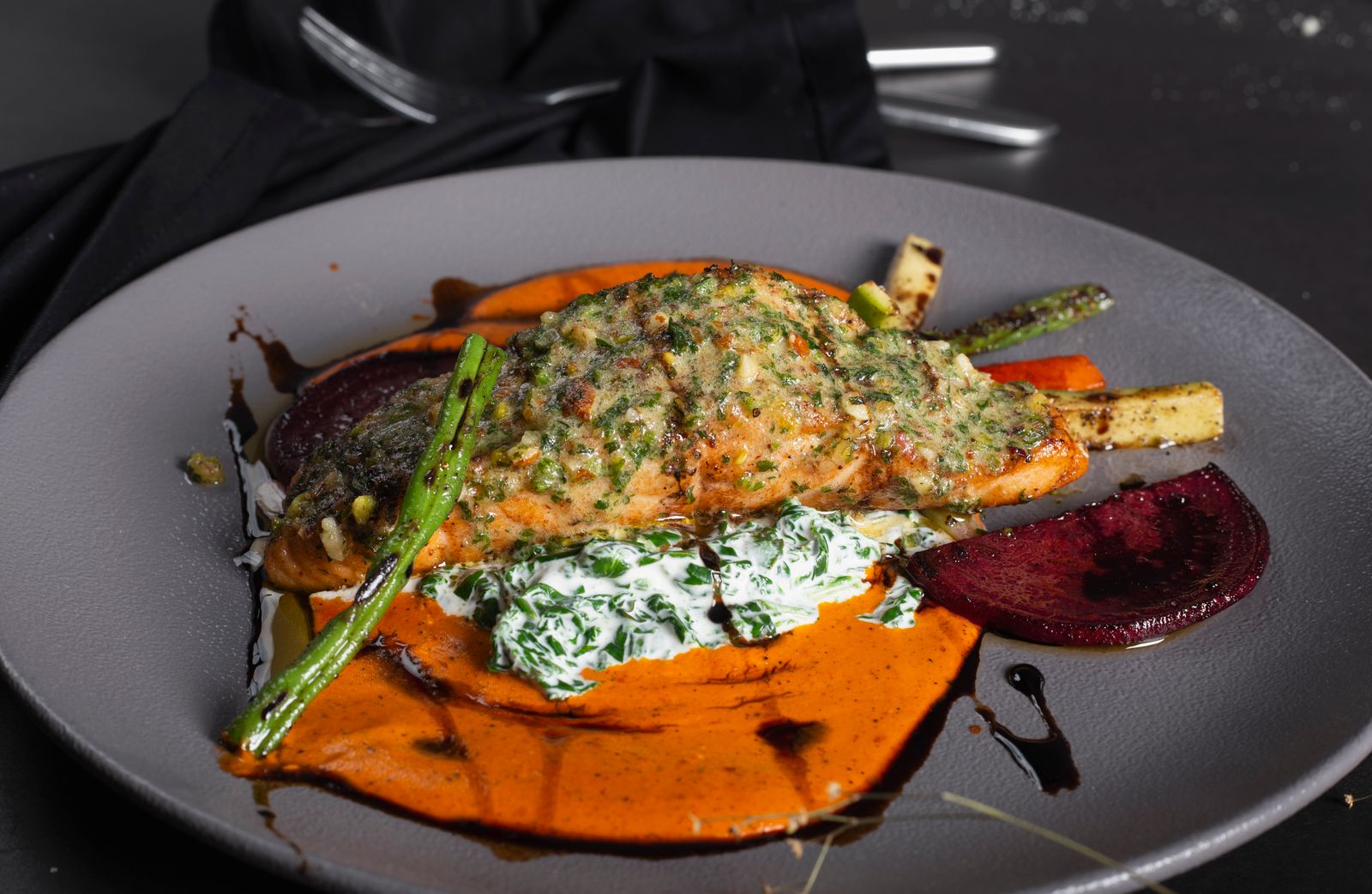
The FDA says to skip these 7: king mackerel, marlin, orange roughy, shark, swordfish, tilefish from the Gulf of Mexico, and bigeye tuna.
Aim for 2 to 3 servings a week of these instead: salmon, shrimp, cod, tilapia, sardines, catfish, pollock and canned light tuna. Canned albacore is fine too, just keep it to about one serving a week.
2. Alcohol close to a feed
One drink is OK if you time it. Alcohol in your milk rises and falls with the alcohol in your blood. Wait about 2 hours per drink before you nurse.
Pumping and dumping doesn’t speed this up. Only time does. Our full guide on alcohol while breastfeeding has a timing chart.
3. Too much caffeine
Your morning coffee is fine. Most moms can have up to about 300 mg a day without any effect on their baby. Newborns clear caffeine slowly, so a baby under 3 months may get jittery if you go well past that.
Watch the sneaky sources: energy drinks, big coffee-shop cups and pre-workout powders. See the chart in our caffeine while breastfeeding guide.
4. Big doses of a few herbs
A sprinkle of parsley on your pasta won’t hurt your supply. Big doses are a different story. Sage tea, strong peppermint tea or peppermint oil every day, and large amounts of parsley have long been used to dry up milk. The proof is mostly from moms’ reports, but it’s not worth the risk if your supply matters to you.
Herbal supplements are the bigger worry. Products like ginseng, black cohosh and weight-loss teas aren’t tested well for nursing moms. Ask your doctor or check LactMed, a free government database, before you take one.
5. Foods your baby clearly reacts to
This is the only list that is truly personal. If your baby has blood or mucus in their poop, a rash or eczema, hives, or vomiting after most feeds, a food in your diet may be the cause. Cow’s milk protein is the most common one by far. Soy and egg come next.
Track every feed without the spreadsheet
Latchly times each side, logs pumps, and shows you the patterns. Free to start.
Foods you probably don’t need to avoid
Most of the “don’t eat” lists online are myths. Here’s what you can keep eating:
- Broccoli, cabbage, beans and onions. The gas they cause stays in your own gut.
- Spicy food. Fine for most babies. Flavor in milk may even help with solids later.
- Garlic. Babies often nurse longer after a garlic meal.
- Citrus. Oranges and tomatoes don’t make milk acidic.
- Chocolate. It has a little caffeine, but a normal serving is fine.
- Peanuts, eggs and wheat. Avoiding them while nursing does not prevent allergies.
- Sushi. The raw-fish rule was for pregnancy. Just choose low-mercury fish.
- Soft cheese and deli meat. The listeria worry was also for pregnancy.

Fussiness after a feed is common, and it’s usually not your lunch. Swallowed air, a fast letdown, a young gut and the evening fussy stretch cause far more crying than food does. If your baby is gassy, start with newborn gas relief tips before you cut anything.
How to find out if a food bothers your baby, step by step
Don’t cut 10 foods at once. You’ll be hungry, stressed and no closer to an answer. Go one food at a time.
1. Look for real signs first. Blood or mucus in poop, eczema, hives, vomiting, or crying that is worse after every single feed. Normal newborn gas and evening fussiness don’t count.
2. Keep a simple food and symptom log. Write down what you eat and how your baby acts for 3 to 5 days. Look for a pattern, not one bad day.
3. Pick the most likely food. For most babies, that’s dairy. Talk to your pediatrician before you start.
4. Cut that one food fully. For dairy, that means milk, cheese, butter, yogurt and hidden milk in bread and snacks. Read labels for whey and casein.
5. Give it 2 to 4 weeks. Cow’s milk protein can take that long to clear. Most other foods clear in a few days.
6. Add it back if nothing changes. If your baby is the same after 4 weeks, that food wasn’t the problem. Bring it back and keep eating it.
7. Eat enough while you test. Replace what you cut. If you drop dairy, get calcium from fortified oat or soy milk, tofu, greens or a supplement.
What to eat more of while breastfeeding
Focus on adding, not cutting. Your body needs about 300 to 500 extra calories a day to make milk.
- Protein at every meal. Eggs, chicken, beans, yogurt, fish.
- Low-mercury fish 2 to 3 times a week. For DHA.
- Iron-rich foods. Red meat, lentils and spinach, especially after blood loss at birth.
- Water. Keep a full bottle where you nurse and drink to thirst.
- Your prenatal vitamin. Most doctors suggest staying on it while you nurse.
Want ideas that also support supply? See our list of foods that increase milk supply.
When to call your pediatrician
Call your baby’s doctor if you see any of these:
- Blood or mucus in your baby’s poop
- Eczema, hives or swelling after feeds
- Vomiting after most feeds, or forceful vomiting
- Poor weight gain or fewer wet diapers
- Wheezing or trouble breathing after a feed (call 911 for trouble breathing)
- Crying for hours every day that nothing calms
Also talk to your doctor before you start any big elimination diet, or before you take any herbal supplement while nursing.
The thing I wish I’d known
Your baby doesn’t need you to eat perfectly. They need you to eat.
I spent weeks blaming my lunch for every cry. Plain rice, no cheese, no coffee, no joy. My baby was just a baby, fussy in the evening like most babies are. When I finally ate a real meal again, nothing changed for her. Everything changed for me.
So here’s your permission. Eat the salsa. Have the coffee. Order the salmon roll. Skip the swordfish, time the wine, and watch for real signs. That’s the whole list.
Your next step: make yourself a real plate of food today, with protein, and eat it while it’s still warm.
Frequently asked questions
What foods should you avoid while breastfeeding?
Only a few. Skip high-mercury fish like swordfish, shark, king mackerel, marlin, orange roughy, tilefish and bigeye tuna. Time alcohol away from feeds, keep caffeine under about 300 mg a day, and skip big doses of herbs like sage and peppermint. Everything else is fine unless your baby reacts.
Do gassy foods like broccoli and beans make a breastfed baby gassy?
Usually not. The fiber that gives you gas stays in your gut and doesn’t pass into your milk. Most baby gas comes from swallowed air and a young gut that is still learning. You don’t need to cut these foods.
Can I eat spicy food while breastfeeding?
Yes. Spicy food is fine for most babies. Flavors from your meals do pass into your milk, and that may even help your baby accept new foods later. Only cut back if you see a clear pattern of fussiness after spicy meals.
Should I avoid peanuts while breastfeeding to prevent allergies?
No. Avoiding peanuts, eggs or other allergens while nursing has not been shown to prevent food allergies in babies. Keep eating them unless your baby has a diagnosed allergy and your doctor tells you otherwise.
How long does it take for a food to leave breast milk?
Most foods show up in your milk within a few hours and are gone within a day. Cow’s milk protein is the exception. It can take 2 to 4 weeks after you stop eating dairy before you see a change in your baby.
Is it safe to eat sushi while breastfeeding?
Yes, for most moms. The raw-fish rules from pregnancy are about protecting you and the baby inside you. Once your baby is born, sushi is fine. Just pick low-mercury fish like salmon and skip bigeye tuna and mackerel rolls.